When buying plastic nursery pots in bulk, you want a durable, lightweight option with reliable drainage and easy stacking. This guide highlights five practical choices that suit seed starters, cuttings, and larger transplants. The top picks are best for hobbyists, classroom projects, community gardens, and small-greenhouse operations. Each product section explains who it’s best for and why it was selected, with clear pros and a brief caution to help you decide.
| Product | Size Options | Key Benefit | Best For |
|---|---|---|---|
| Hemikaki 300 Pack 4 Inch Pots | 4 inch | Includes 300 pots and 300 labels with durable drainage holes | Bulk tray projects, classrooms, clubs |
| RAOOKIF 100 Pack 4 Inch Pots | 4 inch | Deforms but returns to shape; durable and reusable | Starter gardeners and repeated transplanting |
| JERIA 100-Pack 4 Inch Pots | 4 inch | Includes 100 plant labels; easy stacking with raised rim | Seedlings and small flats |
| RooTrimmer 15 Pack 4/6/8 Inch Pots | 4/6/8 inch (15 total) | Three sizes in one set; strong drainage | Mixed-size project setups |
| JERIA 200-Pack 4 Inch Pots | 4 inch | Includes 200 plant labels; reusable and stackable | Larger seedling batches |
Hemikaki 300 Pack 4 Inch Pots

Package includes 300 four-inch pots plus 300 plant labels. The set is designed for bulk planting needs, with standard 4-inch openings and a compact 3.3-inch height. The pots are lightweight and reusable, suitable for daily gardening and plant transplantation. Best for large seedling batches, classroom projects, or community garden initiatives where quantity matters. Caution: plants are not included, so you’ll need to supply seedlings separately.
RAOOKIF 100 Pack 4 Inch Pots

This set includes 100 four-inch pots made from durable, ductile plastic that returns to shape after bending. Lightweight and reusable, they’re well-suited for starting seeds and transplanting to larger containers. Best for growers who plan multiple planting cycles or need to reuse pots across seasons. Limitation: may deform if handled roughly, but returns to original shape with care.
JERIA 100-Pack 4 Inch Pots

Includes 100 pots with 100 plant labels. The pots use a soft, reusable plastic that resists cracking when compressed and features a raised rim for easy handling and stacking. Drainage is supported by eight small holes. Best for compact seedling batches and education settings. Caution: label durability depends on marker quality; consider using water-resistant labels for longer-term use.
RooTrimmer 15 Pack 4/6/8 Inch Pots

This variety pack delivers three sizes (4, 6, and 8 inches) in one order, with eight large drainage holes at the bottom to ensure adequate aeration. Durable and reusable, the pots support a range of plant sizes from seedlings to mature-cuttings. Best for mixed-species projects or seasonal plantings. Limitation: heavy batches can be bulky to move; plan storage space accordingly.
JERIA 200-Pack 4 Inch Pots
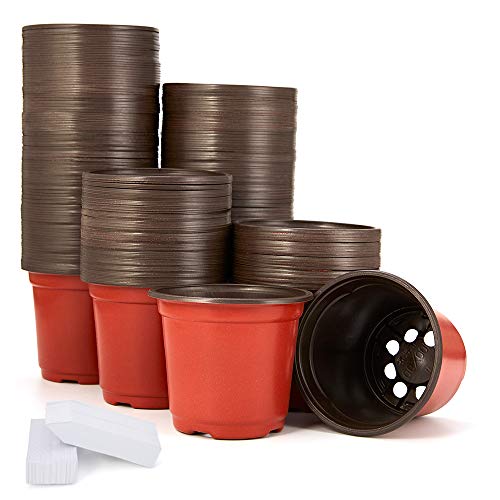
Includes 200 pots and 200 plant labels. The soft plastic design enables easy handling and repeated use, with a raised rim for convenient stacking. Eight drainage holes promote soil drainage and airflow. Best for bulk seed starting and moderate-size transplanting. Caution: ensure labels remain legible; consider pre-writing on durable labels for visibility over time.
Woozettn 120 Packs Flexible Pots

Includes 120 flexible plastic nursery pots with drainage holes. Tall, thickened soft plastic is designed to compress and return to shape, reducing breakage. Best for hobbyists who value flexibility and reuse. Caution: color is black; consider light-colored pots if you plan to monitor soil moisture visually in bright light.
WandaQueen 30 Packs Clear Pots

These clear pots allow quick visual checks of soil moisture and root development. The set includes 30 pots in 3.5/4/5 inches and 20 labels. Best for growers who want transparent monitoring and decor flexibility. Limitation: clear plastic can show soil staining over time; regular cleaning helps maintain visibility.
HKKZYT 16-Pack Clear Nursery Pots

16 clear pots in four sizes (4, 6, 8, 10 inches) provide a versatile set for various plant stages. Built-in drainage holes aid aeration and prevent waterlogging. Best for seasoned gardeners who work with different plant sizes or for teaching environments. Caution: ensure adequate storage as multiple sizes may require varied shelf space.
Buying Guide: Key Considerations for Bulk Plastic Nursery Pots
- Size range: Consider whether you need a single size or multiple sizes to accommodate seedlings, cuttings, and larger transplants.
- Material and durability: Look for soft, lightweight plastic that’s reusable. Reusability lowers long-term cost.
- Drainage: Ensure sufficient drainage holes to prevent root rot and improve aeration.
- Stackability and handling: Raised rims and stackable design save space and protect seedlings during transport.
- Labels and identification: Pots that include labels or are compatible with labeling systems can streamline seedling tracking.
- Transparency: Clear pots help monitor moisture and root growth, but may show soil stains; plan cleaning accordingly.
- Environmental impact: Reusable pots reduce waste; consider sets that emphasize durability and recyclability.
FAQ
- What size should I choose for starting seeds? A 4-inch pot is a common choice for many vegetables and flowering plants after germination, balancing root space with compact growth.
- Are reusable pots worth it for a beginner? Yes, because you can reuse pots across seasons, reducing ongoing costs if you treat them gently.
- How many pots should I order for a small classroom? A starter kit of 100–200 pots typically covers several dozen students with repeated plantings.
- Do clear pots really help with watering? Yes, they let you observe soil moisture and root development, enabling timely watering decisions.
- Is it better to buy a mixed-set or single-size pack? Mixed sets offer flexibility for different plant stages, while single-size packs are convenient for uniform projects.
- Are plant labels essential? Labels help avoid mix-ups, especially in teaching labs or busy seedling operations; consider waterproof options for longevity.