Choosing durable plastic flats for plant propagation helps gardeners save time and achieve reliable germination. This guide highlights five top seed starter trays designed for microgreens, seedlings, and general propagation. Each option emphasizes sturdy construction, drainage (or deliberate no-drain designs), and practical sizes for windowsills, benches, and greenhouses. Read on to compare features, material quality, and suitability for different growing setups.
| Product | Key Benefit | Size / Capacity | Drainage |
|---|---|---|---|
| YoleShy 10 Pack | Thickened, durable without holes | 14.5″ x 9″ x 2.2″ | No holes |
| Gardzen 30 Pack | Healthy growth with drainage holes | 5.4″ x 3.7″ per cell | Drain holes |
| Upgraded 10 Pack 1017 | Large, reusable microgreens trays | 16.9″ x 10″ x 2.5″ | No holes |
| Gardzen 5-Set | Ventilated domes with bases | 40 cells per set | Via domed lids (with vents) |
| Seed Starter Trays 144 Cells | High cell count for varieties | 144 cells (24 trays) | No holes |
YoleShy Seed Starter Trays, 10 Pack

These thickened plastic seed trays are designed for durable use without holes. Each tray measures 14.5″ by 9″ with a 2.2″ depth, providing ample space for early-stage seedlings and microgreens. Their reinforced perimeter and deeper ridges help maintain shape during watering, supporting consistent moisture distribution. The no-hole design reduces soil loss and makes them suitable for germination in controlled environments like greenhouses or on sunny windowsills.
Gardzen 30 Pack Seed Starting Trays with Drainage Holes

This Gardzen set provides a robust seed starting solution with 30 trays, each with 5.4″ by 3.7″ cells. Cell depth supports healthy root development, with 1.5″ square and 2.2″ deep cells. Drainage holes help regulate moisture, and top guide channels ensure even watering to every cell. The product is designed for ongoing seedling production and is well-suited for gardeners who want multiple batches in sequential cycles.
Upgraded 10 Pack 1017 Plant Growing Trays (No Holes)

This set offers durable, reusable trays sized at 16.9″ x 10″ x 2.5″. The no-hole design helps reduce leakage and simplifies watering control for microgreens and seedlings. These trays are positioned as versatile options for indoor gardening, greenhouses, and patios, compatible with heat mats and domes to optimize germination and early growth.
Gardzen 5-Set Seed Starter Trays with Humidity Domes
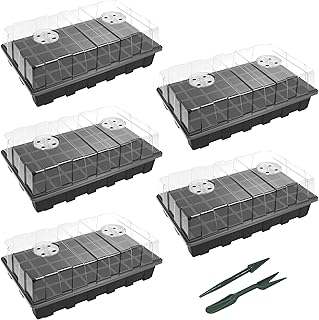
This Gardzen kit includes five 40-cell trays with humidity-vented domes and bases. The upgraded design adds two air vents to control airflow, helping prevent stagnation and mold while maintaining appropriate moisture. The larger 40-cell capacity supports a wider range of seeds, making it suitable for both beginners and more experienced growers aiming to start several varieties at once.
Seed Starter Trays, 144 Cells (24 Trays)

This bulk option features 144 cells across 24 trays, each cell sized at 1.5″ square by 2.25″ deep to promote healthy root development. Made from durable materials, these trays are reusable for sustainable gardening. The design accommodates a wide variety of seeds, including flowers, herbs, vegetables, and succulents, offering versatility for multi-crop propagation on a single workstation.
Buying Guide: Key Considerations For Plastic Plant Flats
Choosing the right plastic flats depends on moisture management, space, and reuse considerations. No-hole trays suit moisture-controlled environments and prevent soil loss, but require careful watering. Trays with drainage holes help prevent root rot by allowing excess water to drain, which can be ideal for seed starting and aeration. Larger surface area trays support many plants at once but take more space, while smaller cells improve ongoing transplanting efficiency. Durability, compatibility with domes, and ease of cleaning are important for repeated use.
Consider the following perspectives to guide selection:
- Indoor gardeners may prefer no-hole trays for precise watering control on a windowsill or under grow lights.
- Greenhouse setups may benefit from trays with drainage holes and top channels to promote even water distribution.
- Microgreen enthusiasts often choose shallow but wide trays to maximize harvest density and simplify harvesting.
- Reusable trays save long-term costs and reduce waste; ensure materials resist warping and cracking with repeated wash cycles.
- Compatibility with humidity domes and heat mats can accelerate germination and uniform seedling growth.
In practice, most gardeners balance tray size, cell count, and moisture control to match their seed mix and propagation schedule. For beginners, a kit with adjustable ventilation, robust build, and a mid-range cell count provides a flexible baseline. Experienced growers may opt for higher-cell options or larger flat trays to support bulk sowing and multiple batches.