Answering the common question: which plastic bags work best for growing mushrooms at home or in a small operation? The top picks below are designed for substrate containment, gas exchange, and autoclave or pasteurization readiness. They’re best suited for hobbyists, home growers, and small-scale cultivators seeking reliable, breathable bags that resist tearing. The following summary highlights the five standout options and who they’re best for.
| Product | Size | Thickness | Best For | Notes |
|---|---|---|---|---|
| Gymgit 15-Pack Mushroom Grow Bags | 8″ x 5″ x 20″ | 6 Mil | Beginners and hobbyists | Great balance of durability and breathability with 0.2 µm filter. |
| TonGass 60-Pack Autoclavable Bags | 6″ x 5″ x 20″ | 80 µm (3 Mil per side) | Serious or commercial-ish small grow | Extra thick, autoclavable, strong and tear-resistant. |
| Zenrok 50-Pack Grow Bags | 8″ x 5″ x 20″ | 6 Mil | Professional or extended runs | 0.2 µm filter patch for gas exchange. |
| The Magnificent Bee 10 Count | Not specified in overview | 3 Mil | Smaller kits and flexibility | Breathable with 0.2 µm patch. |
| LOSTRONAUT 60-Pack | 8″ x 5″ x 20″ | 4.8 Mil | All skill levels | Autoclave-safe, good gas exchange. |
Gymgit 15-Pack Mushroom Grow Bags

Features: Sealable and durable 6 mil polypropylene; transparent for monitoring; suitable for sealing with an impulse sealer or tying. 15 bags measure 8″ x 5″ x 20″ and can hold 5–8 pounds. Side gusset design helps the bag stand and provides a sturdy bottom seal. The 0.2-micron filter supports gas exchange while keeping contaminants out.
Best for: Beginners and hobby growers who want a clear bag with straightforward sealing and visibility during the growth cycle. The medium thickness offers a reliable balance between durability and cost. Avoid if you need ultra-thin bags for space-constrained setups or if you prefer a larger bag for bigger substrate blocks.
Limitation: The size and gusset provide stand-up stability, but the 6 mil thickness is not as robust as heavier variants used in higher-temperature sterilization cycles. Ensure proper handling to prevent accidental punctures.
ZWXT 100PCS Growth Bags

Features: 8″ x 5″ x 20″ bags with 6 mil thickness; 0.2 micron porosity with a breathable window. Designed for high-temperature use and long-term durability. The side corner brace helps the bag stand and maintain shape during growth, which is helpful for professionals and serious hobbyists.
Best for: Professional or extended runs where strong construction and efficient gas exchange matter most. Choose this if you need reliable stability during long spawn or fruiting stages. Limitation: The listing emphasizes durability; price may be higher per bag compared with lower-thickness options.
TonGass 60-Pack Autoclavable Bags

Features: Made from polyethylene; 6″ x 5″ x 20″ size; 80 micron (3 mil per side). Designed to withstand substrate sterilization with autoclavable construction. The bag stands upright due to the side gussets and can hold a substantial payload.
Best for: Growers who sterilize substrates and need a robust, autoclavable option with ample room for spawning and fruiting. Better for: users who prioritize heat resistance and tear resistance. Caution: The thicker material may be less flexible for very dense substrates.
Zenrok Mushroom Grow Bags

Features: 50 bags, 8″ x 5″ x 20″ with 6 mil thickness; 0.2 micron filter patch for gas exchange; autoclavable construction supports multiple cycles. The large capacity supports substantial substrate blocks and robust fruiting growth.
Best for: Larger projects or frequent growers who want a ready-to-use supply bundle with consistent filtration. Limitation: The total number of bags is high; store and manage a large inventory effectively.
The Magnificent Bee Grow Bags
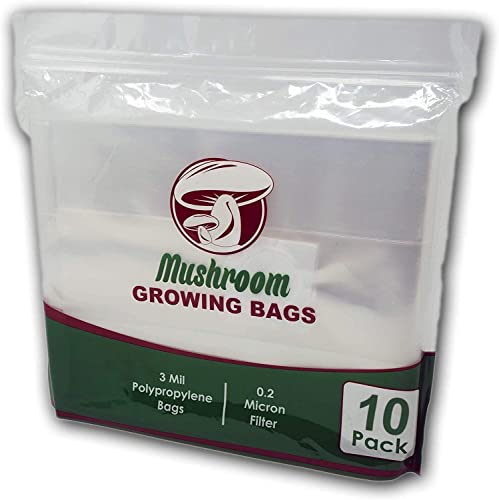
Features: 3 mil polypropylene, reinforced for heavy duty use; 0.2 micron filter patch provides gas exchange while lowering contamination risk. Designed for oyster, morel, enoki, portabella, and other species. Capable of supporting 5–10 lbs spawn blocks depending on configuration.
Best for: Small-acreage producers or hobbyists expanding to multiple mushroom strains. Choose this if you want versatile viability across species. Caution: Lower thickness than some other options means careful handling to avoid punctures, especially with denser substrates.
Buying Guide: Key Considerations For Choosing Mushroom Grow Bags
- Size and capacity: Choose 8″ x 5″ x 20″ or similar when you want a compact footprint with room for fruiting. If you plan larger substrates, consider extra height or broader gussets.
- Thickness and strength: Thicker bags (4.8–6 mil) resist tearing and support heavier loads; thinner options save cost but may be less durable during autoclaving.
- Autoclavability: If you sterilize substrates, prefer autoclavable bags designed for high temperatures to maintain integrity across cycles.
- Filtration: A 0.2-micron filter patch is standard for good gas exchange and contaminant resistance. Ensure the patch type matches your workflow.
- Sealing method: Bags can be sealed with impulse sealers or tied. Consider your equipment and workflow preferences when selecting.
- Budget and quantity: Bulk packs reduce per-bag cost and are helpful for growing multiple strains or scales. Balance price against durability needs.
- Species versatility: Some bags are marketed as compatible with oysters, shiitake, lion’s mane, and other fungi. Check whether the bag design accommodates your chosen species.
Frequently Asked Questions
- What thickness is best for mushroom grow bags?
For most hobbyists, 6 mil bags offer a good balance of durability and flexibility. For autoclavable use and heavier substrate, thicker options (3–6 mil per side) may be preferred, though price and stiffness increase.
- Do grow bags need a filter patch?
Filter patches (0.2 micron) are widely recommended because they allow gas exchange while limiting contaminants, helping maintain a clean growing environment.
- Are autoclave bags necessary?
Autoclavable bags are essential if you sterilize substrates at high temperatures. They are designed to withstand the heat without compromising bag integrity.
- Can these bags be reused?
Many bags are designed for single-use during a session due to sterility concerns. Reuse is not typically advised unless the bag is explicitly rated for repeated sterilization and inspected for damage.
- Which bag is best for beginners?
For beginners, a balanced 6 mil bag with a clear view and a reliable 0.2 µm filter is usually best, offering visibility, ease of use, and dependable gas exchange.
- What species can I grow with these bags?
Most bags listed support common edible species such as oyster, shiitake, lion’s mane, portobello, and similar fungi when used with appropriate substrates and spawning methods.