Choosing the right grow light can help succulents thrive indoors by mimicking natural sunlight. This guide highlights five reliable options, focusing on full-spectrum output, adjustable brightness, timers, and flexible mounting. Each product is suitable for small and medium succulents and designed to fit desks, shelves, or plant stands. The selections balance energy efficiency with plant-friendly wavelengths to promote steady growth without overheating delicate leaves.
| Product | Brand |
|---|---|
| SANSI Grow Lights for Indoor Plants, Pot Clip LED Plant Lights | SANSI |
| Kullsinss Grow Lights for Indoor Plants | Kullsinss |
| GYTF Halo Plant Grow Light | GYTF |
| LEOTER Grow Light for Indoor Plants | LEOTER |
| GooingTop LED Grow Light, 100W | GooingTop |
SANSI Grow Lights for Indoor Plants

The SANSI pot clip LED plant light focuses on efficiency with a 5W output and a 360-degree gooseneck design for flexible positioning. It uses ceramic technology to improve power conversion and delivers 4000K natural light, which reduces eye strain while staying gentle on plants. The clip-on form makes it ideal for compact succulent setups on desks or plant stands. A 6-inch mounting distance is typical for optimal intensity, and the built-in timer options help automate daily lighting cycles, aiding consistent growth without manual adjustments.
Key features to note include 6-inch mounting distance, adjustable 360° gooseneck, and auto on/off timer options (3/6/12 hours). The fixture’s compact footprint suits small pots, while the color temperature leans toward a natural, non-intrusive glow. This product is well-suited for succulents that thrive under steady, moderate light rather than intense, direct sun exposure. For users seeking a clipped, easy-to-mount solution, SANSI offers straightforward installation with minimal setup effort.
Kullsinss Grow Lights for Indoor Plants

The Kullsinss halo grow light offers a detachable base for versatility, with a full spectrum range from 380 nm to 760 nm. It is designed to support all growth stages for small plants, including succulents. The device provides five dimmable levels and three spectrum modes—white, warm white, and red—with an automatic timer option for 3, 9, or 12 hours. The detachable base enables two setup options: place the pot on the base for stability or insert the light into the soil for a soil-proximity arrangement. This flexibility makes it suitable for desktops and plant shelves alike.
When comparing to other clip-based options, the Kullsinss design emphasizes stability and ease of placement on irregular surfaces. The timer function helps reduce daily manual control, making it a practical choice for busy households or office environments where succulents benefit from a consistent light cycle without overexposure. The full spectrum coverage, including both blue and red wavelengths, supports root development and compact growth, which is particularly helpful for leggy or stretched succulents indoors.
GYTF Halo Plant Grow Light

The GYTF halo light uses a 6000K white LED array with multiple red and blue channels to create a balanced, full-spectrum output. This design supports indoor seedlings, succulents, mini bonsai, and other small houseplants. An upgraded timer enables automatic on/off for 4, 8, 12, or 18 hours, helping to tailor the day length to the plant’s growth stage. The stand pole is adjustable from 7 to 18 inches, and a 180-degree rotatable head enables precise lighting angles for uneven shelving or angled plant arrangements. The aluminum structure provides stability while staying lightweight for easy desktop use.
From a plant-growth perspective, the combination of white, red, and blue LEDs promotes photosynthesis across different growth phases. The flexible height and rotation offer a user-friendly setup for succulents with varying pot heights. While not the strongest option for large terrariums, it excels in compact spaces where focused, adjustable lighting is needed for thriving succulent foliage.
LEOTER Grow Light for Indoor Plants
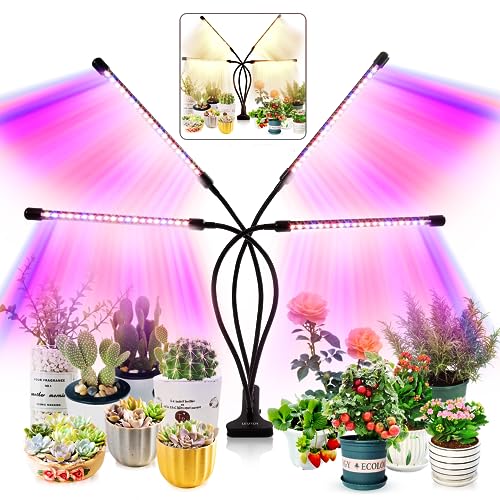
LEOTER’s upgraded version features 80 LED lamps, with a mix of red, blue, and full-spectrum whites designed to cover essential wavelengths for plant growth. The light supports three switch modes and offers 10 dimmable levels, giving users a wide range of brightness to match succulent needs—from gentle, low-light conditions to brighter settings for rapid growth. The built-in 3/9/12-hour timer makes care routine planning easier, particularly for desks or small plant displays. A gooseneck and adjustable height help direct light to individual pots without disturbing neighboring plants.
The LEOTER design emphasizes energy efficiency through its LED composition, reducing heat output while still delivering robust light for photosynthesis. The timer integration ensures consistency for succulents that benefit from regular daily lighting. The variety of dimming levels supports a spectrum of growth stages, from compact rosette formation to fuller leaf expansion, making it a versatile option for mixed succulent collections.
GooingTop Grow Light, 100W
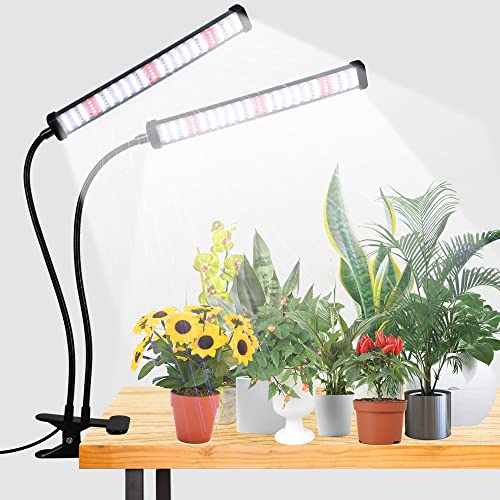
This GooingTop fixture provides a higher wattage setup with 144 white and 10 red LEDs, designed to mimic natural sunlight at noon. It operates with a 12V power supply for stability and efficiency and includes a 4/8/12-hour timer to automate daily lighting cycles. The gooseneck is flexible, and the clamp mounting allows it to be positioned on desks or shelves without a permanent installation. The generous LED mix emphasizes full-spectrum illumination with robust intensity for denser succulent growth while maintaining a reasonable heat output for indoor use.
In terms of suitability, the 100W option suits slightly larger tabletop succulent displays or mixed pots that require more intense lighting without creating hotspots. Users should monitor leaf heat and adjust distance from the plant accordingly to avoid scorching, especially for lighter-colored or newly propagated succulents. The timer feature is helpful for maintaining consistent growth rhythms during workweeks or travel.
Buying Guide: Picking The Right Grow Light For Succulents
- Light spectrum: Look for full-spectrum LEDs that cover blue (growth and leaf development) and red (flowering and flowering-related growth). A mix that includes white LEDs can improve color rendering and plant appearance.
- Intensity and distance: Succulents typically prefer bright but indirect light. Check recommended mounting distance (often 6–12 inches for clip-on or gooseneck designs) and adjust based on leaf color and growth rate.
- Adjustability: Favor models with adjustable height, angle, and dimming levels. This helps accommodate different pot sizes and growth stages without swapping fixtures.
- Timers and automation: Timers (3/6/12 hours) support consistent daily cycles, reducing risk of overexposure. Auto on/off is especially helpful for busy households.
- Mounting options: Clip-on, base-supported, and gooseneck mounts each suit different table heights and decor. Choose a design that minimizes disturbance to nearby plants.
- Power and heat: Energy efficiency matters for long-term use. LED systems generally produce less heat, reducing the risk of leaf burn on delicate succulents.
- Durability and warranty: Look for products with sturdy materials and a reasonable warranty period, especially for office or classroom setups where devices may be moved frequently.
Overall, the right grow light should provide steady, full-spectrum illumination, adjustable settings, and a convenient mounting style that fits your space. For succulents, aim for a balance of bright, evenly distributed light with controlled intensity to encourage tight rosette formation and vivid colors without scorching. When comparing options, consider your room’s ambient light, the number of plants, and how often you’ll reposition fixtures as your collection evolves.