Natural peppermint oil sprays offer a plant-based approach to deter squirrels from indoor and outdoor spaces. This article highlights five top options, explains how peppermint and other essential oils deter rodents, and provides practical buying guidance to choose the right spray for homes, vehicles, and yards.
| Product | Brand | Format | Key Benefit |
|---|---|---|---|
| Mighty Mint Peppermint Oil Rodent Repellent Spray | Mighty Mint | 16 oz | Pet-friendly, extra-strong peppermint protection |
| Natural Peppermint Oil Spray for Rodents | RATITU | 16 oz | Safe, plant-based formula for indoor/outdoor use |
| Mighty Mint Peppermint Oil Rodent Repellent Spray | Mighty Mint | 1 gallon | Large coverage, indoor and outdoor versatility |
| Peppermint Oil Spray for Rodents | Pest easy | 16 oz | Combined peppermint & cedarwood for strong deterrence |
| Grandpa Gus’s Rodent Repellent Spray | Grandpa Gus’s | 16 oz | Peppermint with cinnamon for added chew deterrence |
Mighty Mint Peppermint Oil Rodent Repellent Spray

Mighty Mint’s Extra-Strong Peppermint formula targets mice, rats, and other rodents with a plant-based blend. The product emphasizes pet-friendliness and family safety when used as directed, making it suitable for households with dogs, cats, and children. Its peppermint focus acts as a deterrent by overwhelming rodents’ olfactory senses, limiting interest in treated areas. Suitable for both indoor baseboards and outdoor entryways, it provides versatile placement opportunities where rodents are likely to travel or nest.
Natural Peppermint Oil Spray for Rodents (16 oz)

RATITU’s peppermint oil spray combines peppermint with other natural ingredients to deter mice, rats, and squirrels in homes, garages, yards, and vehicles. The formula emphasizes safety for people, pets, and plants, offering an approachable, natural option for homeowners seeking a chemical-free border against rodents. Usage guidance suggests targeting common rodent hotspots—attics, basements, and entry points—using direct application on surfaces or at entryways to disrupt habit paths.
Mighty Mint Peppermint Oil Rodent Repellent Spray (1 Gallon)

This gallon-size Mighty Mint option extends coverage for larger spaces such as basements, garages, workshops, and exterior perimeters. The same plant-based, extra-concentrated peppermint formulation provides a durable deterrent against mice and rats, helping to reduce nesting and chewing activities around vehicles, storage areas, and entryways. The product notes safety around pets and children when used as directed, and it aims to avoid staining or residue on treated surfaces.
Peppermint Oil Spray for Rodents (Pest easy)

Pest Easy combines peppermint oil with cedarwood oil for a dual-action deterrent that targets indoor and outdoor rodent activity. The spray is marketed for use in kitchens, basements, attics, and garages, offering a fresh peppermint scent while discouraging mice, rats, squirrels, and other offenders from frequenting treated areas. The formula emphasizes safety for people, pets, and plants and highlights easy direct application to favorite rodent spots, pipes, holes, and entry points.
Grandpa Gus’s Rodent Repellent Spray
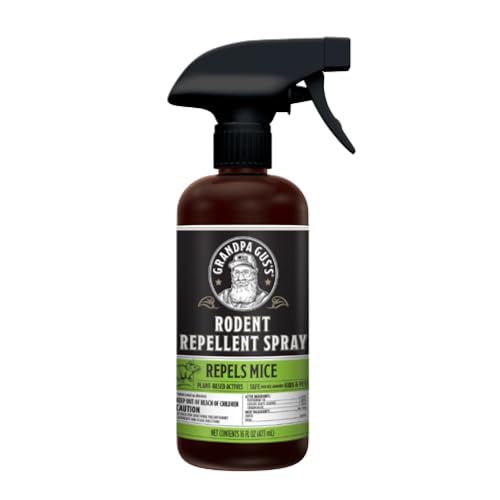
Grandpa Gus’s formula uses peppermint and cinnamon oils to create a potent barrier that deters mice and rats from nesting and chewing on wires. The hydro-water mix delivers a dry-spray barrier that spreads quickly without staining, making it suitable for broader indoor applications such as homes, shops, RVs, or stored vehicles. Shake before use and reapply as conditions change, particularly in damp or dusty environments where residual protection may diminish.
Buying Guide: Key Considerations And Comparisons
Choosing the right peppermint oil spray for squirrels and other rodents involves weighing safety, effectiveness, application scope, and long-term management. The following considerations help compare options across the market:
- Safety and suitability: Look for pet-friendly and family-safe formulations when households include dogs, cats, or children. Plant-based ingredients reduce harsh chemical exposure, but always follow label directions and keep treated areas out of reach of curious pets.
- Active ingredients and concentration: Peppermint oil is the core deterrent, but some products blend cedarwood, cinnamon, or other essential oils. Higher peppermint oil concentration can increase effectiveness but may also intensify a scent that some prefer to minimize.
- Indoor vs. outdoor performance: Some sprays are designed for tight indoor spaces (kitchens, basements), while others offer outdoor perimeters (patios, entryways, driveways). Choose based on where rodent activity is most common in your property.
- Surface compatibility and staining: Prefer non-staining formulas for upholstery, baseboards, fabrics, and wood finishes. If a product notes potential staining, plan applications on non-visible areas first to test for reaction and residue.
- Ease of use and coverage: Larger bottle sizes reduce frequent reapplication for exterior areas, while smaller bottles facilitate targeted spot treatments. Consider the size of the space and frequency of rodent activity when selecting volume.
- Longevity and reapplication: Natural deterrents often require more frequent reapplication after rain, cleaning, or heavy use. Choose a product whose label aligns with your maintenance routine and climate conditions.
- Vehicle and equipment protection: For cars, RVs, boats, and engines, select a formula proven to deter rodents without leaving oily residues or attracting dirt. Some products are specifically marketed for under-hood usage and wiring protection.
- Multi-ingredient effects: While peppermint is central, cedarwood and cinnamon combinations can enhance deterrence for certain rodent species. Evaluate scent tolerance for occupants and nearby neighbors when applying outdoors.
- Storage and shelf life: Store in a cool, dry place away from direct sunlight. Ensure the bottle is sealed to preserve essential oils and prevent fragrance drift in living spaces.
- Compliance with local guidelines: Some regions have regulations regarding essential oil repellents. Always check local guidelines if used in shared or multi-tenant buildings, and follow disposal recommendations for empty containers.
In practice, combining sprays with preventive measures—sealing entry points, trimming vegetation near structures, and removing food sources—yields stronger rodent control. Individual results vary by environment and rodent pressure, so consider starting with a smaller bottle to test efficacy and scent tolerance before scaling up.