Pasture health depends on effective weed control that protects forage yields while minimizing environmental impact. This guide reviews five widely used herbicides suitable for rangeland, pastures, and fence lines. It highlights active ingredients, application notes, and what to consider when choosing products for different weed pressures and environmental conditions.
| Product | Active Focus | Best For | Notes |
|---|---|---|---|
| Grazon Next HL 2 Gallon | Broadleaf weeds | Pastures, rangeland | Effective mix with other herbicides; watch for sensitive forages |
| Southern Ag Amine 2,4-D WEED KILLER | Broadleaves; woody plants | Turf, pastures, rangeland, ditch banks | Economical use rate; versatile across sites |
| Remedy Specialty Herbicide | Brush and broadleaf; Triclopyr | Pasture restoration; fence lines | Low odor; long-lasting brush control |
| Vinegar Weed & Grass Killer with Sprayer | Herbicide alternative; organic feel | Home use or small-scale areas | Glyphosate-free; organic-producer friendly |
| Monterey Thistledown | Thistle, clover; broadleaf weeds | Non-crop areas; pasture management | Clopyralid-based; effective on thistles |
Grazon Next HL 2 Gallon

Grazon Next HL is formulated for selective control of broadleaf weeds in pastures and rangeland. The product relies on a mix of active ingredients designed to target unwanted herbaceous and woody plants while respecting many forage grasses. When applying in pasture settings, land managers should consider tank-mix options and rotation plans to minimize weed resistance and protect preferred forage species. Similar to many post-emergent products, timing relative to weed growth stages can influence efficacy. Always follow label directions for specific forage species and grazing restrictions after treatment.
Southern Ag Amine 2,4-D WEED KILLER, 32oz – Quart

This product emphasizes a low, economical use rate of 1 to 4 pints per acre, making it a versatile choice for widespread weed control in turf, pastures, and rangeland. It targets many broadleaf weeds and woody plants, aiding in maintaining pasture quality and fence lines. Application considerations include ensuring compatible tank mixes with other herbicides and observing any forage crop restrictions. Its economical rate can be favorable for larger properties, but users should monitor potential sensitivity in newly established pastures.
Remedy Specialty Herbicide Weed Killer & Brush Control
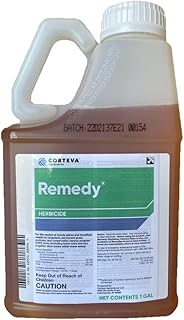
Remedy Specialty Herbicide is highlighted as a top-rated pasture solution for brush and broadleaf control. It is noted for low odor and effectiveness on the entire plant, including roots and top growth, making it suitable for pasture restoration projects and maintaining fence rows. Its flexible use—whether applied alone or in tank mixes with GrazonNext or ForeFront HL—offers strategic options when managing brush encroachment and weed populations across fenced pastures and non-crop areas. Always verify site restrictions to protect desirable plants.
Vinegar Weed & Grass Killer with Sprayer

This product represents a non-GMO, organic-oriented approach with glyphosate-free chemistry. It’s framed as a household- and small-farm option for spot treatment of weeds in non-crop areas. The incorporated sprayer facilitates controlled application, reducing drift to desirable vegetation. For pasture-scale weed issues, this option may be best reserved for perimeters, paths, and dedicated weed patches rather than broad pasture-wide control, due to potency and coverage considerations.
Monterey Thistledown Bundled with Measuring Spoon

Monterey Thistledown provides POST-EMERGENT control, using clopyralid to target actively growing broadleaf weeds and thistles in non-crop areas, pastures, and range lands. It’s selective for thistle species, musk thistle, star thistle, and knapweed, with additional utility against kudzu and dandelion in some settings. Site restrictions are important—avoid ornamentals and vegetables and refrain from applying near irrigation water. This product fits scenarios where established thistle populations threaten forage yield and pasture integrity.
Buying Guide
Key purchase considerations help ensure the right product for your pasture goals. First, identify the primary weeds: broadleaf weeds, brush, or thistle species will influence active ingredients and required formulations. Second, assess forage sensitivity: some products may impact desirable grasses or legumes, so consider grazing restrictions, split applications, and rotation plans. Third, evaluate application site: larger pastures may favor systemic herbicides with longer residual control, while fence lines and brushy borders might benefit from brush-control formulations. Fourth, consider tank-mix compatibility: many pastures use mixtures to broaden weed control while reducing resistance risk. Fifth, environmental and safety factors: low-odor options or organic-friendly formulas can be appropriate near dwellings, water sources, or organic-certified operations. Sixth, regulatory compliance: always follow label directions for permitted uses, re-entry intervals, and grazing restrictions. Finally, plan for resistance management: rotating herbicides with different modes of action and applying at optimal weed growth stages helps maintain effectiveness over time.
In selecting a combination of products, producers may balance cost, target weed spectrum, and grazing management. For instance, a grazing-friendly approach might pair a broadleaf-focused product with a selective brush-control option while reserving a thistle-specific formulation for problematic patches. Always read labels carefully to ensure compatibility with existing forage species and to confirm any grazing restrictions after treatment. A well-structured plan that aligns weed ecology with pasture management goals will yield more consistent, long-term results than a single-application approach.