Transform outdoor and indoor spaces with a ready-to-install outdoor green wall system. This article highlights five top vertical garden setups, ranging from self-watering wall planters to boxed hedge panels. Each option is analyzed for space efficiency, water management, and ease of installation—all essential for a thriving vertical garden in homes, balconies, patios, and small yards.
| Product | Brand | Key Benefit |
|---|---|---|
| 36 Pockets Living Wall Planter Indoor | Unbranded | Extensive 36-pocket design with self-watering |
| 30 Set 60 Pocket Vertical Wall Planters Kit | Unbranded | High-pocket system with efficient water-soil separation |
| VIVOSUN Wall-Mounted Hydroponic Grow Kit | VIVOSUN Store | Soilless hydroponics for higher yield and space savings |
| Grass Wall Panels, 40×120 | Yangrass Store | Realistic faux hedge for instant privacy and décor |
| BOXSAND-12 Vertical Wall Planter | BOXSAND Store | Compact 12-plant system with simple two-screw install |
The following sections outline five carefully chosen options, organized to help you compare space usage, water management, installation effort, and durability. Each product is evaluated on its own merits to guide a practical decision for different outdoor and indoor environments.
36 Pockets Self-Watering Living Wall

This self-watering wall planter accepts multiple pockets, with water flowing from the top to feed each pocket. Each pot holds up to 300 ml, enabling you to re-water every few days and reduce maintenance pressure. The system consists of 36 pockets arranged in three-connected groups, allowing easy repositioning of plants along the wall. The overall frame measures about 39.3 by 39.3 inches with a slim 5.5-inch depth, making it suitable for compact patios and entryways. It is constructed from PP material, featuring an independent water storage structure that offers resilience to heat and cold and is lightweight and durable for outdoor use.
Key considerations:
– Pros: dense coverage, modular pockets for plant rearrangement, reliable self-watering design.
– Cons: larger footprint may require a dedicated wall or fence space; materials are plastic, which may influence longevity in extreme weather.
– Best for: patios, balconies, and entryway walls where a lush, contained display is desired.
60-Pocket Vertical Wall Planters Kit

This 30-set kit combines two-pocket modules into a total of 60 pockets, arranged to maximize vertical planting space for shrubs, herbs, or trailing plants. The system spans roughly 47.5 by 33 inches and 5.5 inches deep, creating a substantial vertical garden on fences, balconies, or bare walls. Made from PP and UV-resistant components, the planters provide a stable, breathable growing environment for roots while minimizing maintenance. An innovative water-by-cotton-rope system helps manage moisture levels and reduces the risk of overwatering, making it suitable for indoor and outdoor use.
Key considerations:
– Pros: large planting area in a compact footprint, water management design reduces maintenance, adaptable to various plant types.
– Cons: assembly can be time-consuming; ongoing water management may require monitoring.
– Best for: renters or homeowners seeking a high-capacity vertical garden without heavy soil loads.
VIVOSUN Wall-Mounted Hydroponic System

This hydroponic grow kit emphasizes high yield with soilless cultivation using a nutrient film technique. The system includes 1 layer with 36 plant sites, four food-grade PVC-U pipes, a water pump, pump timer, nest baskets, and sponges for leafy vegetables. A built-in timer controls automatic nutrient circulation, cycling water for five minutes every 30 minutes by default, saving nutrient solution and reducing effort. It is designed for straightforward assembly and operation, appealing to beginners and experienced growers seeking indoor or outdoor hydroponics without soil.
Key considerations:
– Pros: water-efficient, scalable for leafy crops, timer automation reduces chores.
– Cons: requires electrical access for the pump; maintenance of water quality is essential.
– Best for: kitchen gardens, balconies, and spaces where soil is undesired or unavailable.
Grass Wall Panels 40×120 Inches
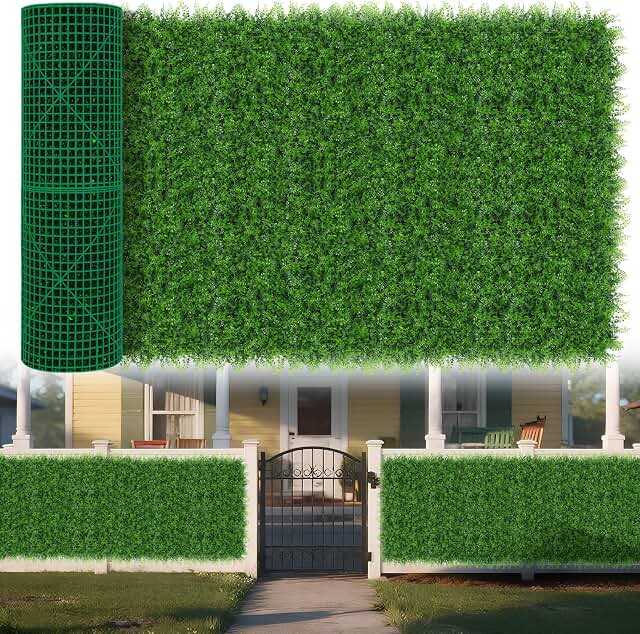
This artificial hedge panel spans 40 by 120 inches, covering about 33.33 square feet. It features 5-inch-tall faux leaves that deliver a realistic 3D effect when adjusted. The premium PE material is UV-resistant and designed to last, with flame-retardant properties and odor-free construction. Panels are lightweight and include convenient zip ties for easy DIY installation. The product is ideal for creating instant privacy screens, backdrops, or greenery accents on outdoor walls and indoor features that benefit from a low-maintenance, evergreen look.
Key considerations:
– Pros: immediate greenery with minimal upkeep, UV-resistant and durable, easy to install and trim.
– Cons: artificial greenery does not offer natural growth or ecological benefits.
– Best for: privacy screens, backdrops on decks, fences, and interior green walls lacking natural light.
BOXSAND-12 Vertical Wall Planter

This compact vertical wall planter supports 12 plants within a 23.5-inch by 25.5-inch frame and a shallow 5.5-inch depth. It is designed for indoor and outdoor use with durable ABS plastic resistant to rust and weather. The installation is straightforward, requiring only two screws that are included. The design allows for moving pots in and out easily, enabling quick refreshes of plantings and simple wall-mounted gardening in small spaces. It is well-suited for apartments, kitchens, or balconies where wall space is at a premium.
Key considerations:
– Pros: quick install, sturdy for outdoor use, easy plant swaps.
– Cons: limited palette of up to 12 plants; wall-mount strength matters for heavier pots.
– Best for: small patios, entryways, and indoor walls needing vertical greenery without a major footprint.
Buying Guide: Key Purchase Considerations For Outdoor Green Walls
When selecting an outdoor green wall system, consider space, plant type, water management, installation effort, and durability. Here are the main perspectives to guide your choice:
- Space and layout: Measure available wall area and determine whether a tall, slim system or a broad, collage-style panel best fits your site. Self-watering options tend to require a bit more wall depth.
- Water management: Self-watering or reservoir-based designs reduce irrigation frequency, important for busy households or locations with irrigation restrictions. Consider overflow protection and whether you prefer soil-based or hydroponic systems.
- Plant compatibility: For soil-based pockets, select plants that thrive with contained soil and consistent moisture. For hydroponic kits, leafy greens and herbs often perform well, while fruiting plants may require more space and nutrients.
- Durability and climate: Outdoor installations face sun, wind, and rain. UV-resistant components, weatherproof plastics, and corrosion-resistant materials extend life in harsh climates.
- Installation and maintenance: Some kits require minimal tools or two-screw installs, ideal for renters. Others are modular but demand more planning and periodic rearrangement of pockets or panels to maintain aesthetics.
- Aesthetics and privacy: Faux hedges provide instant greenery and privacy with minimal upkeep, while living walls offer genuine plant growth and seasonal variation.
- Maintenance plan: Consider accessibility for water topping, pruning, and soil or nutrient replenishment. Hydroponic systems may require pumps and timers; ensure power access and safety in outdoor areas.
- Budget and warranty: Compare initial costs, replacement parts, and the expected lifespan of panels, connections, and water components. Look for products with clear warranties and customer support.
Choosing the right outdoor green wall system depends on your goals—whether you want dense, living vegetation, a low-maintenance privacy screen, or a high-yield hydroponic setup for fresh herbs and vegetables. The options above cover a spectrum of space needs, water strategies, and installation styles, enabling a tailored approach to vertical gardening in American homes and apartments.