Maintaining a lush, weed-free lawn without harsh chemicals is a common goal for American homeowners. The following selections highlight organic and natural approach options that help prevent weed seed establishment and support a healthy, green lawn. Each product below is chosen for its relevance to organic lawn care and ease of use.
Summary of Selected Products
| Product | Brand | Type | Notes |
|---|---|---|---|
| Espoma Organic Weed Preventer Plus Lawn Food | Espoma | 100% Corn Gluten Meal-based preventer | Prevents weed seed establishment; organic nitrogen |
| Espoma Organic Turf-Tone Weed Preventer Plus Lawn Food | Espoma | 100% Corn Gluten Meal-based preventer | Prevents weeds; promotes deep green color |
| Preen Garden Weed Preventer | Preen | Pre-emergent weed preventer | Stops weeds before they start; safe around many plants |
| Scotts Halts Crabgrass & Grassy Weed Preventer | Scotts | Pre-emergent for lawns | Early-spring and fall applications; broad weed protection |
| ECO Garden PRO Organic Vinegar Weed Killer | ECO Garden PRO | Vinegar-based weed killer | Organic formula; quick-action for spot treatment |
Espoma Organic Weed Preventer Plus Lawn Food

Espoma’s Organic Weed Preventer Plus Lawn Food combines weed prevention with organic nitrogen delivery. It uses 100% corn gluten meal to help prevent weed seed establishment, including common lawn weeds like crabgrass and dandelions. The product aims to keep lawns a deep green color longer than conventional lawn foods, reducing the risk of nutrient deficiency while supporting a healthier turf. Application is recommended in early spring with a drop or broadcast spreader for best results. The formula emphasizes a natural approach with no sludges or toxic ingredients.
Espoma Organic Turf-Tone Weed Preventer Plus Lawn Food

Espoma’s Turf-Tone variant also relies on 100% corn gluten meal to disrupt weed seed establishment while supplying organic nitrogen. This product is designed to help maintain a deep green lawn color naturally, potentially reducing the need for synthetic fertilizers. Use in early spring and apply with either a drop or broadcast spreader. The formulation targets common lawn weeds and aligns with organic lawn-care goals, focusing on a balance between weed prevention and lawn nutrition.
Preen Garden Weed Preventer
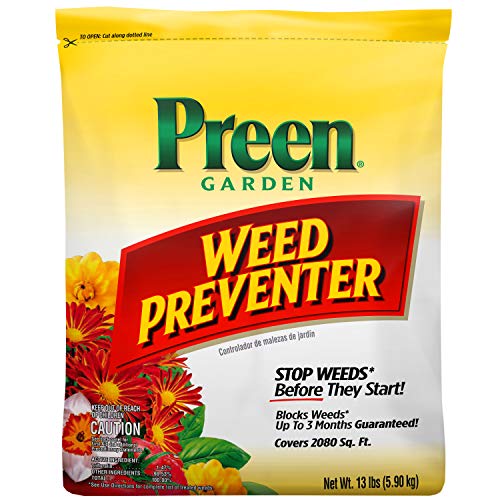
Preen Garden Weed Preventer is a classic pre-emergent option designed to stop weeds before they start, offering up to three months of protection. It’s marketed as safe for use around many established plants, including flowers, vegetables, trees, and shrubs when used according to instructions. It’s typically applied in spring, summer, or fall to create a barrier that reduces weed germination. For best results, follow the product’s guidance on spreading rate and coverage area to tailor application to your lawn’s size and plantings.
Scotts Halts Crabgrass & Grassy Weed Preventer

Scotts Halts is a widely used pre-emergent designed to prevent the germination of crabgrass and various grassy weeds. It also helps manage certain broadleaf weeds during the spring and fall in many climates. The product is intended for early-season application on a dry lawn and claims that rain or freezing weather after application will not affect performance. This option provides a straightforward, large-area solution for lawn weed prevention with a trusted brand reputation in American turf care.
ECO Garden PRO Organic Vinegar Weed Killer

ECO Garden PRO offers an organic vinegar-based weed killer designed for quick results. It is formulated as an herbicidal solution intended for spot treatment of weeds and grasses on lawns, driveways, and other areas. The product emphasizes pet- and kid-safety considerations alongside its organic composition. While it serves as a powerful option for targeted weed control, it is not a broad-spectrum pre-emergent and should be used as part of a broader lawn care plan that includes preventive measures and consistent mowing, fertilization, and irrigation practices.
Buying Guide: Key Purchase Considerations For Organic Lawn Weed Prevention And Control
- Weed prevention vs. weed killing: Distinguish products that prevent weed seeds from germinating from those that kill existing weeds. Pre-emergents are ideal for keeping new weeds out, while spot treatments or broader killers address established infestations.
- Active ingredients and source material: Look for products based on corn gluten meal or other organic, plant-derived components for a more natural approach. Ensure ingredients align with your lawn’s needs and any existing garden plans.
- Lawn type and climate: Some products are better suited to cool-season grasses common in American lawns, while others are formulated for warm-season grasses. Consider your local climate and seasonal timing for best results.
- Application timing and methods: Early spring is a common window for pre-emergents, but follow product instructions regarding spreaders, rates, and coverage to avoid stressing the lawn or harming desirable plants.
- Safety and compatibility: If you have pets, children, or garden beds nearby, prioritize formulations that are labeled as safe for use around these areas and follow all handling guidelines.
- Longevity and coverage: Some products offer multi-month protection, while others require more frequent re-application. Match the product’s duration with your lawn’s weed pressure and maintenance schedule.
- Organic certification and non-toxic credentials: For households prioritizing organic lawn care, verify that products carry credible certifications or clearly state organic ingredients and non-toxic claims.
- Combination use with fertilizer: Many weed preventers also provide lawn nutrition. Ensure the nitrogen source and application rates align with your fertilization plan to prevent over-fertilization and lawn burn.
- Environmental considerations: Prefer products with minimal environmental impact, avoiding sludges, synthetic binders, or harsh solvents. Consider the broader landscape impact when choosing a lawn care regimen.
- Cost and practicality: Compare price per bag and per square foot coverage, along with ease of application. Convenience factors like compatibility with common spreaders can influence long-term satisfaction.
In choosing an organic weed prevention strategy, homeowners should balance prevention efficacy with lawn health and safety. A combination approach—using a pre-emergent to curb seed germination, supported by regular mowing, proper irrigation, and organic lawn foods—often yields the best long-term results without relying on synthetic chemicals.