Maintaining a healthy, weed-free lawn often requires a balanced approach of organic weed prevention and soil-fed nourishment. This guide highlights top options that emphasize organic ingredients or sustainable lawn care while still delivering effective weed control and feeding. Below you’ll find five products that align with organic gardening principles and broad-spectrum weed management, plus a buying guide to help you choose the right fit for your lawn type and climate.
Summary of Selected Products
| Product | Brand | What It Does | Notes |
|---|---|---|---|
| Espoma Organic Weed Preventer Plus Lawn Food | Espoma | Prevents weed seed establishment; organic nitrogen for deep green color | Made from 100% corn gluten meal |
| Espoma Organic Turf-Tone Weed Preventer Plus Lawn Food | Espoma | Prevents weed seed establishment; organic nitrogen | 100% corn gluten meal formulation |
| GreenView Weed & Feed – 13 lb | Greenview | Kills common lawn weeds; ongoing feeding and soil health support | Contains multiple weed-control and feeding components |
| GreenView Weed & Feed – 7 lb | Greenview | Kills common lawn weeds; continuous feeding for 8 weeks | Smaller-lawn option; easy to apply |
| Scotts Turf Builder Weed & Feed3 | Scotts | Kills listed weeds; provides lawn fertilizer to thicken turf | Broad weed control; not organic |
Espoma Organic Weed Preventer Plus Lawn Food

Espoma’s Organic Weed Preventer Plus Lawn Food is formulated from 100% corn gluten meal, offering weed seed suppression with an organic nitrogen source. This product aims to prevent weed establishment in early spring while providing a steady, green color to the lawn. It avoids sludges or toxic ingredients and emphasizes organic lawn nutrition. Use is best aligned with cool-to-warm spring periods when weeds are actively germinating and new growth is starting. Application can be done with a drop or broadcast spreader and should follow the product’s recommended timing for optimal results.
Espoma Organic Turf-Tone Weed Preventer Plus Lawn Food
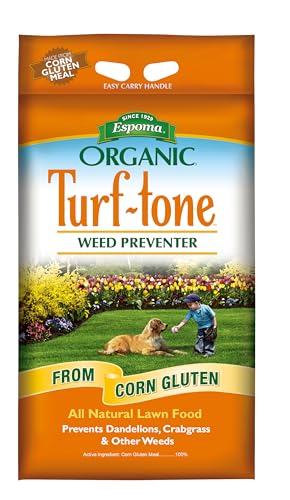
Espoma’s Turf-Tone variant also uses 100% corn gluten meal to help prevent weed seed establishment while supplying organic nitrogen for a deep green lawn. This option is designed for gardeners who prefer a green lawn without synthetic additives. Early spring application helps protect against common weeds like crabgrass and dandelions. Apply with a drop or broadcast spreader to distribute evenly across the target area.
Scotts Liquid Turf Builder With Plus 2 Weed Control

Scotts Liquid Turf Builder combines liquid fertilizer with a broad-spectrum weed killer, delivering a quick nitrogen boost for greening and targeted weed control for a range of broadleaf weeds. While effective for rapid results, this option is not labeled as organic. It is applied as a ready-to-spray solution when weeds are actively growing, enabling homeowners to respond quickly to emerging weed pressure. Consider compatibility with existing lawn care programs and weather conditions when applying.
GreenView Weed & Feed 13 lb
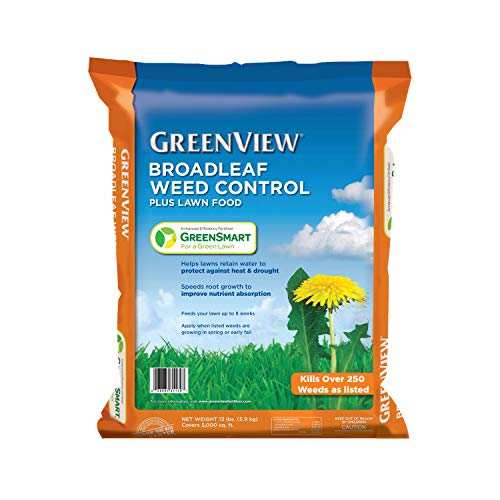
GreenView’s 13 lb Weed & Feed covers up to 5,000 sq. ft. and targets more than 250 common lawn weeds, including dandelions and clover. It combines weed control with consistent feeding to support lawn health during the growing season. The product emphasizes soil-restoration benefits and water retention to help lawns cope with heat and drought. It is a versatile choice for larger areas seeking a straightforward weed and feed approach.
GreenView Weed & Feed 7 lb

This smaller GreenView option provides a compact solution for mid-sized lawns. It kills over 250 common lawn weeds and offers up to eight weeks of continuous feeding. Its focus is on delivering ongoing nutrition while controlling broadleaf and grassy weeds, helping to maintain a robust, healthy lawn with reduced drought stress risk.
Buying Guide
Key purchase considerations
- Organicity and ingredients: If you prioritize organic lawn care, prioritize corn gluten-based products or labeled organic options. Verify ingredient lists and certifications where applicable.
- Lawn type and climate: Some products are formulated for Southern grasses or specific weed profiles. Match the product to your lawn type (Bermudagrass, St. Augustine, etc.) and local climate.
- Weed spectrum: Review the weeds listed on the label. Choose a product that targets your most prevalent weeds (dandelion, clover, crabgrass, etc.).
- Application timing and frequency: Spring applications are common for prevention products. Some formulations allow multiple applications per year; ensure you do not exceed recommended limits.
- Feeding duration and need for irrigation: Some organic products require activation or specific irrigation conditions. Others provide extended feeding with time-release components.
- Lawn size and coverage: Calculate your acreage to choose a bag size that minimizes waste and ensures even coverage.
- Environmental considerations: Consider pets, children, and water runoff safety as you select products and apply them.
Comparative considerations
- Organic vs. conventional: Organic options generally emphasize natural nitrogen sources and weed-prevention mechanisms, while conventional products may offer broader weed-kill potency and rapid results.
- Time to visible results: Liquid formulations often show faster greening and weed suppression, whereas granular products may deliver longer-lasting feeding and prevention.
- Seasonal suitability: Early spring and late summer applications address different weed life cycles; choose products with timing aligned to your local weed pressure.
- Soil health impact: Some products include soil-restoration or water-retention benefits that support drought resilience and turf vigor.