Potassium is a crucial nutrient that supports plant health, fruit development, and overall vigor. For American gardeners seeking organic and effective options, a variety of potassium sources are available in granular, powder, or liquid forms. The following selections highlight products that emphasize potassium delivery, soil compatibility, and safe use in organic systems. The choices below cover mineral sources, plant-based options, and water-soluble formats to fit different growing setups.
| Product | Key Potassium (K) | Form | Notes |
|---|---|---|---|
| Down To Earth Langbeinite (K-Mag) 0-0-22 | 22% K (as K2O) | Granular mineral | Contains potassium, magnesium, sulfate; low chlorine; neutral pH |
| Down To Earth SOP Powder 0-0-50 | 50% K2O | Powder (SOP) | Chloride-free, OMRI-listed for organic use; versatile for liquids or sprays |
| Espoma Alfalfa Meal 2-0-2 | 2% K | Meal (organic) | Natural nitrogen source with potassium; long-lasting soil amendment |
| The Grow Co Muriate Of Potash 0-0-60 | 60% K2O | Granular | High-potassium fertilizer for stronger blooms and fruiting |
| Organic SOP Potassium Sulfate 0-0-50 | 50% K2O | Powder | OMRI-listed; water-soluble; suitable for hydroponics and foliar feeding |
Down To Earth Langbeinite (K-Mag) 0-0-22

Langbeinite provides potassium, magnesium, and sulfur in a naturally mined mineral form. It delivers potassium in a water-soluble sulfate form, helping plants regulate internal processes and tissue development. With a chlorine content under 3.0 percent, this option minimizes fertilizer burn risk, while its neutral pH maintains soil activity. Ideal for ongoing plant health and steady nutrient supply in organic gardens.
Down To Earth SOP Powder 0-0-50
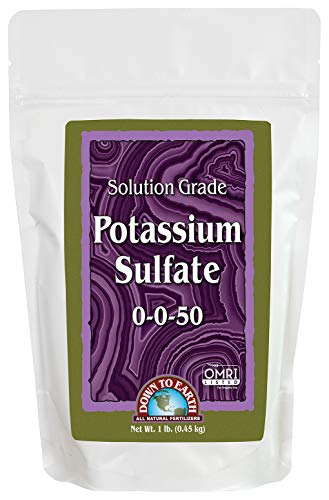
This professional-grade potassium sulfate delivers 50% soluble potash for improved flowering and fruiting. It is organic and OMRI-listed, making it suitable for certified organic production and edible crops. The chloride-free formula supports crops sensitive to chloride and promotes healthy soil biology, offering a reliable, high-potassium option for diverse plantings.
Espoma Alfalfa Meal Fertilizer 2-0-2

Alfalfa meal provides a natural source of nitrogen with a notable amount of potassium. This all-natural fertilizer supports long-lasting soil fertility and release of nutrients. It can be applied directly to the soil or used to make an alfalfa tea fertilizer. Suitable for roses, flowers, vegetables, trees, and shrubs in organic gardens seeking a multi-nutrient amendment.
The Grow Co Muriate Of Potash 0-0-60

This high-potassium fertilizer is derived from muriate of potash, offering a concentrated source of potassium to support carbohydrate metabolism and protein synthesis in plants. The 0-0-60 ratio aims to strengthen stems, improve fruiting, and enhance resilience to drought and stress. Packaged in a resealable pouch for convenient storage and use.
Organic Sulfate Of Potash 0-0-50

OMRI-listed sulfate of potash is a water-soluble, high-potassium fertilizer that supports crop color, texture, and flavor. This low-chlorine option is designed for quick uptake in hydroponics, fertigation, and foliar feeding, making it versatile for both soil and soilless systems in organic production.
Buying Guide: Potassium Sources For Organic Gardens
Choosing the right potassium source depends on your system, crop types, and soil conditions. Consider these factors to compare options effectively:
- Form and solubility: Granular minerals (like Langbeinite and Muriate of Potash) release potassium slowly, while sulfates and liquids offer faster uptake. For rapid foliar or hydroponic needs, water-soluble options are preferred.
- Chloride content: Chloride-rich fertilizers can cause burn in sensitive plants. If you grow chloride-sensitive crops, prioritize chloride-free formulas such as SOP or sulfate-based options.
- Organic certification: For organic gardens, ensure products are OMRI-listed or clearly labeled suitable for certified organic production. This helps maintain compliance with organic standards.
- Soil pH and texture: Neutral or balanced minerals work best in a wide range of soils. Highly alkaline or acidic soils may affect availability; test your soil to tailor potassium inputs accordingly.
- Crop-specific needs: Some plants require higher potassium during flowering or fruiting. Plan applications around growth stages to maximize yield and quality.
- Application method: Consider whether you need soil amendments, liquids for fertigation, or foliar sprays. Matching the product form to your irrigation setup saves time and improves uptake.
- Environmental considerations: Opt for formulations with low burn risk and minimal impact on beneficial soil microbes to maintain soil health in organic systems.
- Storage and handling: Some products come in resealable pouches or powder forms. Proper storage reduces caking and preserves efficacy over time.
In practice, a balanced approach often combines mineral sources for sustained release with soluble forms for peak uptake during critical growth stages. Always follow label directions and integrate soil tests to fine-tune potassium applications for optimal plant performance.