Gardening with organic pest sprays offers a practical path to protect your plants without synthetic chemicals. The following products are designed to control common garden pests and diseases while prioritizing safety for pollinators, pets, and people. This guide highlights five top choices with OMRI-listed or equivalent organic certification, ready-to-use or concentrate formulas, and broad-spectrum efficacy. Each product section provides key features to help you compare options for your garden, balcony, or indoor houseplants.
| Product | Brand | Format | Key Benefit |
|---|---|---|---|
| Earth’s Ally 3-in-1 Plant Spray (32 oz) | Earth’s Ally | Ready-to-use | Insecticide, Miticide, Fungicide |
| Organic Laboratories Organocide 3-in-1 Garden Spray | Organic Laboratories | Ready-to-use | Insecticide, Fungicide, Miticide |
| Monterey Garden Insect Spray (32 oz) | Monterey | Ready-to-use | Broad insect control |
| Bonide Insecticidal Soap (32 oz) | Bonide | Ready-to-use | Soap-based insect control |
| Earth’s Ally 3-in-1 Plant Spray Concentrate (6 gallons) | Earth’s Ally | Concentrate | Insecticide, Fungicide, Miticide |
Earth’s Ally 3-in-1 Plant Spray (32 oz)

Earth’s Ally 3-in-1 Plant Spray provides a ready-to-use solution that combines insecticidal, miticidal, and fungicidal action. The formula relies on a synergistic blend of botanical oils to target common soft-bodied insects such as spider mites, aphids, whiteflies, and more. It also helps suppress diseases like powdery mildew and various leaf spots. The product is designed to be safe for pollinators, kids, and pets when used as directed, making it a versatile option for both indoor houseplants and outdoor gardens.
Its 32-ounce bottle offers convenience for regular applications across a growing season. The spray is especially suitable for home gardeners seeking a dual-action approach—curbing pests while preventing common plant diseases. The essential oil blend is a noteworthy feature for those preferring natural ingredients without harsh synthetic pesticides.
Organic Laboratories Organocide 3-in-1 Garden Spray

Organocide is positioned as a nature-safe option that functions as an insecticide, fungicide, and miticide. It is designed for use on a wide range of insects and mites while minimizing environmental impact. The product is marketed as safe for use during harvest and indoors, with no re-entry time required, which can be advantageous for indoor plants or quick garden refreshes. It is EPA exempt in some classifications, aligning with organic gardening standards in many regions.
The multi-purpose approach makes Organocide appealing for gardeners who want a single product to address multiple threats. Users should consider coverage needs and compatibility with edible crops, as well as any sensitivities to essential oil components when applying around pollinators.
Monterey Garden Insect Spray (32 oz)

Monterey Garden Insect Spray uses Spinosad, a naturally occurring bacterium, to deliver fast-acting insect control. It is effective against a broad range of pests including caterpillars, leafminers, codling moths, gypsy moths, thrips, borers, and more. The product is OMRI-listed for organic gardening, supporting its suitability for organic setups. It is designed for outdoor use and is known for its quick knockdown of targeted insects without widespread residue concerns.
Spinosad-based sprays tend to be well-tolerated on many flowering plants, though growers should monitor for any potential effects on pollinators during application windows. The ready-to-use format simplifies on-site use, especially for larger outdoor spaces or containers where rapid action is desired.
Bonide Insecticidal Soap (32 oz)
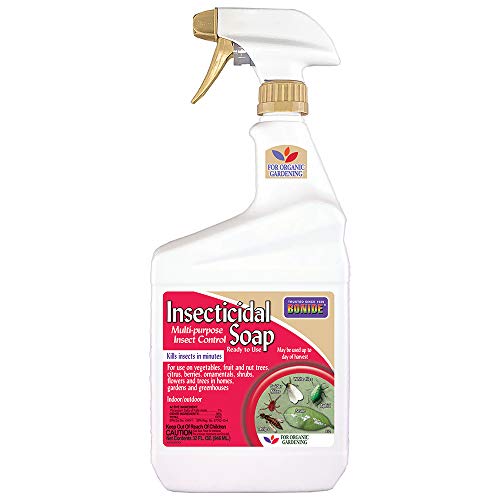
Bonide Insecticidal Soap is a versatile, direct-contact insect control option suitable for many outdoor and indoor applications. It is designed to target species such as aphids, spider mites, whiteflies, and other soft-bodied insects by disrupting their cell membranes. The product is well-suited for systemic use on a variety of ornamentals, vegetables, and herbs, and is commonly used in urban and residential settings. It can be effective as both a preventative spray and a response treatment for existing infestations.
As a soap-based product, performance depends on thorough coverage of the leaf undersides and stems. Users should avoid spraying during peak sun to reduce the risk of leaf burn on sensitive plants. It is a popular choice for gardeners seeking an economical, non-persistent option with broad utility across plant types.
Earth’s Ally 3-in-1 Concentrate (6 gallons)

The concentrate version extends coverage significantly, producing up to six gallons of multi-purpose pest and fungus spray. Like the ready-to-use version, it functions as an insecticide, miticide, and fungicide, leveraging botanical oils for pest mortality and disease suppression. Concentrates are typically favored by larger gardens or households with frequent spray needs, offering a cost-per-use advantage when properly diluted according to instructions.
Concentrates require accurate dilution and thorough mixing to ensure efficacy and safety. This option is compatible with indoor houseplants and outdoor gardens alike, provided the label directions are followed. It is a practical alternative for sustainable pest management across seasons while supporting bees, kids, and pets when used as directed.
Buying Guide: Key Purchase Considerations and Comparisons
- Active ingredients and modes of action: Organic pest sprays use botanical oils, soap bases, or naturally derived compounds. Consider whether you need broad-spectrum control or targeted action against specific pests or diseases. A 3-in-1 product may save time but ensure it covers your primary threats.
- OMRI listing and organic compatibility: If you garden with organic certification in mind, verify OMRI or equivalent certification. This helps ensure suitability for edible crops and aligns with regional organic standards.
- Format and coverage: Ready-to-use sprays are convenient, while concentrates offer lower long-term cost and larger coverage per bottle. Factor garden size, plant density, and spraying frequency into your decision.
- Safety and horticultural tolerance: Check labeled safety for pollinators, kids, and pets. Some formulations may require application timing to minimize impacts on beneficial insects or blooming plants.
- Plant compatibility and crop type: Some products are designed for ornamentals, while others are suitable for vegetables, fruits, or herbs. Always check the product label for crop-specific guidance and any harvest interval notes.
- Environmental considerations: Look for products that minimize environmental impact, such as reduced residue, low toxicity to non-target organisms, and biodegradable components where possible.
- Ease of use and pacing: Consider whether the spray requires shaking, mixing, or re-entry restrictions. Ease of application improves adherence to spray schedules and overall effectiveness.
- Resistance management: Rotating products with different active ingredients can help prevent pest resistance. The combination of insecticidal, miticidal, and fungicidal actions in one product can support integrated pest management when used judiciously.