For farmers seeking organic, label-compliant weed control, choosing the right herbicide can boost yields while meeting sustainability goals. The following selections emphasize OMRI listings, plant-friendly ingredients, and non-toxic profiles suitable for outdoor and indoor use where applicable. Each product below is packaged to address common pasture, field, and garden weed challenges with minimal environmental impact.
| Product | Brand |
|---|---|
| Dr. Earth Final Stop Ready-to-Use Organic Herbicide – 1 Gallon | Dr. Earth |
| Sunday Weed Warrior, 32oz, 2 Pack | SUNDAY |
| Finalsan Organic Herbicide Total Vegetation and Weed Killer Concentrate | Finalsan |
| 128 oz Organic Weed Killer Herbicide Concentrated | Avenger Weed Killer Inc. |
| Energen Carolina Vinegar Weed & Grass Killer (Gallon) | Energen Carolina LLC |
Dr. Earth Final Stop Ready-to-Use Organic Herbicide

Dr. Earth Final Stop is an OMRI-listed, glyphosate-free non-selective herbicide designed for both indoor and outdoor use. It relies on essential oils to kill weeds and grasses on contact, offering a natural alternative to chemical sprays. The product is suitable for garden beds, pathways, and around structures where weed suppression is required without persistent residues. The ready-to-use formulation simplifies application and reduces the need for mixing. Benefits include a safer profile for people and pets when used as directed and compatibility with organic gardening standards.
Sunday Weed Warrior Organic Weed Killer Spray

Sunday Weed Warrior delivers a fast-acting organic weed and grass killer as a fatty-acid-based herbicidal soap. It dehydrates leafy growth on contact, making it effective for spot treatments on lawns, driveways, and around ornamentals. This product emphasizes ease of use with a spray action that targets undesirable vegetation without relying on harsh chemical solvents. It is positioned as a greener option for households seeking a less aggressive approach to weed management while maintaining performance on common weeds, grasses, and certain non-crop targets.
Finalsan Organic Herbicide Total Vegetation and Weed Killer
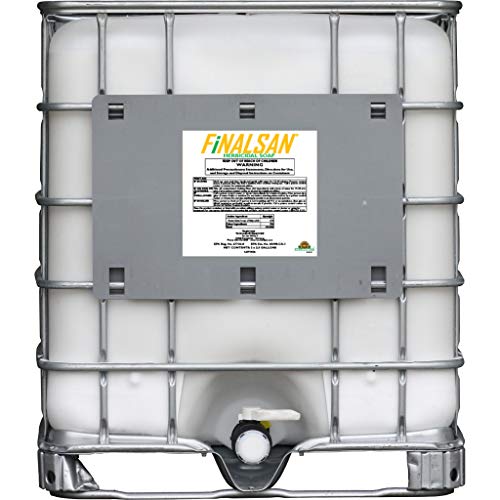
Finalsan Organic Herbicide provides total vegetation and weed control with a fast-acting, non-staining formulation. Marketed as a Roundup glyphosate alternative, it emphasizes non-selective burn-down activity that works across a range of temperatures. It targets grasses, broadleaf weeds, moss, and algae, enabling broad-spectrum suppression where non-crop vegetation is a priority. Farmers may appreciate its reported quick results and flexibility for different seasonal conditions, though, as with all non-selective products, care is needed to protect desired plants and nearby ornamental features.
128 oz Organic Weed Killer Concentrated

This concentrate by Avenger Weed Killer Inc. is marketed as a natural, safe organic herbicide option. It emphasizes environmental friendliness, biodegradability, and safety around humans and pets when used as directed. The concentrate form allows farmers to tailor dilution rates to specific weed pressures, potentially reducing application volume while maintaining efficacy. It aligns with organic farming principles by avoiding synthetic residues and prioritizing a gentler approach to weed suppression in fields, orchards, or garden plots.
Energen Carolina Vinegar Weed & Grass Killer
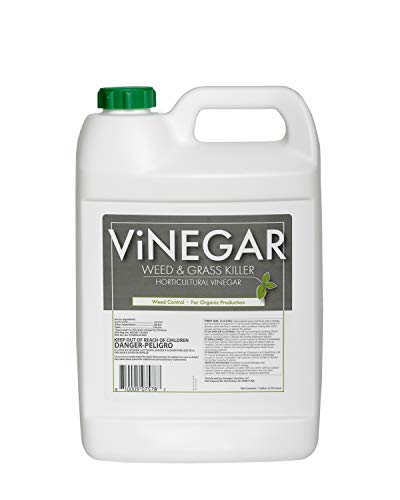
Energen Carolina Vinegar Weed & Grass Killer is a gallon-size, vinegar-based herbicide that offers quick, non-selective contact weed control. It targets common lawn and non-crop weeds like crabgrass, dandelions, and clover, and is designed for both residential and agricultural applications. The product emphasizes safety after drying, allowing pets and children to re-enter treated areas once the solution has fully evaporated. It is well-suited for driveways, sidewalks, mulched beds, and other hard-to-reach weed hotspots where a fast-acting, non-toxic approach is desirable.
Buying Guide: Key Purchase Considerations for Organic Weed Control
- Active ingredients and mode of action
- Non-selective contact herbicides (e.g., vinegar-based or fatty-acid soaps) provide rapid knockdown but may require reapplication for new growth. These are generally safest for surrounding plantings when used as directed.
- Essential-oil or plant-based formulations aim to minimize synthetic inputs but may vary in speed and duration of control. Consider target weed species and lifecycle (annual vs. perennial) when selecting.
- Organic certification and compliance
- Check OMRI or equivalent listings to ensure compatibility with organic farming practices and local agricultural regulations.
- Some products are suitable for indoor use, while others are intended primarily for outdoor environments; verify label directions for your operation’s needs.
- Target weeds and use sites
- Determine whether you need broad-spectrum control (fields, rights-of-way) or spot treatment (paths, around crops, edges). Some products are better for hard surfaces, while others are designed for soil contact and root zone suppression.
- Consider the presence of desirable vegetation and potential drift. Non-selective herbicides require careful application to avoid collateral damage.
- Safety and environmental impact
- Glyphosate-free options are popular among organic producers and urban farmers seeking lower risk profiles. Always follow label directions to protect workers, wildlife, and water sources.
- Biodegradability and residue concerns vary by product; some may leave surface residues longer than others. Plan timing around harvests and pollinator activity where relevant.
- Application method and coverage
- Ready-to-use sprays offer convenience for spot treatments, while concentrates require dilution and equipment but may be more economical for large areas.
- Consider handheld sprayers for small plots and backpack or tow-behind sprayers for larger fields to ensure even coverage and minimize drift.
- Re-entry intervals and compatibility
- Some organic herbicides permit quick re-entry after application; others require drying times to minimize exposure. Align with worker safety protocols and local labor regulations.
- Cross-compatibility with soil health practices, cover crops, and integrated weed management plans should be considered for long-term efficacy.
Organic weed control is most effective when integrated with mechanical weeding, mulching, crop rotation, and proper irrigation management. By assessing weed pressure, site conditions, and harvest cycles, farmers can select a product that complements their overall sustainable farming strategy while meeting regulatory standards.