Organic chicken manure fertilizer products provide natural nutrients to flowers, vegetables, trees, and shrubs. This guide highlights top options, their uses, and practical tips for applying them to improve soil health, aeration, and moisture retention without synthetic additives. Read on to compare the features, application methods, and benefits of each product to support sustainable, productive gardening.
| Product | Brand | Size | Key Benefit |
|---|---|---|---|
| Espoma Organic Chicken Manure 25 lb. Bag | Espoma Store | 25 lb | Granulated, ready-to-use 5-3-2 with 8% calcium; versatile for flowers, vegetables, trees, shrubs |
| Espoma Organic Chicken Manure 3.75 lb | Espoma Store | 3.75 lb | Smaller bag; same formulation and usage as 25 lb option |
| True Organic Chicken Manure | True Organic Store | Varies | Improves soil health, microbial activity, and moisture retention; balanced nutrient profile |
| Espoma Organic Chicken Manure 25 lb. Bag (2 Pack) | Espoma Store | 2 x 25 lb | Two-bag value with same 5-3-2 analysis and easy application |
| Coop Gro Organic Chicken Manure Fertilizer 6 lb | COOP GRO Store | 6 lb | OMRI certified, 3-3-4 with 27% carbon; compact pelleted formula for easy feeding |
Espoma Organic Chicken Manure 25 lb. Bag

Espoma Organic Chicken Manure 25 lb. bag offers a natural, dehydrated and granulated formulation that simplifies garden feeding. The product is designed for use on a wide range of plants, including annuals, perennials, roses, vegetables, trees, and shrubs. It features a 5-3-2 fertilizer analysis with 8% calcium, ensuring essential nutrients without additives. The recommended schedule blends spring and fall applications for trees and shrubs, with monthly feeding for roses, flowers, and vegetables during the growing season. Apply around the drip line, then water to activate.
Key considerations include environmental safety, absence of sludges or toxic ingredients, and convenience of ready-to-use granules. This option supports sustained nutrient release and helps improve soil structure over time. It is suitable for typical home gardens and landscapes seeking organic inputs with predictable results.
Espoma Organic Chicken Manure 3.75 lb

The 3.75 lb version delivers the same organic chicken manure formula in a smaller package, ideal for gardeners with limited space or targeted feeding needs. It shares the same use cases as the larger bag—flowers, vegetables, trees, and shrubs—with no additives, dehydration, and granulation to facilitate easy application. Its 5-3-2 analysis and 8% calcium support robust growth while maintaining soil health. Use guidance mirrors the larger bag: spring and fall applications for trees and shrubs, and monthly feeding for seasonal crops and flowers.
Consider this option when testing organic soil responses on a smaller scale or when evaluating performance before committing to larger quantities. The product’s ready-to-use granules simplify incorporation into existing beds and container plantings without complex mixing.
True Organic Chicken Manure

True Organic Chicken Manure emphasizes soil health and microbial activity, promoting a fertile environment for healthier, more productive plants. Its nutrient profile includes a balanced mix: 3% nitrogen (split between water-soluble and slow-release), 3% phosphate, 2% potash, and calcium. By enhancing soil structure, aeration, and drainage, it helps retain moisture and resist erosion. This option is suitable for a broad array of planting scenarios—from vegetable gardens to ornamental beds—where soil vitality is a primary goal.
Users may appreciate the focus on microbial ecosystems and moisture management, especially in climates with variable rainfall. The product supports long-term soil improvement beyond immediate nutrient supplementation, aligning with sustainable gardening practices.
Espoma Organic Chicken Manure 25 lb. Bag (2 Pack)
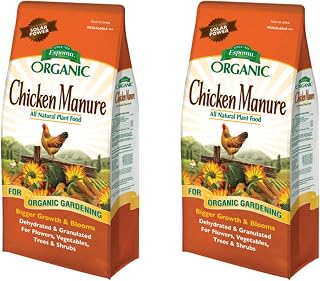
This two-pack option mirrors the 25 lb bag’s full formulation, offering added value for gardeners managing larger plots or multiple beds. The product remains ready to use, with no mixing required, and provides the same 5-3-2 analysis and 8% calcium. It is appropriate for use on a wide spectrum of plants, including flowers, vegetables, trees, and shrubs. Regular spring and fall applications to woody plants and monthly feeding for annual crops support steady growth throughout the season.
Two-bag purchases can streamline ongoing feeding routines and ensure consistent nutrient supply for year-round gardening projects. The packaging is designed to minimize handling while delivering reliable performance in organic landscapes.
Coop Gro Organic Chicken Manure Fertilizer 6 lb

Coop Gro’s 6 lb bag offers a compact, pelleted formula designed for easy feeding across diverse garden settings. The 3-3-4 analysis, combined with 27% carbon, supports healthy soil structure, improved water retention, and robust plant growth. OMRI certified for organic vegetable production, it is suitable for vegetable gardens, flower beds, potted plants, raised beds, trees, and shrubs. The formulation is designed to be safe for households, with relatively low odor and convenient handling for everyday gardeners.
Key attributes include its lightweight packaging, pet- and child-friendly safety claims, and a focus on holistic soil improvement through organic inputs. It is well-suited for gardeners prioritizing sustainability while maintaining reliable nourishment for a variety of crops and ornamentals.
Buying Guide
- Soil needs and crop types: Choose a product with a nutrient profile that aligns with your plants’ growth phase and soil test results. For heavy feeders like tomatoes and roses, a balanced 5-3-2 or similar ratio supports steady vigor.
- Form and ease of use: Granulated and pelleted fertilizers are typically easier to apply around drip lines and in containers. Pre-measured sizes reduce guesswork for small and large beds alike.
- Soil health and microbiology: Some formulas emphasize microbial activity and soil structure as a long-term benefit, beneficial for clay or sandy soils prone to compaction or drainage issues.
- OMRI and organic certification: For organic gardeners, look for OMRI-listed products to ensure compatibility with organic growing practices.
- Application timing: Spring and fall applications support woody plant growth, while monthly feeding suits annuals, vegetables, and flowering perennials through the growing season.
- Environmental safety: Prioritize products with no sludges, toxins, or unwanted additives. Natural, heat-treated compost derivatives typically present fewer risks in home gardens.
- Storage and packaging: Consider bags or bundles that fit your space and storage conditions, ensuring product freshness and ease of transport to garden beds.