Organic bed bug control options offer a safer alternative to traditional chemical pesticides. This guide highlights five practical products that target bed bugs at various life stages, with attention to safety for families and pets. Each pick is evaluated for who it’s best for, how it works, and practical limitations. Use this overview to decide which solution fits your infestation level and living space.
| Product | Best For | Why It Stands Out |
|---|---|---|
| EcoVenger Bed Bug Killer 16 oz | Homes prioritizing plant-based, non-toxic formulations | USDA-certified, kills all stages including resistant bed bugs and eggs |
| Safer Home Diatomaceous Earth 4 lb | Budget-conscious, indoor/outdoor use, non-chemical control | Dehydrates pests on contact; broad indoor-outdoor coverage |
| Ortho Home Defense Max Bed Bug, Flea & Tick Killer | Spot treatments for mattresses, frames, baseboards | Effective on contact; tackles eggs and pyrethroid-resistant bed bugs |
| GoneNaturally Bed Bug Spray (16 oz) | Immediate, scentless treatment for bedding and upholstery | Plant-based, fast-acting, versatile for mattresses and furniture |
| MaxGuard Bed Bug Traps (24 traps) | Early detection and monitoring | Non-toxic, adhesive traps with timed-release attractant |
Buyer intent: If you want ongoing, non-toxic protection, consider combination use (traps + spray/dehydrant). For quick impact without harsh chemicals, start with a plant-based killer or diatomaceous earth. If you’re monitoring a suspected infestation, add traps to confirm bed bug activity before deeper treatment.
EcoVenger Bed Bug Killer 16 oz – Plant-Powered Defense
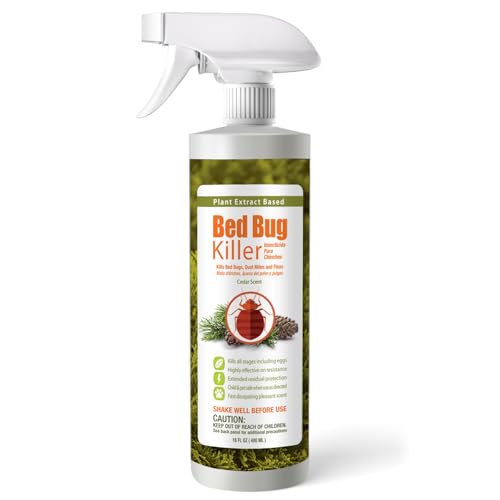
Best for households seeking a plant-based, non-toxic solution with proven efficacy. This bed bug killer uses a patented botanical blend and is field-tested by the USDA, aiming to kill adults, nymphs, and eggs on contact. It is especially suitable for sensitive environments such as public housing or homes with children and pets. A notable consideration is that true performance depends on thorough coverage and repeated applications in infested areas.
Who it’s best for: Homes prioritizing organic and non-toxic ingredients, especially where vulnerable occupants are present. Why selected: It earned recognition in university studies for natural efficacy and carries USDA field-testing credentials, signaling reliability in sensitive settings.
Caution: Although highly effective, ensure complete application across bed frames, seams, and hiding spots. Avoid over-reliance on a single application for severe infestations, and follow label directions for safe use around children and pets.
Safer Home Diatomaceous Earth 4 lb – Non-Chemical Bed Bug Control

Best for DIYers seeking a chemical-free approach that dehydrates pests. Diatomaceous earth works by abrading the exoskeleton of bed bugs and other insects, leading to dehydration. It is versatile for indoor cracks, crevices, baseboards, and can be used in conjunction with other methods for a broader control strategy. The main limitation is that effectiveness depends on consistent contact and clean, dry application.
Who it’s best for: Homeowners wanting a budget-friendly, non-toxic option. Why selected: DE is a time-tested, broad-spectrum desiccant that works without chemical residues, aligning with eco-conscious preferences.
Caution: Avoid windy or dusty environments during application to minimize inhalation risk. Re-application after cleaning or moisture exposure is often necessary for ongoing protection.
Ortho Home Defense Max Bed Bug, Flea & Tick Killer

Best for targeted, on-contact control around beds, frames, baseboards, and mattress seams. This Ready-to-Use spray is designed to kill bed bugs and their eggs, including pyrethroid-resistant strains, offering a practical option for immediate hotspots. Use this method as a spot treatment rather than whole-room fumigation for best results. A limitation is that repeated treatments may be necessary in active infestations.
Who it’s best for: Homeowners needing quick, localized relief from bed bugs and their eggs. Why selected: It combines efficacy against resistant bed bugs with convenient spot-treatment applications for everyday use.
Caution: Avoid overapplication on fabrics that may saturate and cause staining. Always follow surface suitability guidelines on the label and test a small area first.
GoneNaturally Bed Bug Spray – Scentless, Quick-Acting

Better for immediate, scent-free treatment of bedding, furniture joints, and crevices. GoneNaturally uses plant-based ingredients to kill bed bugs on contact without harsh chemical residues. It also doubles as a broader pest control spray for fleas, ticks, and dust mites, offering versatility for homes with pets and kids. The product’s non-toxic profile is its standout feature, though it may require repeated applications in active infestations.
Who it’s best for: Households needing a scent-free, multi-purpose spray with a focus on safety. Why selected: The formula emphasizes non-toxic, plant-based active ingredients and rapid contact-kill action.
Caution: While effective on contact, it may not provide long-lasting residual protection alone. Pair with traps or barrier methods for ongoing defense.
MaxGuard Bed Bug Traps (24 traps) – Early Detection

Best for monitoring and early detection of bed bugs before they spread. These traps use a timed-release attractant to lure bed bugs and capture them on a sticky surface. They are non-toxic and safe for use around households, making them a proactive tool for homeowners who want to verify activity and track movement. The limitation is that traps alone do not eliminate an established infestation; they are most effective as part of a broader integrated pest management plan.
Who it’s best for: People who want to confirm bed bug activity and guide treatment with data. Why selected: Traps provide ongoing insight into pest presence without chemicals and can help shorten a larger control plan.
Caution: Traps require proper placement and regular checking. They should be used alongside other measures for comprehensive control.
Buying Guide: Practical Considerations For Organic Bed Bug Control
What level of infestation are you dealing with?
For light infestations or prevention, non-toxic options like diatomaceous earth and traps can be effective. For moderate to heavy infestations, a combination of plant-based killers and targeted spot treatments is often necessary.
Is safety a priority?
If children, pets, or sensitive individuals are present, prioritize products labeled non-toxic or plant-based. Always read labels to understand safe application areas and required contact times.
Do you need ongoing monitoring?
Traps offer continuous monitoring and can help detect re-infestation early. Pair traps with periodic treatments for best results.
How should you apply these products?
Spot treatments should focus on seams, mattress edges, bed frames, and baseboards. Diatomaceous earth requires dry conditions and thorough distribution in cracks and crevices. Traps should be placed under beds, along walls, and near suspected entry points.
What combination works best?
A practical approach combines a plant-based killer for immediate kill, diatomaceous earth for residual desiccation, and traps for monitoring. This multi-pronged strategy reduces reliance on any single method and lowers the chance of reinfestation.
FAQ
- What is the safest organic bed bug control product for homes with kids?
- Can diatomaceous earth be used around pets?
- Do bed bug traps eliminate infestations?
- How often should I reapply organic bed bug products?
- Are there risks with non-toxic bed bug sprays?
- What is the best first step for a suspected bed bug problem?
Plant-based options labeled as non-toxic or USDA-certified are typically the safest for homes with children. Always follow label directions and use as part of a broader plan.
Yes, but ensure it is the food-grade variety and apply in dry areas inaccessible to pets to avoid inhalation.
No. Traps detect and monitor activity. They should be used with other treatment methods to eradicate bed bugs.
Reapplication frequency depends on the product and infestation level. Follow the product label and assess persistence after cleaning or vacuuming.
Non-toxic does not mean risk-free. Some ingredients can cause irritation. Use in well-ventilated areas and avoid direct skin contact with concentrated formulations.
Start with a monitoring plan (traps) and a non-toxic killer or DE in crack-and-crevice zones. If signs persist, escalate to targeted spot treatments and consider professional evaluation.