Find the right organic African violet soil to support vibrant blooms and strong roots. This guide helps buyers choose soil mixes tailored for Saintpaulia and other indoor flowering plants. The top picks below are best for indoor growers, starting new plants, or transplanting into fresh pots. Each option highlights who it’s best for, why it was selected, and a practical caution to consider when planning a soil change.
Summary table of selected products:
| Product | Best For | Why It Stands Out |
|---|---|---|
| Espoma Organic Premium Potting Soil Mix for African Violets | New and transplanting violets | Rich blend with sphagnum peat, humus, perlite, yucca extract; promotes healthy growth and flowering |
| Midwest Hearth African Violet Natural Potting Soil Mix | Ready-to-use professional-style mix | Promotes root growth with good aeration; USA-made |
| Doter Organic African Violet Potting Mix | Fine-textured, nutrient-rich soil | Slightly acidic pH, blends peat, perlite, barks for light texture |
| Hoffman Organic African Violet Soil Mix | All types of African Violets | Light, loose texture to encourage foliage and blooms |
| Leaves and Soul Premium African Violet Plant Soil | Indoor flowering plants variety | Ready-to-use blend designed for optimum drainage and nutrient availability |
Espoma Organic Premium Potting Soil Mix for African Violets
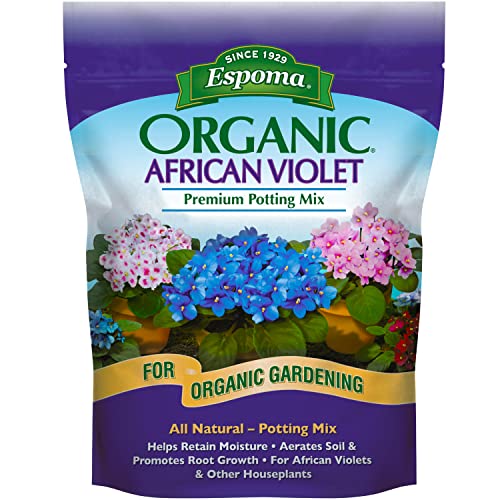
Best for starting a violet or transplanting into a larger container. This organic potting soil mix is formulated for all African Violets and indoor flowering houseplants. It blends sphagnum peat moss, humus, perlite, and yucca extract to support healthy growth and flowering. The blend helps with root development and moisture management, reducing the risk of root rot in damp conditions.
Who it’s best for: beginner and intermediate violet growers who want a straightforward, ready-to-use organic mix that promotes lush foliage and regular blooming. It’s also suitable for new plantings in organic gardens or indoor setups seeking consistent performance.
Caution: Because it’s peat-based, avoid over-watering. Use proper drainage in containers to prevent waterlogging, especially in compact pots.
Espoma Organic Premium Potting Soil Mix (Second Listing)
This version reiterates the same use-case: for all African Violets and indoor flowering houseplants. It’s ideal for gardeners who want a consistent, organic medium that supports root health and steady flowering. The included peat-based mix with yucca extract aids moisture retention while maintaining good aeration.
Who it’s best for: growers who may reuse or stock up, preferring a known organic brand with consistent texture across batches. Suitable for starting new violets or repotting into a larger pot.
Caution: In very dry climates, you may need to water more frequently to prevent the medium from drying out too quickly, since organic mixes can vary in moisture retention with temperature and humidity.
Midwest Hearth African Violet Natural Potting Soil Mix

Best for professional-style indoor violet care, this mix is ready to use with the same formulation used by professionals. It promotes robust root growth through proper aeration and moisture control. The blend includes peat moss, perlite, and vermiculite to optimize drainage and water retention for flowering plants.
Who it’s best for: serious hobbyists or small indoor greenhouses wanting a consistent, ready-to-use soil that supports large blooms and strong stems. It’s also a good choice for those who value US-made products.
Caution: Some users may prefer a more organic-certified blend; verify certifications if you require 100% organic labeling for compliance or personal preference.
Doter Organic African Violet Potting Mix

Best for slight acidity and fine-textured ingredients that support healthy root growth. This mix uses peat moss, perlite, and barks to create a light, airy texture that enhances moisture management and rooting for African Violets and other Saintpaulia varieties.
Who it’s best for: growers who want a slightly acidic medium that aids nutrient uptake and bloom production. It’s a solid option for containers that require precise moisture management.
Caution: If you tend to over-water, this mix’s texture can hold more moisture; ensure drainage is adequate to prevent root issues.
Hoffman Organic African Violet Soil Mix

Best for all African Violets with a light and loose texture that encourages foliage development and blooms. The mix aims to provide an optimum growing medium with good drainage and aeration, reducing compaction and promoting healthy root systems.
Who it’s best for: gardeners seeking a straightforward, lightweight organic option that focuses on long-term root health and steady flowering. Might be preferred by those who favor Hoffman’s brand familiarity.
Caution: Some violet varieties may prefer slightly more acidic mixes; if your violets show slower growth, consider testing pH and adjusting with a milder amendment.
Leaves and Soul Premium African Violet Plant Soil

Best for indoor flowering plants, this premium all-purpose blend balances drainage and moisture for consistent growth. Its peat moss, coco coir, perlite, and dolomite composition aims to support nutrient uptake and root health, enhancing blooming potential across Saintpaulia and related varieties.
Who it’s best for: indoor growers who want a versatile soil that works well with a range of flowering plants beyond violets, with reliable drainage and moisture balance. It’s suitable for small to medium pots in living rooms or sunrooms.
Caution: The mix might be heavier than some violet-specific blends; ensure pots have adequate drainage to prevent standing water in denser batches.
Buying Guide: Key Considerations For Organic African Violet Soil
Choosing the right soil involves balancing texture, pH, drainage, and nutrient availability. Below are practical considerations to help buyers compare options and pick what fits their violets best.
- Texture and aeration: African Violets prefer light, fluffy media that allow air to reach roots. Look for peat-based blends with perlite or vermiculite for improved aeration.
- Moisture management: Potting mixes should retain some moisture without becoming soggy. Coir and vermiculite can improve moisture retention, while perlite aids drainage.
- pH suitability: Violets thrive in slightly acidic to neutral conditions. A mix with a pH around 6.0–6.5 supports nutrient uptake for blooms and foliage.
- Organic vs. non-organic: Organic blends reduce synthetic inputs and may appeal to organic gardeners. Check labeling for certifications if required.
- Container and potting strategy: For smaller pots, choose a lighter mix to prevent compaction. For larger containers, ensure the blend remains well-draining yet moisture-retentive.
- Longevity and reuse: Some mixes are designed for single-use repotting, while others may be suited for multiple transplant cycles. Consider how often you repot violets in your setup.
Comparison At-a-Glance
- Best for beginners: Espoma Organic Premium Potting Soil Mix for African Violets — simple, ready-to-use, promotes flowering.
- Best for professional-like results: Midwest Hearth African Violet Natural Potting Soil Mix — consistent texture and drainage, USA-made.
- Best for slightly acidic preference: Doter Organic African Violet Potting Mix — fine texture and targeted pH support.
- Best for all African Violet varieties: Hoffman Organic African Violet Soil Mix — light, loose, good foliage and blooms.
- Best for versatility: Leaves and Soul Premium African Violet Plant Soil — works with other indoor flowering plants and emphasizes drainage and nutrients.
FAQ: Quick Answers For Buyers
- What soil is best for African Violets?
A light, fluffy, peat-based mix with perlite or vermiculite provides good aeration and moisture control for most violets. - Should I use organic soil for African Violets?
Organic blends reduce synthetic inputs and often improve moisture retention; verify labeling for certification if needed. - Can I reuse soil from previous violet plantings?
It’s best to refresh pots with fresh organic mix during repotting to avoid soil-borne issues and ensure adequate drainage. - What pH should African Violet soil have?
A slightly acidic pH around 6.0 to 6.5 supports nutrient uptake and flowering. - How much drainage do violets need?
They prefer well-drained media; ensure pots have drainage holes and use aggregates like perlite to prevent waterlogging. - Is there a risk with peat-based mixes?
Peat-based media can retain moisture; monitor watering to prevent root rot in cooler or humid spaces.