Answering the common question “which oat and pea forage mix should I choose?” this guide highlights durable, nitrogen-fixing blends that improve soil health while offering forage value. These mixes are best suited for home gardeners, small farms, and no-till setups looking to build organic matter, support beneficial soil life, and prep beds for future crops. Each product below is selected for its seed quality, growth habit, and suitability across typical cool-season climates.
Summary Table
| Product | Best For | Why Pick | Limitations |
|---|---|---|---|
| Pea and Oat Cover Crop Seeds – CZ Grain | Gardeners and small farms | Fast growth; nitrogen contributor; winterkill if not reseeded in some zones | Winterkill in colder areas if oats don’t reseed |
| Organic Oat and Peas Cover Crop Mix Seed 1 Lb – Sustainable Seed Company | Beginners and no-till growers | No-till friendly; organic; 50–70 days to maturity | Zone-specific winter-kill depends on climate |
| Oat and Peas Cover Crop Mix Seed 1 Lb – Mountain Valley Seed Company | Soil builders between cash crops | Supports soil health; no-till compatible; beneficial insects | Winter-kill behavior varies by zone |
| Organic Oat and Peas Cover Crop Mix Seed 25 Lb – Sustainable Seed Company | Mid-to-large scale beds | High seed quantity; same benefits as 1 Lb | Bulk handling considerations |
| Oat and Peas Cover Crop Mix Seed 25 Lb – Mountain Valley Seed Company | Larger plots needing easier management | Wide coverage; no-till friendly | Zone-dependent winter kill |
Pea and Oat Cover Crop Seeds – CZ Grain
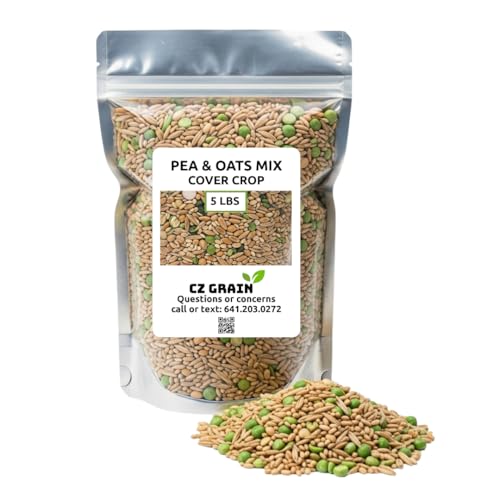
Best for quick soil-building and home gardens. This mix blends peas with oats to create a fast-growing cover crop that fixes nitrogen and adds organic matter. Oats act as a nurse crop and help peas climb, creating a simple, low-maintenance option for season transitions.
- Best for gardeners wanting a straightforward no-fuss cover crop.
- Winterkill behavior: oats may not reseed in northern zones; peas contribute nitrogen and biomass.
- No specialized termination equipment required; ideal for home plots.
Who it’s for: Small-acreage gardeners and hobby farmers seeking a reliable, early-maturing cover crop without complex termination steps.
Why selected: Combines fast emergence with soil-building benefits, and is backed by a seller offering a satisfaction guarantee.
Caution: In colder regions, watch for winterkill patterns; plan reseeding or termination accordingly.
Organic Oat and Peas Cover Crop Mix Seed 1 Lb
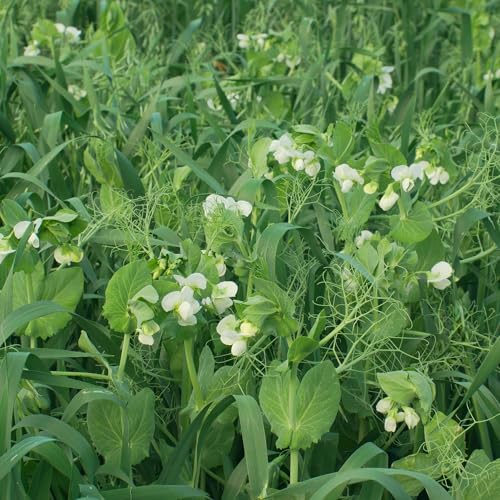
Best for organic operations and no-till enthusiasts focused on long-term soil health. This organic mix fixes nitrogen and builds biomass, supporting mycorrhizal networks for ongoing soil improvement.
- Winter-kill design means simpler cleanup in zones 2–8; ideal for prepping for spring.
- No-till friendly and beginner-friendly; broadcast and lightly rake in.
- Grow height 24–36 inches; good for dynamic soil coverage.
Who it’s for: Organic growers and educators seeking soil-restorative planting without heavy tillage.
Why selected: Strong soil-building profile and no-till compatibility, with clear guidelines for easy management.
Caution: Winter-kill can vary by microclimate; plan for spring re-planting if needed.
Organic Oat and Peas Cover Crop Mix Seed 25 Lb
Best for larger plots that prioritize organic soil health and no-till practices. The 25 Lb bag provides the same nitrogen-fixing and biomass-building benefits at scale, suitable for prep work between crops or for soil restoration.
- 50–70 days to maturity; supports mycorrhizal networks and overall soil vitality.
- No-till friendly; naturally dies in Zones 2–8 to simplify cleanup.
- Grows 24–36 inches tall; offers substantial soil cover and weed suppression.
Who it’s for: Farms, community gardens, and educational plots needing bulk cover crop options.
Why selected: Bulk availability with consistent performance in soil health improvement.
Caution: Zone-dependent winter-kill behavior; verify local climate suitability.
Oat and Peas Cover Crop Mix Seed 25 Lb

Best for larger-scale no-till operations aiming to restore soil health quickly. The Mountain Valley mix offers a robust combination of oats and peas to boost nitrogen and soil structure between cash crops.
- Winter-kill design helps with easy soil preparation for springs and falls.
- Supports beneficial insects and weed suppression through dense ground cover.
- Choose this if you want a higher-volume option with similar growth characteristics.
Who it’s for: Medium-to-large plots and educational demonstration beds showing soil-health outcomes.
Why selected: Consistent, no-till friendly performance with clear organic benefits.
Caution: Winter-kill patterns may vary; plan adjustments based on your local climate.
PlotSpike Forage Oat Seed, 25-Pound

Best for larger forage plots where oat-based ground cover is the primary goal. This product provides extensive seed coverage for quick establishment and forage potential between crops.
- Effective cover for approximately 0.25 acre with proper bed preparation.
- Planting depth guidance helps optimize germination.
- No-till suitability supports low-maintenance farming styles.
Who it’s for: Larger garden plots and foundational forage crops where oat-based cover is desirable.
Why selected: Simple, scalable option for quick soil protection and biomass addition.
Caution: Requires adequate soil moisture for best germination; adjust seeding depth as advised.
Buying Guide
What makes an oat and pea forage mix a good fit?
These mixes combine oats as a nurse crop with nitrogen-fixing peas. The result is rapid ground cover, improved soil organic matter, and nitrogen contribution for subsequent crops. They are well-suited to no-till systems and can be terminated or allowed to winter-kill depending on climate and plans for spring planting.
Key considerations for choosing a mix
- Climate and winter-kill: In zones prone to winter-kill, choose mixes branded as winter-kill or plan reseeding after spring.
- No-till compatibility: If you practice no-till, look for seeds described as no-till friendly and easy to terminate.
- Row geometry and plot size: Bulk bags (25 lb) are best for larger plots; smaller bags suit home gardens.
- Soil goals: Select blends emphasizing rapid biomass vs. nitrogen fixation if your primary aim is soil structure improvement.
- Time to maturity: Most blends reach 50–70 days to maturity, enabling flexible rotation windows.
Best practices for planting and termination
- Broadcast and lightly rake in for even germination in no-till systems.
- Plant late summer to early fall for winter-kill varieties, or in spring where winters are harsh.
- Terminate by mowing or rolling if you want fast soil incorporation, or allow natural die-off where appropriate.
- Monitor weed pressure; the dense canopy typically suppresses many weeds.
Which product should you choose?
- Best for beginners and no-till gardeners: Organic Oat and Peas Cover Crop Mix Seed 1 Lb (Sustainable Seed Company).
- Best for organic operations with high-volume needs: Organic Oat and Peas Cover Crop Mix Seed 25 Lb (Sustainable Seed Company).
- Best for quick cover and nitrogen contribution in small plots: Pea and Oat Cover Crop Seeds – CZ Grain.
- Best for soil-building between cash crops: Oat and Peas Cover Crop Mix Seed 1 Lb (Mountain Valley Seed Company).
- Best bulk option for larger plots needing simple management: PlotSpike Forage Oat Seed, 25-Pound.
FAQ
- What is the primary benefit of an oat and pea forage mix? – They provide rapid ground cover, fix nitrogen, and build soil organic matter, supporting healthier soil structure for future crops.
- Are these mixes suitable for no-till farming? – Yes, most mixes are designed for no-till or minimal-till approaches and are easy to terminate.
- How long until you see soil health improvements? – Many blends reach 50–70 days to maturity, with biomass and nitrogen effects accumulating over multiple seasons.
- Should I expect winter-kill in all zones? – Winter-kill is common in zones 2–8 for these blends; plan reseeding or spring setup accordingly.
- What size bag should I buy? – For home gardens, 1 Lb bags are usually sufficient; larger plots benefit from 25 Lb bags for efficiency.
- Can I use these mixes before heavy feeders like tomatoes or pumpkins? – Yes; several blends are designed to precede heavy feeders, improving soil conditions before planting.