Looking for a reliable riding mower to cover larger yards quickly? This guide highlights top riding and zero-turn mowers suited for American lawns, from compact riding mowers to high‑powered zero-turns. Each option is assessed for typical buyers: homeowners with medium to large lawns, property managers seeking efficiency, and users needing ease of use with strong cutting power. The table below compares key details to help you decide fast.
| Product | ||||
|---|---|---|---|---|
| Husqvarna Z254 (54″) | 54 in | 24 HP Briggs | Hydro-Gear EZT | Powerful mid-size yard, smooth cuts |
| Ariens Edge 34 (34″) | 34 in | 20 HP Briggs | Zero Turn | Narrow gates, tight spaces |
| Husqvarna Z246 (46″) | 46 in | 22 HP Briggs | Hydro-Gear EZT | Smaller yards with solid power |
| Husqvarna Z254F (54″) | 54 in | 24 HP FR730 | FR730 Engine | Heavy-duty cutting with fuel efficiency |
| CRAFTSMAN 42″ Gas Riding | 42 in | 17.5 HP Briggs & Stratton | 7-Speed | Balanced power for medium yards |
Husqvarna Z254 (54″) 24HP Zero Turn Mower

Best for large, open lawns that require fast mowing with precise maneuverability. This 54-inch zero-turn mower uses a 24 HP Briggs Endurance V-Twin engine and a 54-inch stamped 3-blade deck for efficient, wide cuts. The Hydro-Gear EZT transmission provides smooth speed control. Choose this if you need quick coverage of big areas and tight turning capability near obstacles.
- Best for: larger yards with obstacles and a need for speed and precision.
- Why selected: high horsepower and wide deck reduce mowing time on expansive properties.
- Caution: maintenance complexity is higher than smaller riders; ensure sufficient storage for a larger unit.
Ariens IKON Onyx (52″) 23HP

Best for mid-to-large properties wanting a high-quality Kawasaki engine and reliable zero-turn performance. The 23 HP Kawasaki FR691V engine powers a strong cutting experience on a 52-inch platform. It’s a robust choice for homeowners who need dependable power and smooth operation, especially on uneven terrain.
- Best for: mid-to-large yards with obstacles and a demand for steady Kawasaki performance.
- Why selected: strong engine and reputable Ariens build quality.
- Caution: may be less forgiving for beginners compared to riding mowers with steering wheels.
Husqvarna Z246 (46″)

Best for smaller to medium yards that still require solid cutting power and agility. The 46-inch deck is paired with a 22 HP Briggs EXI engine and a Hydro-Gear EZT transmission for smooth operation. This option balances maneuverability with cutting width, making it a practical choice for regular maintenance of medium lawns.
- Best for: yards where space is a concern but you want a capable zero-turn experience.
- Why selected: compact footprint with strong features for its class.
- Caution: narrower deck means more passes on very large lawns compared to bigger models.
Husqvarna Z254F (54″) 24HP

Best for heavy-duty mowing where fuel efficiency and power matter. The 54-inch FAB deck, paired with a 24 HP FR730 engine, supports fast, thorough cuts across larger properties. Its construction is aimed at users needing long-term reliability and robust performance in demanding mowing sessions.
- Best for: large yards with frequent mowing needs and a demand for durable components.
- Why selected: high-spec engine and deck design for professional-style results.
- Caution: premium features may come with higher upfront costs and maintenance requirements.
CRAFTSMAN 42″ Gas Riding Mower
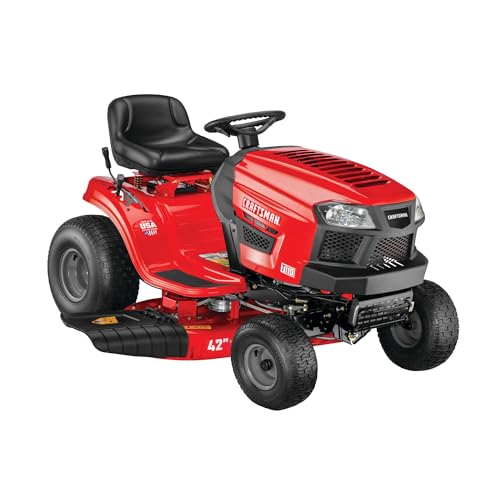
Best for medium-sized yards where a balance of deck width and engine power matters. The 17.5 HP Briggs & Stratton single-cylinder engine provides reliable starting and consistent cutting. The 42-inch deck is adequate for yards that have tight gates or narrow spaces, and the 7-speed transmission helps modulate speed for precise mowing. The optional mulching kit adds finishing quality to the cut.
- Best for: homeowners with medium yards and occasional mulching needs.
- Why selected: a solid, value-focused option that fits through narrower spaces.
- Caution: not as aggressive as larger, higher-horsepower models for very dense or tall growth.
Buying Guide
What type of mower fits your yard size?
Riding mowers range from compact 30–40 inch models to wide 54 inch decks. For large, open lawns, a wide deck with a high-horsepower engine reduces mowing time. For tight spaces or narrow gates, a smaller deck with good maneuverability is preferable.
Which engine and transmission matter most?
Engines vary in horsepower and displacement. More HP can cut thicker grass or hills more easily, while transmission types (hydrostatic vs mechanical) affect control and maintenance. Hydro-Gear EZT and similar units provide smooth speed changes, which helps with precise edging and around obstacles.
Gas vs electric and fuel considerations
Gas-powered mowers are common for larger properties due to longer run times and quicker refueling. Electric models are quieter and cleaner but may require more frequent recharging for big lawns. Consider your access to fuel, maintenance preferences, and noise tolerance when choosing.
Maintenance and parts availability
Choose models with widely available parts and service networks. Brands like Husqvarna, Briggs & Stratton, Kawasaki, and Briggs are commonly supported, making routine maintenance and part replacement easier over time.
Practical safety and setup tips
- Ensure you have a safe area for maintenance and storage.
- Check blade condition, deck cleanliness, and belt tension regularly.
- Follow manufacturer guidelines for fuel type, oil changes, and service intervals.
Which model should you avoid for your yard?
Avoid choosing a high-powered mower with a very wide deck if your yard has many tight turns or narrow gates. In such cases, a smaller deck or a compact rider can improve maneuverability and reduce trimming time.
Quick decision checklist
- Yard size and shape: large, open spaces vs tight areas.
- Gate width and obstacles: ensure deck width fits.
- Maintenance plan: prefer brands with easy access to parts.
- Budget and long-term value: weigh upfront cost against durability and efficiency.
Frequently asked questions
- What is the difference between a riding mower and a zero-turn mower?
Riding mowers typically have steering wheels and are designed for straight-line mowing with some turning. Zero-turn mowers use zero-radius turns for exceptional maneuverability around obstacles, often at higher speeds. - Is a larger deck always better for a large yard?
A larger deck can reduce mowing time on wide, open spaces but may be harder to maneuver through tight areas. Choose based on both yard size and gate width. - Do I need a mulching kit?
A mulching kit helps recycle clippings into the turf, potentially reducing cleanup time. Availability varies by model. - How important is engine horsepower?
Higher horsepower helps with thick or tall grass and hilly terrain but may come with higher cost and fuel consumption. Match horsepower to your typical mowing conditions. - What maintenance tasks should I plan for?
Regular blade sharpening, oil changes, air filter replacements, and belt inspections are key to prolonged mower life and performance.