Nursery bags offer a practical, affordable, and efficient way to start seeds, transplant seedlings, and manage root health in home gardens. This article reviews five top-rated options, highlighting material, drainage, and usability to help you choose the right bags for your plants—from vegetables to flowering saplings.
Summary of chosen products
| Product | Brand | Material | Size | Key Benefit |
|---|---|---|---|---|
| Belit 100 Pcs Plant Nursery Bags | PE Plastic | 3.5″ x 6.6″ | Flexible, good drainage | |
| gardtree Plant Nursery Bags | Biodegradable Non-woven | 4″ x 4.7″ | Healthy root respiration | |
| GREANER 200 PCS Nursery Bags | Non-woven, Biodegradable | 5.5″ x 6.3″ | High seeding survival, breathable | |
| ENPOINT Black Plant Grow Bags | Non-woven fabric | 5.5″ x 5.9″ | Space-saving, easy transplant | |
| VIVOSUN 5-Pack 5 Gallon Grow Bags | Nonwoven fabric | 5 gal | Strong handles, good drainage |
Belit 100 Pcs Plant Nursery Bags

Belit’s 100-piece set provides flexible, durable seedling bags ideal for starting saplings and transplanting fruit trees or vegetables. The bags are crafted from high-quality PE material that resists tearing when moved. Drainage is addressed with multiple holes along the sides and bottom to prevent waterlogging, promoting healthy root air exposure. These bags are suitable for family gardens and small-scale farming, offering a practical solution for seedling growth and transplantation.
gardtree Plant Nursery Bags

gardtree offers 400 biodegradable nursery bags measuring 4″ x 4.7″, designed as non-woven fabric seedling pots. They promote healthy root respiration thanks to breathable material, which supports water and nutrient uptake. The bags are manufactured with sturdy seams via constant temperature welding, reducing tearing and ensuring reliable use through multiple transplant cycles. They’re well-suited for vegetables, flowers, and fruit saplings in home gardens and light commercial settings.
GREANER 200 PCS Nursery Bags

GREANER provides a large value pack of 200 non-woven, biodegradable nursery bags sized 5.5″ x 6.3″ (with soil dimensions around 3.3″ x 4.6″ after filling). Made from eco-friendly material, these bags support healthy root growth and allow direct planting in ground or garden beds. They include drainage and air permeability to enhance seedling survival, making them a practical choice for new starters, trees, and vegetables.
ENPOINT Black Plant Grow Bags
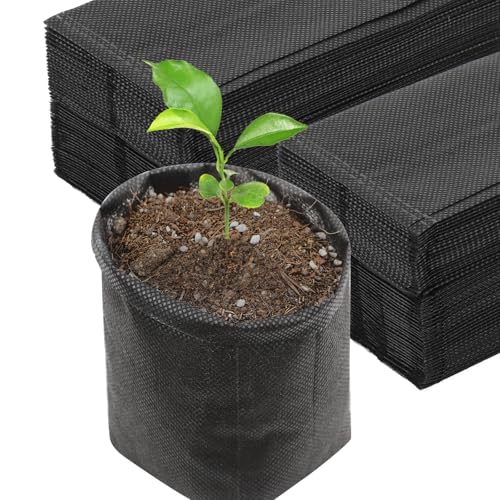
ENPOINT’s 200-pack contains sturdy 5.5″ x 5.9″ grow bags that fit typical 1-gallon pots. They are designed to occupy minimal space and stand upright when filled with soil, making them convenient for seed trays and seed starts. The bags offer reliable water permeability, promoting healthy root growth as roots can penetrate the fabric. They support straightforward transplanting and efficient seed-to-plant transitions.
VIVOSUN 5-Pack 5 Gallon Grow Bags

VIVOSUN’s five-pack features heavy-duty 300G thickened nonwoven fabric with reinforced handles and improved stitching. These 5-gallon grow bags offer moderate permeability to support root respiration while ensuring drainage to prevent overwatering. The durable handles and build quality help carry full bags, making them suitable for larger seedlings and plants that need more soil volume during growth.
Buying Guide
- Material and biodegradability: Non-woven, biodegradable options support sustainability and soil health, and can often be transplanted directly into the ground.
- Size and compatibility: Choose bag dimensions that fit your plant type and your growing space, including tray compatibility and final transplant size.
- Drainage and aeration: Look for bags with ample drainage holes and breathable fabric to prevent root rot and promote oxygen access.
- Durability and seams: Bags should have strong seams and sturdy handles if you plan to move full bags or stack them during storage.
- Transplant readiness: Some bags allow easy removal or direct planting, reducing root disturbance during transplanting.
- Seedling survival rates: Bags with good air permeability and water management tend to improve seedling survival, especially for vegetables and fruit saplings.
- Storage and space: If you have limited space, compact packs or square-foot layouts can help you organize seedlings efficiently.
- Environmental considerations: Biodegradable or recyclable options help minimize waste and support sustainable gardening practices.
- Cost per bag: Large packs often offer better value, but consider usefulness and durability for your typical growing cycle.
- Use case variety: For home gardens, consider a mix of sizes to accommodate seedlings, cuttings, and mature plants as needed.
In summary, the best nursery bags for your garden depend on your priorities—cost, environmental impact, root health, and transplant convenience. The reviewed selections cover a range of materials and capacities to support seed starting, transplant transitions, and ongoing plant care in American home gardens.