Looking for space-efficient ways to grow herbs, vegetables, and flowers indoors or on a balcony? A multi-level garden box system can turn limited areas into productive, accessible planting beds. This guide highlights five versatile options, outlining who each is best for and why it fits compact spaces. The selections focus on durability, ease of assembly, and adaptable design for indoor and outdoor use. Use the buying guide and FAQ to compare features like materials, height, and soil capacity before buying.
| Product | Best For | Key Benefit | Material |
|---|---|---|---|
| Simplay3 American Home 3-Level | Small patios and indoor herb setups | Three accessible levels for easy reach | Durable, USA-made construction |
| Kitsanery 3-Tiers Wooden Raised Garden Bed | Three-dimensional planting on balconies | Three levels with sturdy fir wood | Wooden, traditional design |
| TDDSS Raised Garden Bed Planters | Modular setups for varied plant types | Water reservoir tray for moisture control | Premium reinforced PP material |
| Tierra Verde Raised Garden Trough Box | Decks or patios needing deep cavities | Large cavity with substantial soil volume | Recycled materials-based |
| Giantex 3-Tier Vertical Raised Garden Bed | Outdoor or indoor tiered planting with storage | Storage shelf and tiered sun exposure | Natural pine wood |
Buyer tip: For tight urban spaces, prioritize products that stack vertically, have integrated drainage, and offer accessible heights to reduce bending. If you prefer natural materials, wood options like fir or pine provide a traditional aesthetic, while PP and galvanized metal offer weather resistance with lower maintenance. The following sections present five top choices with practical usage notes to help you decide which setup aligns with your climate, sun exposure, and gardening goals.
Simplay3 American 3-Level Planter
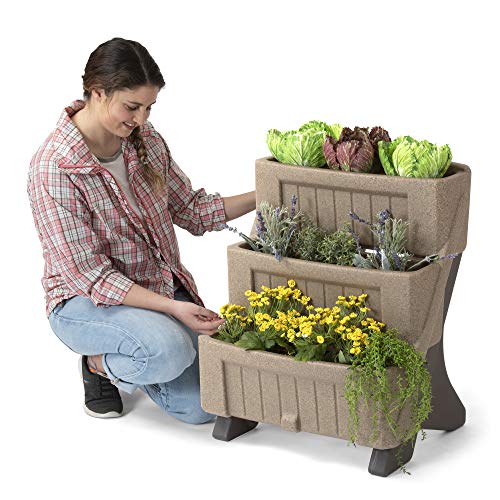
The Simplay3 three-level planter is designed for easy access and efficient space use. It features three vertical planters in a compact footprint, making it well suited for small patios, balconies, or an indoor greenhouse. Best for buyers who want a tall, space-saving unit that can house herbs, greens, or compact vegetables with straightforward assembly. A consideration is that larger plants may need careful placement to ensure adequate sunlight on all levels.
Kitsanery 3-Tiers Wooden Raised Garden Bed

This three-level wooden raised bed uses fir wood to deliver a sturdy, traditional look with solid load-bearing capacity. It’s ideal for gardeners who prefer natural materials and a straightforward assembly process. The three levels provide flexible zoning for herbs, flowers, or vegetables. Note that wood may require maintenance over time to maintain color and resistance to weather, depending on climate and exposure.
TDDSS Raised Garden Bed Planters

The TDDSS system emphasizes modular design, enabling various configurations to suit multiple planting needs. It includes a water reservoir tray and drainage holes for precise moisture management. Best for gardeners who want adaptable layouts and better control of irrigation. A potential limitation is that modular assemblies may require frequent checks to ensure joints remain tight over time.
Tierra Verde Raised Garden Trough Box

The Tierra Verde trough emphasizes a large, trough-style cavity suitable for deep-rooted plants and a substantial soil volume. It’s well suited for patios or decks where a long, low-profile bed is preferred. The branding highlights recycled materials as a sustainability feature. Buyers should consider the weight and long-term staining or sealing needs when used outdoors.
Giantex 3-Tier Vertical Raised Garden Bed

The Giantex model combines three tiers with a back storage shelf, offering a practical mix of planting space and tool storage. This makes it a strong choice for gardeners who want a single unit that supports diverse plant types while keeping tools and supplies accessible. Best for those who want a stable, freestanding unit with a natural wood aesthetic. A caveat is the need to seal or treat wood to resist outdoor moisture over time.
Buying Guide
What to consider when choosing a multi-level garden box:
- Height and reach: If you have mobility concerns or want closer access, choose higher tiers with ergonomic reach or a back shelf for tools.
- Material and durability: Wood offers a classic look but may require maintenance; PP or galvanized materials provide weather resistance with less ongoing care.
- Capacity and soil depth: Ensure each tier has enough soil depth for the intended plants. Deep-root crops like tomatoes will need larger cavities.
- Drainage and irrigation: Integrated drainage or a reservoir helps prevent waterlogging. Confirm the unit includes predrilled holes or a tray.
- Assembly and stability: Look for pre-buried nuts or clear instructions for a quick, sturdy setup. Consider units with a broad base in windy locations.
- Indoor vs. outdoor suitability: Some units are designed to withstand sunlight and rainfall, while others are better for covered patios or greenhouses.
Where to place your multi-level garden box
- Sun exposure: Most vegetables and herbs prefer 6-8 hours of sun. Position higher tiers to receive direct light where possible.
- Protection: If you’re near strong winds, choose heavier units or anchor taller planters to a balcony railing or wall.
- Accessibility: Place the tallest sections within arm’s reach to avoid overreaching or bending excessively.
FAQ
- What is the easiest multi-level planter for beginners?
Planters with simple bolt-together assembly and clear instructions, such as the 3-tier wooden or elevated metal-framed models, are suitable for beginners seeking straightforward setup and immediate usability.
- Can these planters be used indoors?
Yes, several models are designed for indoor greenhouse use or bright indoor spaces to start seedlings or grow herbs year-round.
- Which material lasts longest outdoors?
Materials like coated PP or galvanized metal typically resist weathering longer than untreated wood, while wood can last with proper sealing and maintenance.
- Do these planters require drainage modifications?
Most include drainage holes or a reservoir tray. If not, you may need to add a insert or liner to prevent overwatering.
- Are these suitable for tomatoes or deep-root vegetables?
Yes, but verify soil depth per tier. Deeper tiers are better for tomatoes, peppers, or larger herbs to ensure healthy root growth.
- How much space do they occupy on a balcony?
Measure the footprint of the unit and consider airflow around it. Vertical designs maximize growing area with minimal ground space.