Growing healthy plants starts with well-designed seed trays. This guide highlights top multi-cell seed trays that maximize germination, root development, and transplant success. Each option offers varying cell counts, depths, and drainage features to fit different indoor and greenhouse setups. Use the product details below to compare capacity, durability, and ease of use for your seed-starting needs.
| Product | Cells | Brand | Key Benefit |
|---|---|---|---|
| Gardzen 5-Set Seed Starter Tray Kits | 40 per tray (total 200 cells) | Gardzen Store | Adjustable ventilation for thriving seedlings |
| Seed Starter Trays, 144 Cells | 144 cells (24 trays) | The Hydroponic City Store | Versatile for a wide range of seeds |
| Burpee SuperSeed Seed Starting Tray | 36 cells | Burpee Store | Easy pop-out cells and smart watering |
| 10 Pack 32 Cell Seed Starter Trays | 32 cells per tray | RooTrimmer Store | Deep trays with efficient drainage |
| The Hydroponic City Seed Starter Trays | 216 cells (36 trays) | The Hydroponic City Store | Durable, reusable, wide seed compatibility |
Gardzen 40-Cell Seed Starter Trays Kit
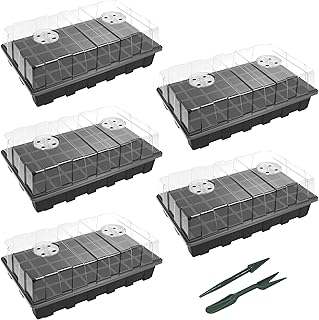
Gardzen’s seed starter kit is designed for efficient seed germination with an emphasis on adjustable airflow. The tray system pairs durable plastic with a 40-cell capacity per kit, offering ample space for a variety of seeds. The product includes stickers to help achieve a tighter fit between the dome and base, maximizing humidity control. Two top air vents allow you to regulate ventilation, reducing the risk of mold or damping-off while promoting healthy root initiation.
Seed Starter Trays, 144 Cells

This option offers wide versatility with 144 cells across 24 trays, each cell measuring 1.5″ square by 2.25″ deep. The design prioritizes healthy root development while keeping trays durable and reusable for ongoing gardening cycles. Suitable for a broad range of seeds including flowers, herbs, succulents, and vegetables, these trays support scalable propagation and efficient space use in indoor gardens or greenhouses.
Burpee SuperSeed 36-Cell Seed Tray

Burpee’s 36-cell tray emphasizes transplant-friendly design and reliable germination. The cells are soft, food-grade silicone and easy to pop out, reducing root disturbance during transplanting. The tray features molded corner drainage slots to improve soil aeration and a watering tray with deep channels to draw excess moisture away from the roots. Alphanumeric labeling aids seedling identification, and the whole system is designed for simple, repeatable use—top shelf dishwasher safe for quick cleanup.
RooTrimmer 32-Cell Deep Seed Starters (10 Pack)

RooTrimmer’s 32-cell deep seedling trays provide substantial soil depth, measuring 4.33″ deep per cell and 2.32″ by 2.32″ for each cell. The thicker, 1mm plastic construction adds durability for repetitive use, making these trays suitable for indoor or greenhouse propagation. The design includes efficient bottom drainage and top guide channels to ensure water reaches every cell, helping promote uniform germination while minimizing overwatering risks.
The Hydroponic City 216-Cell Seed Starter Trays

The Hydroponic City tray set comprises 216 cells across 36 trays, each cell sized to promote robust root structure. Constructed for durability and reusability, these trays are designed to accommodate a broad spectrum of seeds—from flowering annuals to leafy greens. The system supports scalable seed starting in indoor setups or greenhouse environments, aligning with sustainable gardening practices through long-term use.
Buying Guide
When selecting multi-cell seed trays, consider these purchase criteria to optimize germination, root health, and transplant success:
- Cell size and depth: Deeper cells support longer root systems, beneficial for vegetables and perennials; shallow cells work well for fast-germinating herbs and flowers.
- Ventilation and humidity control: Adjustable vents help regulate moisture and air exchange, reducing disease risk and rapid drying in hot spaces.
- Durability and reuse: Higher-quality plastics withstand repeated use, cleaning, and transport; dishwasher-safe options save time.
- Drainage design: Trays with well-placed drainage channels prevent waterlogging while ensuring moisture reaches all cells.
- Modularity: Sets with multiple trays or a consistent base/dome system enable scalable production and easy expansion.
- Seed compatibility: Ensure trays accommodate a wide range of seed types, from tiny microgreens to larger tomato or pepper seedlings.
- Transplant ease: Silicone or soft-cell designs reduce root damage during removal, improving transplant success.
- Environment and sustainability: Reusable trays reduce waste; consider materials that resist warping or cracking in varying temperatures.
- Maintenance: Easy cleanup and compatibility with standard flats (1020) can simplify inventory management in a busy growing space.
For home gardeners, a balance of cell count, tray depth, and ventilation is usually ideal. Larger multi-pack options suit hobbyists with extensive seed lists, while compact trays fit windowsill gardens or starter setups in small greenhouses. Evaluate how often you seed per season, your preferred transplant schedule, and whether you prioritize durability or lightweight, portable trays for occasional use.