Answering common buyer needs, these Mexican bush sage options are ideal for drought-tolerant landscapes, pollinator-friendly borders, and late-summer color. Best for gardeners seeking low-maintenance perennials that thrive in sun and heat, with spiky purple blooms and velvety textures. The top picks below cater to different garden sizes and growing zones, from compact starter plants to larger, established stands. Use the summary table to compare key traits at a glance.
| Product | Size/Height | Best For | |
|---|---|---|---|
| Purple Mexican Bush Sage Live Plants (Pack of 2) | 5-9″ tall | Small to mid-size beds, containers | Early fall color, 2-plants pack |
| Salvia Leucantha Live Butterfly Plant | 4″ pot to 3′ mature | Pollinator-friendly borders | Hardy, ornamental white/purple blooms |
| Set 3 Mexican Bush Sage (Bicolor White Purple) | 4-6″ tall | Compact borders, borders with mixed varieties | Well-rooted, easy to establish |
| Set 2 Mexican Bush Sage (Bicolor White Purple) | 4-6″ tall | Small rock gardens, planters | Fast-growing |
| Set 4 Mexican Bush Sage (Bicolor White Purple) | 4-6″ tall | Mixed-color mass plantings | Shade to sun as needed |
Purple Mexican Bush Sage Live Plants – Pack of 2

Best for gardeners who want a quick start to a shrub-like mound with silver foliage and velvet-purple blooms. This pack contains two starter plants (5-9″ tall) shipped bare-root for rapid establishment. The plants develop arching spikes of purple calyxes above silvery-green leaves, creating a striking late-summer to autumn display. Suitable for bulk plantings, borders, and containers in sunny, well-drained soils. Caution: bare-root handling requires careful moisture management after transplanting to prevent transplant shock.
Set 4 Mexican Salvia Sage Plants – 4-6 Inches

Best for small gardens needing quick-growing, fragrant perennials. The set includes four compact 4-6″ plants that flourish in full sun to partial shade and in well-drained soils. They are suitable for borders, edging, or mass plantings to create a cohesive look. Limitations: growth rate varies with sun exposure and soil moisture; ensure consistent drainage to avoid root rot.
Set 3 Mexican Bush Sage – Bicolor White Purple

Best for color variety in mixed borders or themed plantings. These well-rooted 4-6″ plants feature spikes of purple flowers with white accents, providing visual interest against silvery-green foliage. They’re suited for sunny spots with good drainage. Choose this set if you want a cohesive look with contrasting bloom tones. Caution: color intensity may vary with light; more sun generally yields deeper purple hues.
Set 2 Mexican Bush Sage – Bicolor White Purple

Best for gardeners who want reliable, fast-growing starter plants in a compact size. Four-to-six-inch plants thrive in full sun to partial shade with well-drained soil. They’re suitable for border edges, containers, or rock gardens. Limitation: growth can slow if soil stays too wet; ensure good drainage and avoid waterlogged conditions.
Mexican Sage – Salvia Leucantha – Live Butterfly Plant
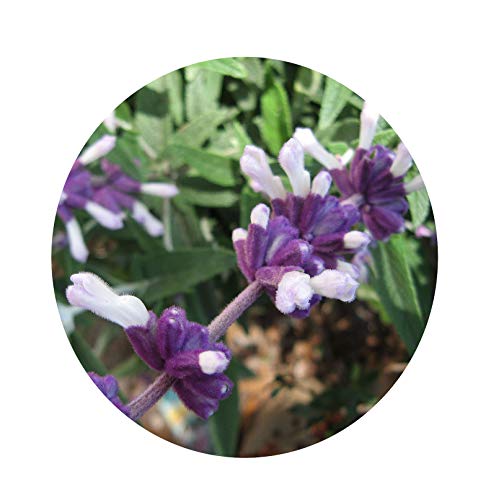
Best for pollinator-friendly landscapes and cut-flower interest. This live butterfly plant features arching stems with fuzzy purple calyxes and white flowers, creating a dramatic late-summer display. It typically grows into a compact shrub around 3 feet tall in favorable conditions. Caution: ensure full sun and well-draining soil; overly rich or consistently soggy soil may reduce flowering vigor.
Buying Guide: Mexican Bush Sage Plants
Key considerations help you choose the right sage for your garden:
- Sun and soil needs: Most Mexican bush sages prefer full sun and well-drained soil. If your site is partially shaded, select varieties described as tolerating partial shade.
- Size and spacing: Starter plants are compact but will fill in over time. Plan spacing to accommodate eventual shrub-like growth.
- Bloom timing and color: Expect late-summer to autumn blooms with purple calyxes. Some sets mix white and purple tones for visual contrast.
- Watering and drainage: This group is drought-tolerant but performs best with occasional deep watering and good drainage. Avoid waterlogged soil.
- Pollinator value: Several options attract bees and butterflies, enhancing garden biodiversity.
- Maintenance: Pruning after flowering helps control size and encourages fresh growth for the next season.
Frequently Asked Questions
- Q: Are Mexican bush sages deer-resistant?
- A: Many salvias are relatively deer-resistant, but local deer behavior can vary. Use as part of a diverse garden to reduce browsing.
- Q: Can these plants survive in containers?
- A: Yes, most listed varieties adapt to containers with well-draining potting mix and regular sun exposure.
- Q: When should I fertilize Mexican sage?
- A: Apply a slow-release bloom-boosting fertilizer in spring and as needed to support flowering cycles.
- Q: Do these plants attract pollinators?
- A: Yes, floret spikes and nectar-focused blooms attract bees and butterflies, aiding garden biodiversity.
- Q: How do I prune Mexican sage?
- A: Prune after flowering to control height and shape. This encourages denser growth and better next-year bloom.