Choosing the right manure for a vegetable garden can boost soil fertility, improve structure, and promote robust yields. This guide highlights five well-regarded organic options, explaining how each supports plant growth, soil biology, and practical use in American gardens. From pelletized chicken manure to compost blends, these products are designed to enrich beds, raised planters, and plots without synthetic additives.
The following summary table helps compare the featured products at a glance. Each entry reflects a commonly recommended manure-based amendment for vegetables, focusing on nutrient content, application style, and suitability for organic gardening.
| Product | Brand | Type | Main Benefit |
|---|---|---|---|
| Espoma Organic Chicken Manure | Espoma | Granulated Pellet | Easy, balanced NPK with calcium; spring and fall use |
| Michigan Peat Garden Blend | Garden Magic | Compost & Manure Blend | Odor-free, ready-to-use soil amendment |
| Hoffman Organic Cow Manure | Hoffman | Granular Fertilizer | Nourishes without burning; encourages earthworms |
| Baccto Wholly Cow Compost & Manure | BACCTO | Compost & Manure Mix | Natural blend with rich nutrients; odor-free |
| Coop Gro Organic Chicken Manure | COOP GRO | Pelleted Manure | OMRI-certified; 3-3-4 NPK; pet-safe |
Espoma Organic Chicken Manure 25 Lb. Bag
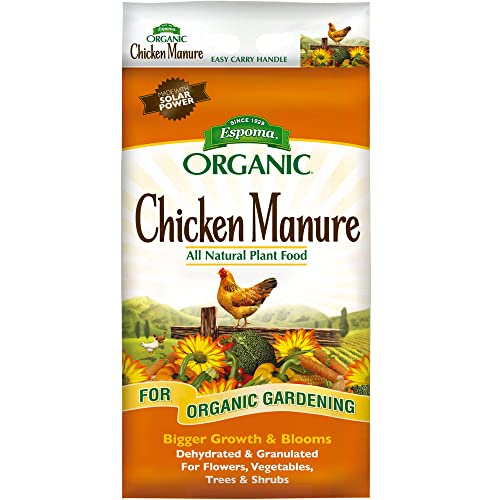
Espoma Organic Chicken Manure provides a straightforward, ready-to-use fertilizer option for a vegetable garden. The 5-3-2 analysis with 8% calcium supplies essential nitrogen, phosphorus, and potassium, supporting leafy growth and fruit production while contributing to soil structure. The product is heat-treated and granulated for easy application, reducing handling mess and integrating smoothly with soil around the drip line. It’s designed for use in spring and fall for trees and shrubs, while roses, flowers, and vegetables benefit from monthly applications during the growing season. This manure contains no additives and avoids sludges or toxic ingredients, aligning with organic gardening practices. When applying, water thoroughly after scattering to ensure nutrients reach the root zone.
Ideal for garden beds that require a reliable nutrient boost without synthetic components, this Espoma option helps support ongoing vegetable production through steady nutrient release. While it’s versatile enough for multiple plant types, it shines when used as part of a broader soil-building plan, including compost and mulch to improve moisture retention and microbial activity over time.
Michigan Peat Compost And Manure Blend Garden Magic Mix

Garden Magic Mix combines organic compost with manure to create a ready-to-use blend that improves soil structure and nutrient availability. The 40-pound bag is designed for lawn and garden bed applications, adding essential nutrients that support the growth of vegetables, flowers, and turf. The blend is formulated to be odor-minimized, enabling comfortable use in residential settings without overpowering smells. It’s particularly helpful for soil in need of improved drainage and aeration, as composted material supports beneficial microbial activity. Garden Magic emphasizes nutrients essential for plant growth, aiming to sustain healthy vegetable plants from transplanting through harvest.
Garden Magic Mix offers an approachable option for gardeners seeking a straightforward amendment that blends well with existing soil. As with all compost-based products, results depend on starting soil conditions, including pH and organic matter. Pair with periodic soil tests, organic mulch, and drip irrigation to maximize benefits for vegetable beds and garden plots.
Hoffman Organic Cow Manure Fertilizer 1-1-1

Hoffman’s Organic Cow Manure Fertilizer provides an even 1-1-1 formulation aimed at robust plant growth with natural nutrients. The product is non-burning and easy to apply, making it suitable for beginners and experienced gardeners alike. By encouraging earthworm activity, it helps create a rich, loamy soil structure that benefits root development and water retention—critical factors for vegetable gardens. The manure is derived from cow sources, offering a slow-release nutrient profile that supports steady growth without spikes. This option suits beds in need of long-term soil enhancement and improved microbial life, especially when integrated with a regular mulching schedule.
As with any manure-based product, monitor for signs of nutrient excess in sensitive plants and adjust application frequency accordingly. Combining with compost and a soil amendment plan can yield more uniform growth and better disease resistance in diverse vegetable varieties.
Michigan Peat Baccto Wholly Cow Horticultural Compost And Manure

BACCTO’s Wholly Cow compost and manure blend combines peat-based organic matter with composted cow manure, forming a natural soil amendment that enriches garden beds and lawns. The 40-quart bag is odor-minimized, supporting convenient transport and storage while delivering essential nutrients for vegetable and flower beds. This blend aims to improve soil structure, moisture retention, and microbial activity—key factors for healthy root systems and robust harvests. It’s well-suited for top-dressing beds, adding slow-release nutrition that complements existing soil chemistry. Gardeners appreciate the product’s versatility for a range of plantings, from vegetables to ornamentals.
When integrating this mix, consider soil testing to tailor nutrient inputs and avoid over-fertilization. The odor-free feature helps in tight urban spaces where neighbors may be sensitive to smells, and its organic basis aligns with sustainable gardening goals.
Brut Cow Compost – 10 Quart

Brut Cow Compost is a nutrient-rich composted cow manure product designed to enrich soil without burning plant roots. Its finely sifted texture makes it suitable for indoor and outdoor gardening, including vegetable beds and container plots. The product emphasizes a balanced mix of nitrogen, calcium, and iron that supports vigorous growth and healthier soil ecosystems. It’s advertised as odor-free, which improves usability in spaces near living areas or patios. As with all compost-based amendments, it’s best used as part of a broader soil-building strategy, incorporating seasonal mulching and regular soil testing to maintain nutrient balance across diverse crops.
Brut emphasizes purity and safety, offering a product free of synthetic additives. For best results, pair with a consistent watering schedule and monitor soil moisture to maximize microbial activity and nutrient uptake by vegetable plants.
Buying Guide: Key Purchase Considerations For Manure-Based Amendments
- Organic certification and safety: Look for OMRI-listed products if you plan to cultivate certified organic vegetables. This ensures the product meets organic farming standards.
- Form and application method: Pelleted, granulated, and compost blends each have different handling and distribution characteristics. Pellets are easy to spread with standard sprinklers; compost blends may require broader incorporation into the topsoil.
- Nutrient profile: Check the NPK ratio and secondary nutrients. For vegetables, balanced nitrogen supports leafy growth while phosphorus and potassium aid root and fruit development. Calcium content helps plant structure and reduces some disorders in tomatoes and leafy greens.
- Soil compatibility: Consider existing soil pH, organic matter, and drainage. Manure-based amendments work best when integrated with compost and mulch to improve structure and moisture retention.
- Odor and storage: Odor-reduced blends are preferable for residential gardens. Ensure proper storage in a dry place to maintain product integrity and prevent clumping.
- Usage schedule: Some products recommend periodic seasonal applications, while others suggest monthly feeding during growing seasons. Align with crop calendars and any fertilizer restriction guidelines on your crop list.
- Safety and pets: For households with pets or children, choose products labeled as safe for use around animals and consider application timing to minimize contact during play periods.
- Environmental impact: Favor products with minimal processing and biodegradable packaging. Organic blends typically emphasize sustainable sourcing and reduced chemical inputs.
In practice, combining manure-based products with compost and a layered mulching strategy often yields the best results. Monitor plant response through growth rate, leaf color, and yield, adjusting inputs to match seasonal weather and the particular needs of vegetables grown in your garden.