If you’re seeking a reliable source of phosphorus and calcium to support root growth, flowering, and fruiting, liquid bone meal fertilizers offer fast-acting delivery and easy uptake by plants. This guide focuses on liquid formulations and closely related bone meal products to help you choose the right option for an organic garden. Ideal buyers include home gardeners growing vegetables, flowers, or fruiting plants who want quick phosphorus boosts without synthetic additives. Below, you’ll find five well-suited products and a practical buying guide to compare options side by side.
Product Overview Table
| Product | Form | Best For | Why It Stands Out |
|---|---|---|---|
| Nature’s Way Soil Liquid Bone Meal Concentrate | Liquid | Root & bloom boost for vegetables, tomatoes, and flowers | Fast-absorbing P & Ca; organic; spray-friendly |
| Nature’s Way Soil Liquid Bone Meal Fertilizer | Liquid | Organic growth for roots and fruit production | Fast-absorbing; 100% organic; bloom & fruit support |
| Burpee Bone Meal Fertilizer | Granular | Strong root development in soil or pots | OMRI listed; steady nutrient release |
| Down To Earth All Natural Fertilizers Organic Bone Meal | Granular | Bulbs, roots, and early season growth | OMRI listed; ready-to-use organic formula |
| Espoma Organic Bone Meal Fertilizer 4-12-0 | Granular | Bulbs and flowering plants; long-lasting | All natural; nitrogen and phosphorus balance |
Nature’s Way Soil Liquid Bone Meal Concentrate – Fast-Acting Phosphorus & Calcium

- Fast-Absorbing Phosphorus & Calcium to support root development and bud formation
- 100% Organic and Natural; no synthetic additives
- Boosts flowering and fruit production for vibrant blooms and high yields
The Nature’s Way liquid concentrate is best for gardeners who want quick nutrient uptake through foliar or root feeding. It’s particularly well-suited for tomatoes, peppers, and flowering ornamentals. A potential limitation is that liquid formulations may require more frequent applications than granules in some soil conditions, so use as directed to avoid over-application.
Nature’s Way Soil Liquid Bone Meal Fertilizer – 32 Ounce/1 Gallon
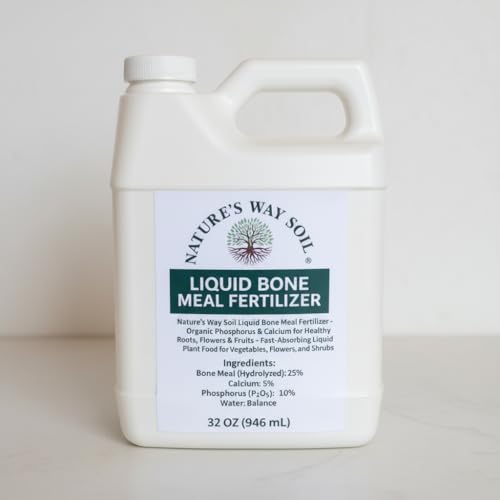
- Fast-absorbing phosphorus and calcium for robust root systems and flowering
- Organic and natural with no artificial additives
- Supports fruit production and healthy vegetative growth
Choose this liquid option if you’re applying through watering or as a spray for quick fill-ins during active growth. Best for gardeners seeking a streamlined, organic phosphorus boost without synthetic components. A limitation is that liquid products can sometimes require precise dilutions; follow label guidance for best results.
Burpee Bone Meal Fertilizer

- Strong root development from a natural phosphorus and calcium source
- OMRI listed for organic gardening; suitable for tomatoes, peppers, and bulbs
- Slow-release bone meal provides extended nutrition; ideal for planting beds and containers
Best for gardeners prioritizing long-lasting soil enrichment and a steady nutrient release. Use this if you want a traditional, proven bone meal that supports root expansion and later flowering. Caution: granular bone meal releases nutrients gradually; plan applications to align with plant growth stages for optimal effect.
Down To Earth All Natural Bone Meal

- Five-pound box with a 3-15-0 formula for early-season vigor
- OMRI-listed for organic production; supports flowering and bulb growth
- Ideal for bulbs and ornamentals needing a phosphorus boost
Best for gardeners who maintain bulb beds or flowering borders and want to improve root systems before peak bloom. The granular format provides a long-term release in the soil. A limitation is the need to mix into soil; avoid applying directly to foliage or shallow, established roots without proper incorporation.
Espoma Organic Bone Meal Fertilizer 4-12-0 (Pack of 2)

- All-natural bone meal fertilizer with balanced nitrogen and phosphorus
- 4 lb bag; pack of 2 offers extended supply for larger beds
- Best for bulbs, flowering plants, and general soil enrichment
Choose this option for a balanced, all-natural nutrient profile that supports both vegetative growth and flowering. It’s particularly suitable for organic gardeners seeking predictable, long-lasting phosphorus and calcium release. Limitation: granular bone meal requires proper incorporation into soil to avoid uneven distribution.
Buying Guide: Key Considerations For Liquid and Granular Bone Meal Fertilizers
- Form and application method: Liquid bone meals offer faster uptake via watering or foliar feeding, while granular forms provide slower, longer-lasting release. Consider your growing schedule and whether you need a quick boost or steady maintenance.
- Nutrient balance: Bone meal is typically high in phosphorus and calcium; some products include additional nitrogen. For flowering and bulbs, phosphorus is crucial, while calcium supports cell structure and root development.
- Organic certification: Look for OMRI listings if you’re gardening organically. This ensures the product meets organic standards in many jurisdictions.
- Plant suitability: Vegetables (tomatoes, peppers), ornamental flowers, bulbs, and fruiting plants all benefit from bone meal, but timing varies. Early-season soil preparation and root establishment often benefit from phosphorus-rich inputs.
- Soil health considerations: Bone meal is a soil amendment as well as a fertilizer. Consider current soil phosphorus and calcium levels to avoid over-application, which can affect soil balance and microbial activity.
- Safety and handling: For granular formulas, avoid inhalation and wear gloves during handling. When applying liquids, dilute according to label instructions to prevent plant burn.
- Container vs. in-ground planting: Containers may require more frequent feeding with liquids due to leachate; granules work well for slow release in pots when properly mixed.
Frequently Asked Questions
- What is liquid bone meal best used for?
Liquid bone meal is ideal for quick phosphorus and calcium delivery to established plants, helping with root growth, flowering, and fruit set. It’s especially useful during active growth and when plants show signs of phosphorus deficiency.
- Is bone meal safe for organic gardening?
Yes. Many bone meal products are OMRI-listed or marketed as organic, making them suitable for organic gardening when used as directed.
- Can bone meal be used in pots and containers?
Yes. Both liquid and granular bone meal can be used in containers. Liquids are convenient for regular feeding; granules should be mixed into the potting mix or top-dressed and watered in.
- How often should I apply bone meal?
Frequency depends on product type and plant needs. Granular bone meal commonly provides long-lasting nutrition over weeks to months, while liquids may require more frequent applications per label directions.
- Are there risks of over-fertilizing with bone meal?
Over-fertilizing can lead to phosphorus buildup and imbalances in soil. Always follow the product’s recommended application rates and monitor plant response.
- Which plants benefit most from bone meal?
Flowering plants, bulbs, tomatoes, peppers, and fruiting vegetables commonly benefit from phosphorus and calcium supplied by bone meal.