Keeping a lake, pond, or shoreline free of lily pads and invasive aquatic vegetation is essential for water quality and recreational use. This guide highlights five top lily pad and aquatic weed removal tools, showing who each product is best for and why it stands out. The selection focuses on tools that cut, pull, or shear underwater weeds with long reach and durable blades. The buyers who will benefit most include homeowners maintaining private ponds, boat owners needing dock access, lakefront property managers, and weekend explorers who want clear water for swimming or fishing.
| Product | Best For | Why It Stands Out |
|---|---|---|
| Jenlis The Original Weed Razer | Ponds with thick sub-surface weeds | Wide 48″ cut, durable V-shaped blades for rapid clearing |
| Jenlis Weed Razer Express | Smaller ponds and tighter spaces | Compact 30″ cut width, lighter for easy throws |
| VEVOR Lake Weed Cutter | Medium to large ponds with varied weed density | Adjustable width up to 37″, robust stainless steel build |
| Buzzlett Lake Weed Cutter | Budget-friendly, all-purpose lake clearing | 48″ cutting width, sharp stainless blades, long rope |
| Lilyvane Lake Weed Cutter | Heavy-duty, rust-resistant performance | All stainless steel, 33 ft reach for distant areas |
Jenlis The Original Weed Razer

The Jenlis The Original Weed Razer uses V-shaped razor blades designed to slice through submerged aquatic vegetation, including cattails, reeds, and algae, with a wide 48-inch cutting width. This model weighs around eight pounds, a balance between reach and sinking stability, and includes a 5-foot handle for effective base-level cutting without excessive strain. Best for large open-water sections where a long, powerful pass can dramatically reduce weed growth. Consider this option when you want fast, consistent clearing of wide swaths near shorelines or docks. Caution: heavier use may require more effort to reposition the tool after each throw in very dense vegetation.
Who this is best for: Property owners with larger ponds or lakefronts seeking rapid, wide-area clearance and durable blades that can cut through thick vegetation.
Key considerations
- Cut width (48 inches) accelerates clearing but requires space to swing.
- Weight and throw distance affect how often you can reach weed beds.
- Blade design prioritizes aggressive cutting at the base of the weeds.
Jenlis Weed Razer Express
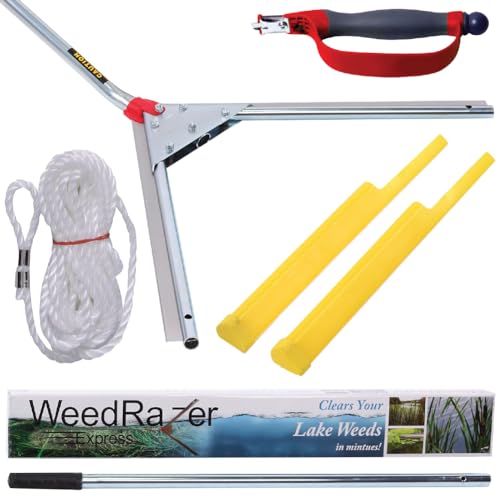
The Weed Razer Express is the compact sibling to the Original, boasting a 30-inch cut width and a lighter 6-pound design. It’s optimized for tighter ponds, smaller shorelines, or areas where space for a wide swing is limited. The 5-foot handle still provides reach to pull weeds from the base, helping maintain water clarity near docks, swim areas, and boathouses. Best for small to mid-sized water features where mobility and ease of use trump sheer cutting width. Limitation: smaller cut area means more passes may be required in dense vegetation.
Who this is best for: Homeowners with compact ponds or near-shore areas where maneuverability matters and quick, repeated passes are feasible.
Key considerations
- Balanced for easier throwing and sinking to the weed bed.
- Moderate cut width improves control in tight spaces.
- Useful as a complementary tool for smaller waterways.
VEVOR Lake Weed Cutter

The VEVOR Lake Weed Cutter offers adjustable width with a max of 37 inches and a minimum around 20 inches, enabling customization for weed density. It uses durable stainless steel blades and a tool steel frame to resist corrosion, a practical feature for repeated use in freshwater and saltwater settings. The 30-foot throw rope increases reach for shorefront clearing without needless repositioning. This model is suitable for lakefronts with variable weed thickness and a need for a robust, semi-custom cutting width. Limitation: less cutting width than some 48-inch models, so larger areas require more passes.
Who this is best for: Users who want adjustable cutting width to match weed density and don’t mind a bit more setup for a precise pass.
Key considerations
- Adjustable width helps tailor effort to conditions.
- Long throw rope reduces time spent moving the tool around.
- Rust resistance supports longevity in varied water environments.
Buzzlett Lake Weed Cutter

The Buzzlett Lake Weed Cutter features a 48-inch cutting width with sharp stainless steel blades and a 28-foot throw rope. Its ergonomic non-slip grip helps reduce fatigue during extended cleaning sessions, making it practical for larger properties or frequent clearing tasks. The tool’s rust-proof stainless steel blades promise long-lasting durability across freshwater environments. Best for users who want a straightforward, wide-area tool with reliable corrosion resistance. Caution: as with any long-handled cutter, balance and control are important to prevent accidental strikes near bystanders or boats.
Who this is best for: Budget-conscious buyers seeking a wide-cut option that balances ease of use with durability.
Key considerations
- Wide 48″ cut width for efficient clearing of large patches.
- Stainless steel blades resist rust, extending tool life.
- Long throw rope improves reach from shore or dock.
Lilyvane Lake Weed Cutter

The Lilyvane Lake Weed Cutter emphasizes all-stainless construction with a robust 33-foot throw rope for extended reach from docks or shorelines. The razor-sharp stainless steel blades deliver quick, clean cuts through cattails, reeds, lily pads, and algae mats. This model is intended for heavy-duty use and long-term durability in various water conditions, including brackish environments. Best for users who want a strong, rust-resistant tool that can cover larger areas from a longer distance. Limitation: all-stainless builds may be heavier, which can affect handling for some users.
Who this is best for: Property managers or homeowners who need a high-durability tool with substantial reach to clear distant weed patches.
Key considerations
- Full stainless steel construction for longevity and rust resistance.
- 33-foot throw rope enables long-distance clearing without entering water.
- High cutting efficiency on dense vegetation such as lily pads and reeds.
Buying Guide
What should I consider before buying a lily pad removal tool?
Cut width and reach determine how quickly you can clear larger patches. Wider blades cover more area per swing but may require more space to swing safely. A longer throw rope reduces the need to move the tool as often, saving time on big properties. Material matters too: stainless steel blades resist rust and last longer in wet environments, while a sturdy frame ensures longevity in rough use.
What water conditions affect tool choice?
In freshwater ponds near the shore, wider cutters achieve faster clearance. For mixed-density weed beds or smaller, contained ponds, a compact model can be easier to maneuver. If you operate near saltwater or brackish water, prioritize rust-resistant materials and corrosion-proof components.
Is weight a critical factor?
Yes. Heavier tools deliver more inertia for cutting at the weed bed but can be harder to throw and control over long sessions. Lighter tools are easier to handle and move but may require more passes. A balanced weight helps maximize efficiency without causing fatigue.
How important is ease of use and maintenance?
Ease of use includes comfortable grips, clear handling, and straightforward assembly. Maintenance focuses on rust resistance and blade sharpness. Tools with stainless blades and corrosion-resistant frames tend to require less upkeep and deliver consistent performance over time.
Which tool is best for a budget-conscious buyer?
Tools that balance cost with cutting width and materials, such as the Buzzlett or Lilyvane lines, offer strong value. They provide wide cutting areas, durable blades, and reasonable weight without compromising longevity.
FAQ
- What is the typical best cutting width for clearing a lake bed? A wider width, such as 30 to 48 inches, clears larger patches more quickly but requires space to swing safely. Choose based on pond width and shoreline layout.
- Are these tools safe to use near docks and swimmers? Yes, but you should maintain awareness of people and gear nearby and ensure you have space to operate. Start with slower passes near the shore.
- Do I need multiple tools for different weed densities? A combination can help—one wide cutter for open water and a smaller, more maneuverable tool for tight spaces or dense beds.
- Will these tools work in saltwater? Many are designed to resist rust and corrosion, but verify blade material and construction. Stainless steel options are best for brackish or saltwater use.
- How long does it take to clear a pond with these tools? Time varies with pond size, weed density, and user experience. Wide cutters typically reduce time for large patches, while smaller tools suit frequent maintenance on smaller water features.