Answering the need for compact, soil-based indoor germination, these LED soil grow boxes provide controlled light, moisture, and temperature in one unit. They’re best for beginner seed starters, small-space gardens, and hobby growers who want a simple, all-in-one system. The top picks below balance ease of use with reliable features like full-spectrum LEDs, humidity control, and automatic timers. Use the buying table to compare core specs at a glance.
| Product | Best For | Key Feature |
|---|---|---|
| LetPot Smart Seed Starter | Beginner and winter-start projects | All-in-one control via app |
| BAOSHISHAN Seed Starter Tray | Herbs and small plants | Self-watering with long bulb life |
| VGrow All-in-One Smart Grow Box | First-time to harvest | Integrated circulation and tailored spectrums |
| FYLXURO Seed Starter Tray (2-Pack) | Low-budget seed rounds | Dual trays with humidity dome |
| RooTrimmer Seed Starter Tray (3-Pack) | Many seedlings at once | 54-cell deep-root design with timer |
LetPot Smart Seed Starter With Humidity Dome

Features: All-in-One Smart Germination System with a 24W full-spectrum LED, a 24W smart heating base, soil EC & temperature monitoring, adjustable humidity dome, and app control—no extra devices needed. The 24W full-spectrum LED provides even coverage across 40 cells to prevent leggy growth. The smart heating base stabilizes soil temperature day and night, with automatic adjustments for reliable germination.
Best for: Beginners starting seeds in cooler indoor spaces, or anyone wanting a single, self-contained germination unit. Why choose this if you want an integrated system that handles light, heat, and monitoring from an app. Caution: It is a compact unit; larger plant varieties may require transplanting sooner than bigger setups.
Seed Starter Tray With Grow Light – 60 Cells

Features: A 60-cell self-watering seed starter with a 24/7 LED grow light system. Each light strip packs 56 high-efficiency LEDs for even coverage, adjustable brightness, and a timer to support all growth stages. The dome and base tray are BPA-free PET for durability and humidity retention. The design aims to reduce watering frequency while promoting robust seedling development.
Best for: Small herb and flower starts that benefit from continuous light and easy moisture management. Better for: users who want a simple, low-maintenance seed tray with built-in water awareness. Caution: The semi-transparent base makes water levels visible, but occasional refills are still required for longer germination windows.
VGrow All-in-One Smart Grow Box

Features: A ready-to-grow smart system with LED grow lights, a built-in circulation system, and planting accessories. The Grow Pilot guides users through stages with HD tutorials and controlled spectrums—full spectrum for leaf growth, red for flowering, and blue for sturdy stems. It’s designed for herbs, leafy greens, small vegetables, and flowers, with energy-friendly operation via phone control.
Best for: Those seeking a turnkey, guided indoor garden from seed to harvest. Better for: users who want stage-by-stage support and remote management. Caution: It is more feature-rich, which can require a steeper initial setup than simpler trays.
Seed Starter Tray With Grow Lights (2-Pack)
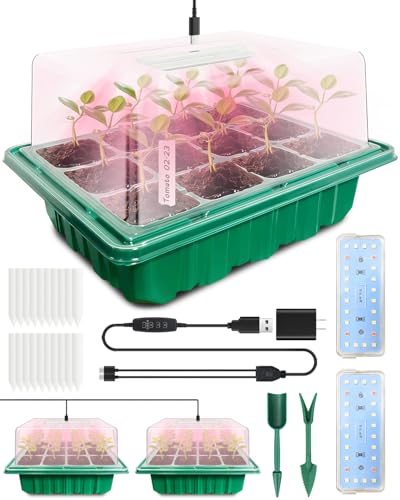
Features: A 2-pack tray system with 24 LEDs per unit, including 5 brightness levels and timers (4, 8, 12, 18 hours). Each tray has 12 larger cells, plus a 3.3-inch high humidity dome. Dual drainage helps prevent root rot and keeps the growing area tidy. The design emphasizes long-term reuse and easy observation of root development.
Best for: Busy urban gardeners who want multiple seed rounds and a forgiving humidity environment. Choose this if: you need more seed capacity per purchase. Caution: The 2-pack is still compact; very large crops will need larger systems.
Indoor Garden Planter With 17W Led Light

Features: Self-watering soil planter with a 17W LED grow light and adjustable sunlight settings. This compact system is designed for beginners and experienced gardeners who want a stable indoor growing environment. The mode options cycle through different light schedules to support photosynthesis under varied indoor conditions.
Best for: People who want a standalone soil planter that doubles as a light source. Better for: small-space indoor gardening where soil-based cultivation is preferred. Caution: It’s a planter-style unit, so plant height is limited by the enclosure.
Wolezek Grow Lights With Stand

Features: A 32W full-spectrum grow light with stand, offering 6/9/12-hour timer options and a height-adjustable frame. The 6, 9, or 12-hour timers support consistent daily lighting. The light provides a mix of red and blue spectrum to promote germination, foliage growth, and sturdy stems when used with indoor plants.
Best for: Seed starters who need a flexible stand-alone light for diverse plant types. Better for: users who want adjustable height to grow with their plants. Caution: Not a self-contained soil system; pairing with a separate planter may be necessary for soil-based crops.
Yadoker Plant Grow Light With Soil Tester

Features: 72 LED full-spectrum grow light with height adjustment up to 61.1 inches, a 10-level dimmable setting, and a timer option. Designed to illuminate indoor plant growth across various stages, it supports a wide range of indoor plants and is adaptable to different room layouts.
Best for: Growers needing tall reach and adjustable brightness for larger plant clusters. Better for: multi-plant setups where space and light direction vary. Caution:higher ceilings may be required to utilize full extension.
Seed Starter Tray With Grow Lights – 3-Pack

Features: A 3-pack seedling starter kit with 54 cells per tray, 4-inch tall humidity domes, and 96-LED full-spectrum grow lights. The kit includes a smart cycle timer (3H/9H/12H) and 4 dimmable brightness levels to accommodate different seedling requirements. The deep-cell design supports robust root growth.
Best for: Large seedings projects or classrooms needing multiple trays. Better for: users seeking dense seedling capacity with consistent lighting. Caution: The 54-cell configuration may require careful transplant planning to avoid crowding in later stages.
Buying Guide
What should you consider when choosing a LED soil grow box?
- Seed type and space: Larger seeds or transplant needs require more cell space or bigger boxes.
- Lighting: Look for full-spectrum LEDs with adjustable brightness and height, to support different growth stages.
- Moisture management: Self-watering or humidity domes help maintain consistent moisture without overwatering.
- Temperature control: Systems with heating bases or integrated sensors help germination in cooler environments.
- Automation: App control, timers, and guided setup save time and reduce guesswork for beginners.
- Expansion potential: Some units scale with more trays or higher stands, which is useful for growing seasons.
Practical tips for buyers: match a unit’s features to your typical planting schedule, space constraints, and how much hands-on management you’re comfortable with. For a hands-off experience, prioritize all-in-one kits with app control. For budget-conscious buyers, consider multi-pack trays with compatible light kits to expand gradually.
FAQ
- What is a LED soil grow box used for?
It provides a controlled indoor environment with light, moisture, and temperature management for seed starting in soil.
- Do all-in-one germination kits require many extra accessories?
No. Many combine light, heat, and humidity control in one unit, reducing the need for separate devices.
- Is full-spectrum light better for seed germination?
Yes, full-spectrum light supports photosynthesis across germination and early growth stages, reducing leggy seedlings.
- How important is a humidity dome?
It helps maintain humidity around young roots and developing leaves, supporting faster germination in dry indoor spaces.
- Can these systems grow vegetables indoors?
Yes, many are suitable for leafy greens, herbs, and small vegetables with appropriate transplant timing.
- Do I need a separate temperature controller?
Some units include built-in sensors and heating bases; others may require a separate controller for precise conditions.