Gardens thrive when pests are kept in check without harming plants, pollinators, or the environment. The right insecticide spray can protect vegetables, fruits, and ornamental plants while meeting organic or conventional gardening goals. This article highlights five widely recommended options, covering organic and synthetic approaches, safety considerations, and performance in different settings—from indoor herb containers to outdoor vegetable plots.
The following table summarizes the chosen products, focusing on their primary use, key features, and what makes them suitable for typical home gardens.
| Product | Brand | Primary Use & Highlights |
|---|---|---|
| Organic Laboratories Lab QT Organocide 3-in-1 Garden Spray | Organic Laboratories | Organic insecticide, fungicide, miticide; safe for harvest and indoor use; EPA exempt |
| Earth’s Ally 3-in-1 Plant Spray | Earth’s Ally | Natural, ready-to-use spray; controls insects and diseases; safe for pollinators and pets |
| BioAdvanced Vegetable and Garden Insect Spray | BioAdvanced | Concentrated insecticide; broad-spectrum control; protects fruit & vegetables |
| Bonide Pyrethrin Garden Insect Spray Concentrate | Bonide | Fast-acting insecticide concentrate; derived from chrysanthemum; broad pest coverage |
| Monterey Spinosad Insecticide | Monterey | Spinosad-based; OMRI-listed for organic gardening; versatile outdoor use |
Below are detailed product sections with practical guidance for selecting and using these sprays effectively in typical American gardens. Each section provides product-specific information, application considerations, and a balanced view of strengths and limitations.
Organic Laboratories Lab QT Organocide 3-in-1 Garden Spray

Organocide offers a nature-safe combination of insecticide, fungicide, and miticide designed for versatility in home gardens. Its organic credentials appeal to growers seeking fewer synthetic inputs, and the product is described as safe for harvest-time spraying and indoor use. The formulation emphasizes environmental safety and EPA exemption, making it a compelling option for those prioritizing sustainability. For pest management, it can address mites and various insects while providing some disease control. Users should follow label directions for acceptable crops and re-entry guidelines to maximize efficacy and minimize risk to beneficial insects.
Earth’s Ally 3-in-1 Plant Spray

This ready-to-use spray blends botanical oils to inhibit pests and fungal pathogens while offering foliar protection. It targets common soft-bodied insects such as spider mites, aphids, whiteflies, mealybugs, and scale, and also helps with fungal issues like powdery mildew and leaf spot. The OMRI-listed status and emphasis on safety for pollinators, kids, and pets make it suitable for homes with flowering plants or edible gardens. Because it relies on active plant oils rather than harsh synthetic chemicals, expect gradual knockdown and a need for repeat applications during heavy pressure periods. Always test on a small area first to verify compatibility with sensitive ornamentals.
BioAdvanced Vegetable And Garden Insect Spray

BioAdvanced provides a concentrated solution designed to kill a broad spectrum of garden insects on contact, with a focus on protecting edible crops. The product is positioned for easy mixing and application, enabling gardeners to treat vegetables, fruiting plants, and associated foliage. By targeting common pests like aphids, caterpillars, thrips, and whiteflies, it supports preventative and curative control. When using concentrates, follow dilution ratios precisely and avoid treating during extreme heat or when beneficial pollinators are active. This option is well-suited for larger plots or containers where repeated treatment is needed across diverse crops.
Bonide Pyrethrin Garden Insect Spray Concentrate

Bonide Pyrethrin Garden Insect Spray uses pyrethrin, a natural insecticidal compound derived from chrysanthemum flowers, to rapidly reduce pest populations. It is highlighted for outdoor use on ornamentals and vegetables, including beans, peppers, and tomatoes. The product’s fast action makes it appealing for sudden infestations, while its biodegradable nature aligns with environmentally conscious gardening. Users should assess spray timing, especially near beneficial insects and pollinators, and apply evenly to foliage until coated but not dripping. It’s a strong choice for spot treatments and quick knockdowns in mixed plant beds.
Monterey Spinosad Insecticide
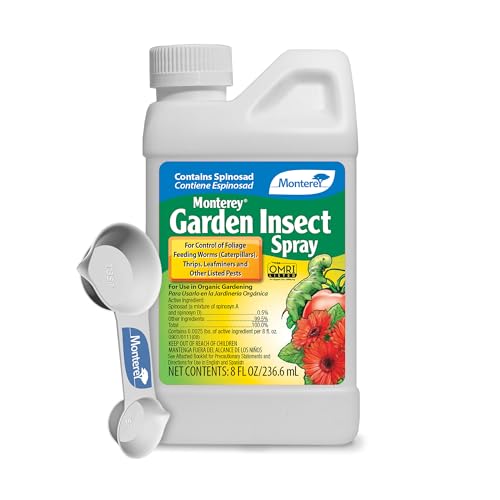
Monterey Spinosad is an insecticide based on spinosad, a natural bacterially derived ingredient. It is OMRI-listed for organic gardening and is effective against a broad array of pests, including caterpillars, leafminers, aphids, and various borers. Spinosad is known for its targeted mode of action, reducing broad collateral harm to non-target organisms when used as directed. As with any spray, timing and coverage are key; repeat applications may be needed in ongoing infestations. This option is particularly suitable for fruit trees, vegetables, and ornamental plants where organic integrity is desired.
Buying Guide: How to Choose The Right Garden Insecticide Spray
- Garden goals and compliance: Decide whether you need an organic option, a conventional broad-spectrum spray, or a combination product that also targets fungal diseases. Check label claims and any organic certifications (such as OMRI listings).
- Target pests and plants: Consider which pests are most common in your area and whether you’re protecting edible crops, flowers, or ornamentals. Some products excel at mites, others at caterpillars or aphids; some are safe on fruits and vegetables, others are not.
- Safety for people and pollinators: If you have children, pets, or pollinator-friendly blooms nearby, prioritize products with lower toxicity, shorter re-entry intervals, and minimal impact on bees and other beneficial insects when applied as directed.
- Application method and convenience: Evaluate whether you prefer ready-to-use sprays or concentrates you mix yourself. Consider spray coverage, re-entry timing, and compatibility with spray equipment you already own.
- Environmental impact and persistence: Organic options often break down more quickly but may require more frequent applications. Some products provide systemic protection, while others work mainly by contact; balance persistence with environmental considerations.
- Combination benefits: Multi-action products that combine insecticidal and fungicidal properties can reduce the number of products needed, but ensure they are appropriate for the specific diseases and pests in your garden.
- Resistance management: Rotate products with different active ingredients to reduce the risk of pest resistance. Avoid prolonged, exclusive use of a single mechanism.
- Plant compatibility: Test on a small leaf area if you’re applying to sensitive ornamentals or edibles to prevent phytotoxicity, especially in hot or sunny conditions.
In practice, the best approach is to tailor spray choices to the garden size, plant types, pest pressure, and any certifications you care about. For beginners, starting with a ready-to-use product that targets common pests and diseases, paired with regular monitoring, often yields reliable results without overcomplicating maintenance.