Whiteflies are a common pest across crops and ornamentals, challenging gardeners and growers alike. This guide highlights effective insecticides and bio-based products that target whiteflies and related pests, offering options for different scales and environments. Each product is summarized with its key strengths and usage notes to help you compare quickly and choose confidently.
Summary Table
| Product | Brand | Size | Top Use |
|---|---|---|---|
| Endeavor 50WG Insecticide | Syngenta | 15 oz | Aphids and whiteflies on various crops |
| Marrone Bio Innovations CG Bioinsecticide | Marrone Bio Innovations | 1 quart | Aphids, leafhoppers, whiteflies, mites, thrips |
| Grandevo CG Bioinsecticide (1 lb) | Marrone Bio Innovations | 1 lb | Aphids, whiteflies, mites, SWD, more |
| Grandevo CG Bioinsecticide (4 lb) | Marrone Bio Innovations | 4 lb | SWD management and broader pest control |
| Venerate XC Bioinsecticide | Marrone Bio Innovations | 2.5 gal | Mites, thrips, aphids, whiteflies, leafhoppers |
Endeavor 50WG Insecticide for Aphids & Whiteflies

Product overview: Endeavor 50WG is a water-soluble, fine granular insecticide designed to combat aphids and whiteflies among other pests. The packaging notes a shift from packets to a single 15-ounce container, indicating a revised formulation handling and application approach. Consider its compatibility with your existing spray equipment and water hardness when preparing solutions. This product is useful for growers seeking a versatile, broad-spectrum option with a reputation for effective suppression of soft-bodied pests.
Key considerations: Verify label instructions for target crops, timing relative to harvest, and any restrictions on tank mixes. For water-soluble formulations, ensure complete dissolution to maximize efficacy and minimize clogging in application equipment.
Marrone Bio Innovations CG Bioinsecticide (1 Quart)
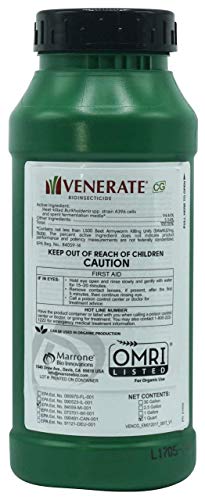
Product overview: Venerate CG is a bioinsecticide designed to address multiple pests including aphids, leafhoppers, lygus, stink bugs, thrips, and whiteflies. It emphasizes a broad spectrum and compatibility with integrated pest management (IPM) programs. The product is often used in crops such as grapes, berries, potatoes, and citrus, aligning with growers seeking sustainable options that minimize environmental impact.
Key considerations: Assess compatibility with beneficial insects and pollinators, confirm PHI and REI requirements, and review OMRI/NOP listing status for organic production where applicable.
Grandevo CG Bioinsecticide (1 lb)
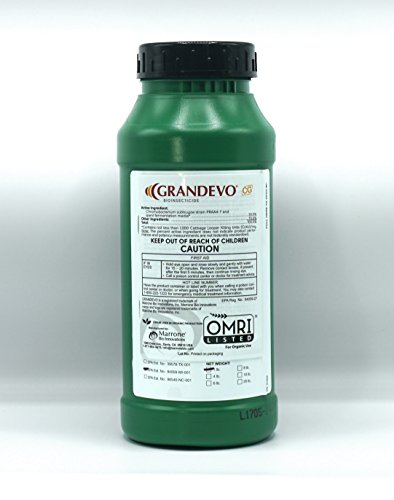
Product overview: Grandevo CG is positioned for SWD management and resistance management across crops like grapes, potatoes, and tomatoes. It emphasizes an IRM-friendly approach and provides an O-day PHI with a 4-hour REI, making it suitable for pre-harvest intervals. The product is listed by OMRI and NOP for organic compatibility, appealing to growers pursuing organic or low-residue strategies.
Key considerations: Monitor rotation plans with other modes of action to delay resistance development, and ensure adherence to local regulatory guidelines for organic use where required.
Grandevo CG Bioinsecticide (4 lb)
Product overview: This larger format extends the same core capabilities as the 1 lb variant, offering extended coverage for larger operations. It remains focused on mites, aphids, thrips, whiteflies, and other pests while supporting SWD management and IRM strategies. The 4 lb size is suitable for growers with repeated applications across seasons, reducing handling frequency.
Key considerations: Plan applications to maintain consistent pest suppression while minimizing disruption to beneficial insects; confirm storage guidelines for larger quantities and batch integrity.
Venerate XC Bioinsecticide (2.5 Gallon)

Product overview: Venerate XC is derived from Burkholderia spp. and offers multiple modes of action against adults and nymphs. It targets a broad range of pests including whiteflies, with an emphasis on novel bacterial-based efficacy. The 2.5 gallon size makes it suitable for larger operations or frequent spray programs, potentially reducing the volume of product per acre through concentrated coverage.
Key considerations: Review label directions for crop compatibility and tank-mixability, and consider compatibility with existing mite and whitefly management plans to avoid conflicting actions.
Atticus Eschaton TR Greenhouse Fogger

Product overview: Atticus Eschaton TR is a total release fogger formulated with 5% etoxazole for mite control, with demonstrated suppression of whiteflies. It is designed for greenhouse environments and ensures thorough coverage by releasing micro-sized particles that can reach undersides of leaves where pests hide. Rotate with other products to manage resistance across pest life stages.
Key considerations: Follow safety guidelines for fogger use, ensure proper ventilation after application, and incorporate fogging into a broader IPM plan that includes monitoring and resistance management.
Buying Guide
- Target pests and crops: Confirm which pests you are facing (whiteflies, aphids, mites, etc.) and verify crop compatibility with each product’s label.
- Mode of action and rotation: Use products with different modes of action to reduce resistance. Create a rotation plan across product families when possible.
- Formulation and application method: Consider whether a water-soluble granule, liquid, or fumigation method fits your equipment and facility. Ensure compatibility with existing sprays and buffers.
- PHI and REI considerations: Review pre-harvest intervals and re-entry times to align with harvest schedules and worker safety.
- Organic and regulatory status: If you pursue organic production, prioritize OMRI/NOP-listed products and verify any regional restrictions.
- Environmental impact and beneficials: Assess potential impacts on pollinators and beneficial insects; select products that minimize disruption where IPM is practiced.
- Storage and handling: Check shelf life, storage requirements, and packaging volumes to match your operation size and risk tolerance.