Spider mites can threaten indoor and outdoor plants, performance, and yields. This article highlights five effective, readily available insecticides and miticides that target spider mites while supporting safe, garden-friendly use. Each product leverages plant-based oils, soap concentrates, or organic-friendly formulations to combat mites with minimal residue. Read on for concise product insights, application notes, and a practical buying guide to help you choose the right option for your setup.
| Product | Brand | Format | Notable Focus |
|---|---|---|---|
| Grower’s Ally Spider Mite Control Spray Ready to Use 24 oz | Grower’s Ally | Ready-to-use spray | Natural miticide, rosemary oil blend |
| Trifecta Crop Control Ready to Use | Trifecta | Ready-to-use spray | Plant-based, broad spectrum |
| Mite Killer Spray by Mite-B-Gone | Naturasil | Spray | Non-toxic, pet-safe, household mites |
| Safer 5118-6 Insect Killing Soap Concentrate | Safer | Concentrate | Insecticidal soap for plants |
| Earth’s Ally Insect Control for Plants | Earth’s Ally | Ready-to-use spray | Rosemary, clove, peppermint oils |
The following sections review five products most relevant to spider mite control, drawing on their active ingredients, usage guidance, and compatibility with organic gardening or home use. Each entry includes a concise overview, what makes it effective against spider mites, and practical application notes. This layout aims to help homeowners and gardeners compare options quickly and decide which product best fits their plant care routine.
Grower’s Ally Spider Mite Control Spray Ready to Use
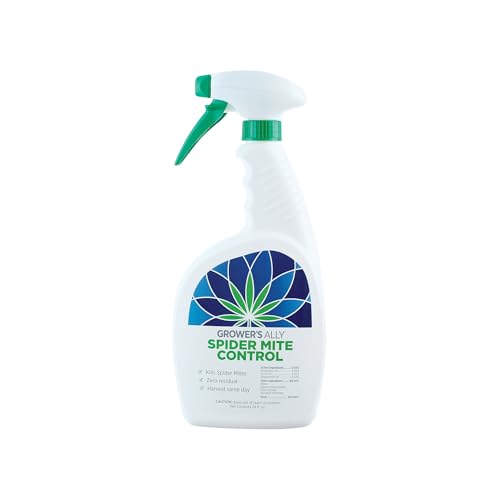
Grower’s Ally Spider Mite Control is a ready-to-use spray designed to kill and repel common soft-bodied pests, including adult and juvenile spider mites. The formulation relies on a natural blend of rosemary, clove, and peppermint oils, offering an organic-friendly approach that’s FIFRA 25(b) exempt and OMRI Listed for organic gardening. Used preventatively, the rosemary component can help deter mite activity while the oils provide contact-based action to immobilize pests on contact. The product is positioned as safe for both indoor and outdoor use, aligning with gardeners seeking minimal synthetic inputs.
Key considerations include its ease of use (ready-to-spray), compatibility with organic systems, and the emphasis on limiting chemical residues. While effective on contact and as a preventative, repeated applications may be necessary in heavy mite pressure scenarios. This option is well-suited for growers who prioritize botanical actives and OMRI-listed status in home or small-scale garden settings.
Trifecta Crop Control Ready to Use
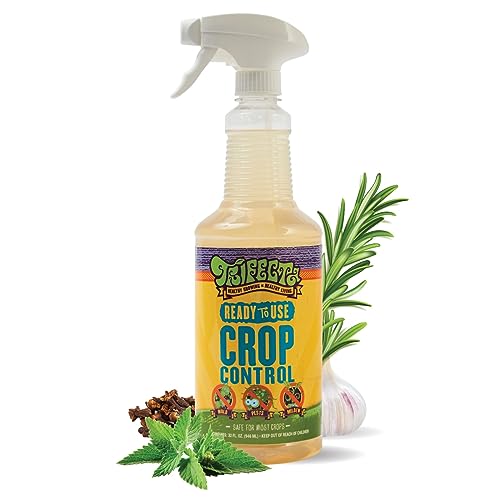
Trifecta Crop Control is an all-natural, plant-based solution that targets a range of pests, including spider mites, aphids, and whiteflies, with a focus on safe use in both indoor and outdoor environments. The formulation is described as biodegradable and eco-friendly, designed to work without chemical residues on edible crops. It claims to suffocate or dehydrate pests, providing rapid knockdown with minimal impact on beneficial insects when applied as directed. The product also touts fungicidal properties, extending its utility to managing some concurrent plant diseases.
When applying Trifecta Crop Control, practitioners should consider coverage uniformity, reapplication frequency in ongoing infestations, and its suitability for organic growing contexts. For households or gardens seeking a broad-spectrum botanical approach, this option offers a versatile choice with fewer synthetic inputs than conventional pesticides.
Mite Killer Spray by Mite-B-Gone

The Mite-B-Gone Mite Killer Spray targets a wide range of household and animal-associated mites, including spider mites, dust mites, and even human-associated mites in some contexts. The formula is marketed as EPA 25(b) listed for using natural ingredients and emphasizes rapid contact action for mites and other pests. It is promoted as pet- and family-friendly, making it a convenient option for homes with children or pets. While the product covers multiple mite species, users should verify its suitability for plant protection in garden contexts and follow label directions for plant-safe use when applying indoors near houseplants.
Pros include broad-spectrum mite control, rapid action, and low-toxicity positioning. A potential limitation is ensuring the product’s label-specific guidance aligns with plant applications, particularly if you’re applying near edible crops or in highly integrated pest management (IPM) programs. This option serves households seeking a versatile, low-toxicity solution for multiple mite challenges.
Safer 5118-6 Insect Killing Soap Concentrate
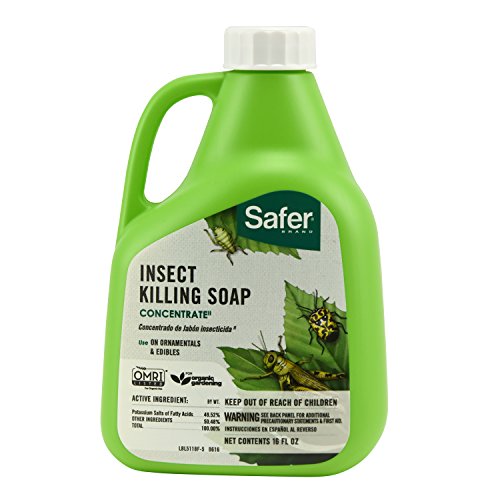
Safer 5118-6 is a concentrated insecticidal soap designed to kill a variety of soft-bodied pests, including spider mites, on a range of plants. As an insecticidal soap, it disrupts the pests’ cell membranes upon contact, leading to rapid knockdown. The concentrate format allows for flexible dilution ratios tailored to plant type and infestation level. The product is positioned as suitable for organic gardening contexts and compatible with a broad spectrum of ornamentals, edibles, and herbs, with repeated applications recommended at intervals of about 5-7 days during active outbreaks.
Practical considerations include compatibility with delicate leaves, potential phytotoxicity on certain plant varieties, and the need for thorough coverage on undersides of leaves where mites often congregate. For gardeners seeking a soap-based approach, Safer 5118-6 offers a proven, straightforward option with room for adjustment based on plant tolerance and pest density.
Earth’s Ally Insect Control for Plants

Earth’s Ally Insect Control combines essential oils, notably rosemary, clove, and peppermint, to create a botanical spray designed to kill and repel a broad spectrum of soft-bodied insects, including spider mites. The formula emphasizes organic gardening utility, with an OMRI-listed status that supports organic use in gardens and on edible crops. The product advertises safety for use up to the day of harvest, making it a practical choice for herb gardens, vegetables, and indoor houseplants alike. Its multi-insect focus can be beneficial when mites co-occur with other pests.
Key considerations involve ensuring thorough coverage (mites reside on the underside of leaves), staggered spray intervals to prevent re-emergence, and compatibility with the specific crops in your care. For gardeners seeking an OMRI-listed, plant-oil-based option that reduces reliance on synthetic pesticides, Earth’s Ally offers a balanced approach with a focus on plant compatibility and harvest-time flexibility.
Buying Guide: What to Consider When Choosing a Spider Mite Insecticide
- Safety and organic compatibility: If you grow edible crops or prefer organic gardening, look for OMRI-listed products and FIFRA 25(b) exemptions. Botanical ingredients (rosemary, clove, peppermint oils) and insecticidal soaps tend to be gentler on beneficial insects when used as directed.
- Mode of action: Contact-kill botanicals, oils, and soaps provide rapid knockdown but may require repeated applications under heavy mite pressure. Some products also offer repellent or preventative effects. Consider integrating products with different modes of action to reduce resistance risk.
- Plant safety and phytotoxicity: Delicate foliage or new growth can be sensitive to essential oils and soaps. Always test on a small leaf area or follow label dilution guidelines to prevent leaf burn or stress, especially on ornamentals and herbs.
- Residue and harvest timing: For edible crops, prioritize formulations labeled safe for use up to harvest. Some products are suitable for use on herbs and vegetables right before harvest, while others may require a waiting period.
- Indoor vs. outdoor use: Indoor environments may benefit from products designed for indoor use with low odor and minimal spray drift. Outdoor use should account for weather, UV exposure, and potential effects on pollinators if applied during bloom.
- Coverage and reapplication: Spider mites hide on the undersides of leaves and in webbing. Ensure full leaf coverage and consider multiple applications at intervals (often 5-7 days) to break the life cycle and reduce reinfestation.
- Integrated Pest Management (IPM) compatibility: Combine cultural controls (quarantine of infested plants, humidity management), physical removal (manual mite removal), and compatible products to sustain long-term mite suppression.
In selecting a spider mite insecticide, balance efficacy with plant safety and your gardening goals. Botanical oils and insecticidal soaps provide practical, lower-toxicity options for many homes and gardens, while ready-to-use formats offer convenience for homeowners and hobbyists. For organic growers, OMRI-listed products that function as miticides or have repellent properties can support compliant pest management. Always follow the product label for application rates, timing, and safety precautions to optimize results and protect plants.