Dealing with Japanese beetles requires selecting effective, reliable options that protect your plants without harming your landscape. The following products are among the most commonly recommended by homeowners and garden professionals for controlling these tough pests. This guide outlines each option’s purpose, how to use it safely, and what to expect in real-world results. Use this overview to compare contact sprays, soil-applied treatments, and attractant traps to tailor a strategy to your yard.
| Product | Type | Use Area | Key Benefit |
|---|---|---|---|
| Bonide Japanese Beetle Killer Ready-to-Use Spray | Contact Insecticide | Indoors, Outdoors | Broad spectrum control on vegetables, flowers, ornamentals, trees, and shrubs |
| Catchmaster Japanese Beetle Trap Outdoor 3PK | Trap | Yard, Garden | Dual lure system draws beetles away from plants |
| Pro Grub Control – 32oz (Imidacloprid) | Systemic Insecticide | Trees, Shrubs, Landscape | Controls beetles and grub larvae with soil/foliar applications |
| Spectracide Bag-A-Bug Japanese Beetle Trap 2 | Trap | Yard | Over 5,000 sq ft coverage |
| RESCUE! Japanese Beetle Trap – Reusable Bag | Trap | Yard | Reusable trap that attracts and captures beetles |
Bonide Japanese Beetle Killer Ready-to-Use Spray
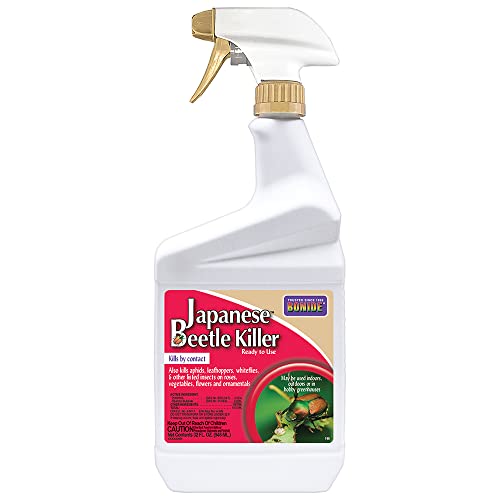
The Bonide Japanese Beetle Killer Ready-to-Use Spray is designed for immediate action on contact. It targets Japanese beetles along with a range of other common pests such as aphids, flea beetles, leafhoppers, caterpillars, and webworms. This versatility makes it suitable for use on vegetables, flowers, ornamentals, trees, and shrubs, both indoors and outdoors. The product is labeled for residential use and can be applied to a variety of surfaces, offering a practical solution for gardeners who need rapid results. When applying, follow label directions carefully to minimize exposure to people and pets and to protect beneficial insects in bloom periods. As with other contact sprays, coverage and timing are critical for effectiveness, especially during peak beetle activity.
Key points: quick knockdown on contact; broad pest spectrum; indoor/outdoor use; suitable for multiple plant types; safety and application guidelines are essential to optimize outcomes.
Bonide Product Details and User Guidance
When using a contact spray like Bonide’s, apply during active beetle periods, ensuring thorough coverage on the upper and lower leaf surfaces where beetles feed. Reapply as directed after rain or as beetle pressure persists. Consider combining with cultural controls such as pruning heavily infested foliage and maintaining plant health to reduce beetle damage. This product is described as effective on a range of pests beyond Japanese beetles, which can be advantageous for multifunctional garden protection. However, like all insecticides, it may not offer lasting protection once beetles are no longer present, and repeated applications can be necessary during heavy infestations.
Catchmaster Japanese Beetle Trap Outdoor 3PK

The Catchmaster Japanese Beetle Trap uses a dual lure system to attract both male and female beetles, drawing them away from prized ornamental plants, fruit trees, vegetables, and flowers. The trap is designed for outdoor use and claims coverage of more than 5,000 square feet. It includes a lid to prevent rainwater from diluting the attractant and disposable collection bags that hold captured beetles. For best results, place multiple traps at a distance from plants being protected and at the level where beetles are most active. Regularly check and replace disposal bags to maintain effectiveness throughout the beetle season.
Key points: dual lure system reduces pest pressure on plants; broad outdoor coverage; rain-resistant design; requires monitoring and bag disposal for ongoing use.
Catchmaster Trap Setup and Use Tips
Traps like Catchmaster can be a practical part of an integrated pest management plan, especially in yards with abundant beetle activity. They help reduce beetle populations near flowering plants and trees, but they work best as part of a broader strategy that includes plant health maintenance, targeted insecticides, and selective use of pheromone lures to avoid attracting beetles to sensitive areas. While traps do not eliminate beetles entirely, they can lower infestation levels and extend the life of ornamental plants during peak feeding windows.
Pro Grub Control – 32oz Imidacloprid

Pro Grub Control is a systemic insecticide designed to protect trees, shrubs, and landscape ornamentals by delivering active ingredients through the plant’s vascular system. This product is labeled for quick uptake via turf applications, foliar sprays, or soil treatments. The active ingredient, Imidacloprid at 21.4%, targets a range of pests, including Japanese beetles and grub larvae. For effective results, apply according to label directions, calibrate the application rate to plant size and species, and consider timing in relation to beetle life cycles. Systemic products can provide extended protection, but potential impacts on pollinators should be considered and used in accordance with local regulations and label precautions.
Key points: systemic protection; flexible application methods; good for trees and landscape plantings; mindful use around pollinators and non-target organisms.
Spectracide Bag-A-Bug Japanese Beetle Trap 2
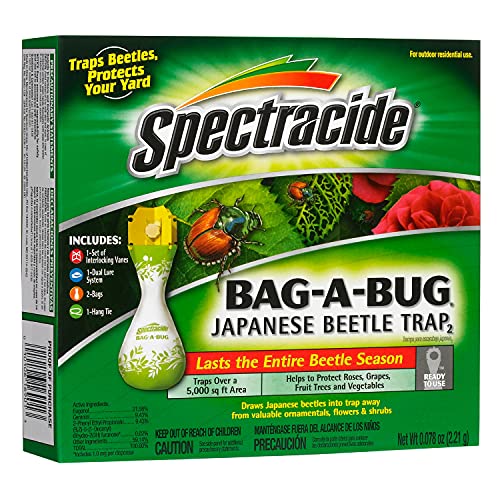
The Spectracide Bag-A-Bug trap is designed to protect outdoor spaces by capturing beetles with a simple, ready-to-use trap system. This model is advertised as covering over 5,000 square feet, which makes it suitable for medium to large yards with multiple flowering plants and trees. Traps are most effective when placed away from the vegetables and decorative shrubs you want to protect, as they operate by luring beetles away from them. Proper placement, regular bag replacement, and timely maintenance are essential for sustained performance across a season.
Key points: sizable coverage; user-friendly setup; outdoor-focused pest management; integrate with plant protection practices to maximize impact.
Spectracide Bag-A-Bug Japanese Beetle Trap (Pack of 3)

This pack expands the same concept as the single trap with multiple units, providing greater yard coverage to intercept beetles across larger landscapes. A trio of traps can reduce beetle concentration near important plantings by increasing the total lure distribution across the yard. As with any trap-based approach, effectiveness improves when used as part of a broader strategy that includes regular monitoring, plant health management, and limited use of insecticides when beetle pressure is high.
Key points: more traps equal broader coverage; cost-effective for large spaces; coordinate placement with plant protection zones.
RESCUE! Japanese Beetle Trap – Reusable Bag
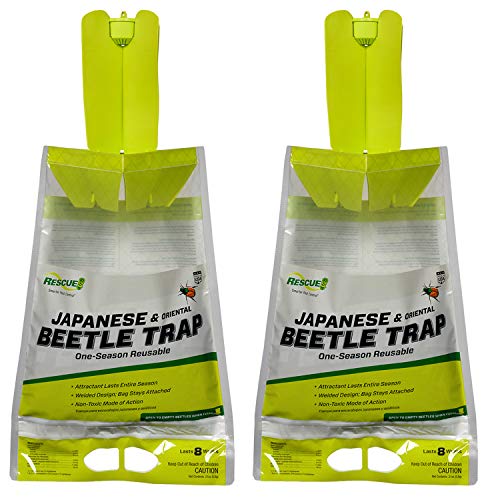
The RESCUE! trap offers a reusable bag design with an attractant cartridge that lasts an entire season. The trap is designed to attract and capture both Japanese beetles and oriental beetles, which can also be problematic in some areas. The large green panels are part of the capture mechanism, and the collected beetles fall into the bag, which can be emptied and reused when needed. This option emphasizes reusability and cost-effectiveness, with a focus on reducing beetle populations by trapping them away from plants. Regular maintenance and queueing with other control methods can improve long-term outcomes.
Key points: reusable system; targets multiple beetle species; seasonal attractant cartridge; easy to empty and reuse.
Buying Guide
- Identify beetle behavior and life stage: Japanese beetles feed heavily during the adult stage, while grubs live underground. Pair contact or systemic sprays with grub controls for season-long protection where grubs are a concern.
- Choose a control method that fits your yard: For small to mid-size landscapes, a spray like Bonide provides immediate knockdown. For larger areas, traps from Spectracide or Catchmaster can reduce beetle buildup. In trees and ornamental landscapes, systemic controls like Imidacloprid can offer extended protection, but consider pollinator safety and timing.
- Consider an integrated approach: An effective plan often combines cultural practices (healthy soil, proper watering), physical controls (traps placed away from high-value plants), and selective chemical controls timed to peak beetle activity.
- Placement matters for traps: Position traps away from edible gardens and flowering beds you want to protect. Space multiple traps to create a corridor that lures beetles away from prized areas.
- Safety and environmental considerations: Follow product labels for application rates, restricted times, and plant compatibility. Be mindful of beneficial insects and pollinators, especially when using systemic insecticides in bloom periods.
- Maintenance and monitoring: Check traps and treatments regularly. Replace lures, bags, or cartridges as recommended, and adjust placement as beetle pressure shifts through the season.
In summary, effective Japanese beetle management often requires a balanced mix of immediate knockdown products, long-term systemic protection, and proactive trapping. Selecting a combination that fits your yard size, plant values, and environmental considerations will help you protect your landscape with objective, evidence-based methods.