American gardens face a common nemesis: Japanese beetles that feed on a wide range of ornamentals and crops. This guide reviews effective insecticides and traps designed to reduce beetle pressure, protect plants, and provide practical, residential use. Below you’ll find concise product summaries, usage notes, and a buying guide to help you choose the right solution for your landscape or garden.
Summary Table Of Selected Products
| Product | Brand | Type | Key Benefit |
|---|---|---|---|
| Bonide Japanese Beetle Killer Ready-to-Use Spray | Bonide | Contact Insecticide | Fast-acting, safe for indoor/outdoor residential use |
| Pro Grub Control (32 oz) Imidacloprid | Liquid Harvest | Soil/foliar insecticide | Prevents and controls beetles and grub issues in trees and ornamentals |
| RESCUE! Japanese Beetle Trap – Reusable Bag | RESCUE! | Trap | Attracts and traps beetles away from plants |
| Spectracide Bag-A-Bug Japanese Beetle Trap | Spectracide | Trap (Pack of 3) | Multi-trap solution to reduce beetle pressure |
| Bonide 428 Eight Insect Control Garden & Home | Bonide | Broad-spectrum Insecticide | Controls multiple pests including beetles on outdoor plants |
Choosing the right approach often means combining strategies: direct contact killers for immediate relief, soil/systemic options for longer-term protection, and traps to reduce local beetle populations around prized plants. The selections below emphasize products with practical residential use, clear application directions, and a track record of addressing beetle pressure in home landscapes.
Bonide Japanese Beetle Killer Ready-to-Use Spray
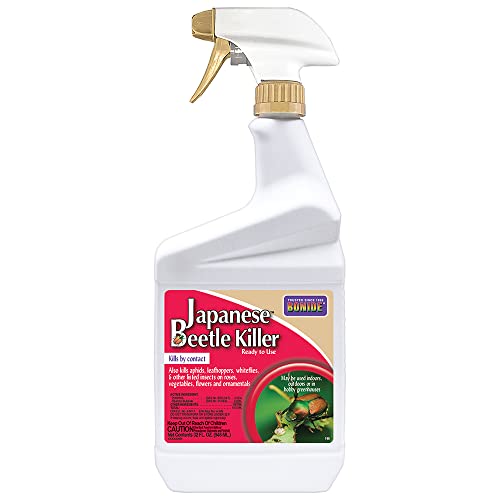
Bonide’s Japanese Beetle Killer is a versatile contact insecticide designed for residential use both indoors and outdoors. Its broad label targets a range of beetles and harmful garden pests, making it a convenient go-to for immediate beetle knockdown. The spray is suitable for vegetables, flowers, ornamentals, trees, and shrubs, offering a practical solution to quickly suppress visible beetle activity. Users should apply to the foliage where beetles feed, focusing on infested areas and ensuring thorough coverage for best results. Repeat treatments may be necessary to maintain control during peak beetle season.
Key features include a wide pest spectrum, foliage protection for a variety of plant types, and compatibility with indoor and outdoor settings. While it provides rapid knockdown, it should be applied with standard protective gear and kept away from beneficial pollinators when spraying flowering plants. For best results, follow the label directions regarding reapplication intervals and safe handling.
Pro Grub Control – 32oz (Imidacloprid)

Liquid Harvest Pro Grub Control provides a concentrated imidacloprid formulation intended for trees, shrubs, and landscape ornamentals. While its primary role is grub and beetle management, imidacloprid offers systemic protection that helps prevent feeding damage by Japanese beetles and related pests. Application may be through soil drench, foliar spray, or turf treatment, depending on the target plants and lawn conditions. This product is best used as part of an integrated approach, combining preventative soil applications with cultural practices to reduce stress on plants.
Important considerations include the systemic mode of action, the need for careful timing (often in accordance with label instructions), and potential effects on pollinators if misapplied near bloom periods. Always apply with proper PPE and follow guidelines for rate and frequency to minimize non-target impacts. This product is suited for larger landscapes or established plantings where long-term protection is desired.
RESCUE! Japanese Beetle Trap – Reusable Bag
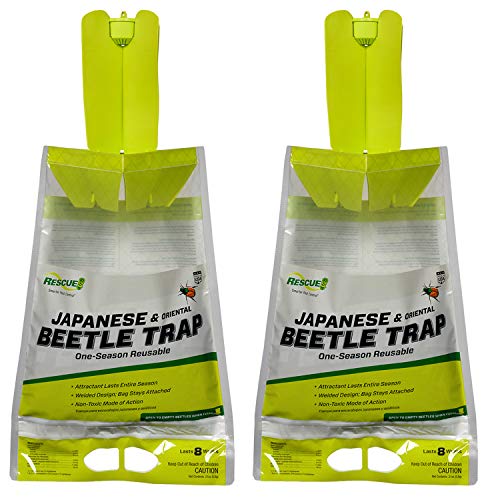
Rescue’s Japanese Beetle Trap is designed to attract and trap beetles away from plants, using pheromone cues to guide beetles into a bag where they cannot escape. The trap is reusable, and the attractant cartridge is rated for a full season, providing an economical option for long-term beetle suppression in your yard. Position traps away from prized ornamentals to draw beetles toward a controlled collection point rather than letting them feed directly on your garden.
The trap’s effectiveness depends on placement and maintenance. Be sure to replace attractant cartridges as recommended and monitor captured beetles to gauge performance across the season. While traps can reduce local beetle populations, they work best as part of a broader strategy that also includes direct plant protection and preventive treatments for susceptible plants.
Spectracide Bag-A-Bug Japanese Beetle Trap

The Spectracide Bag-A-Bug trap offers a cost-effective multi-trap package designed specifically for Japanese beetles. Packaged in multiples, it enables homeowners to deploy a coordinated trap system around the garden or landscape to reduce beetle pressure before feeding damage occurs. Each trap attracts beetles with the included attractant, guiding them into a bag for easy disposal. Proper deployment—distance from highly valued plants and regular bag emptying—helps maximize performance across larger garden areas.
Traps should be used as a preventative measure rather than a sole control method. They work best when integrated with cultural practices (watering, pruning, and plant health) and selective protective sprays if beetle populations spike in peak months. Consider the layout of your garden when choosing how many traps to place and where they should be positioned for optimal beetle interception.
Bonide 428 Eight Insect Control Garden & Home

Bonide’s Eight Insect Control is a broad-spectrum insecticide designed for outdoor use on vegetables, flowers, shrubs, and other outdoor surfaces. It claims to control a wide range of pests, including beetles, making it a practical option for households seeking a single product for multiple pest pressures. This product’s “on contact” action means pests must encounter treated areas to be affected. While broad-spectrum products can simplify maintenance, they should be used carefully to minimize impacts on beneficial insects and pollinators, especially near flowering plants.
Buying Guide: Key Purchase Considerations
- Target pests and site: For direct beetle control on ornamentals, sprays with fast knockdown work well. For lawn and tree protection, a systemic or soil-applied product can extend protection beyond leaves.
- Mode of action: Contact sprays offer quick results; systemic products provide longer-lasting protection but require careful timing and label adherence.
- Environmental impact: Consider pollinator sensitivity and water runoff. Use traps to reduce beetle presence but avoid trapping too close to bloom sources that attract beneficial insects.
- Plant safety and label directions: Read plant compatibility and application rates to avoid phytotoxicity. Indoor/outdoor use labels influence where the product can be applied.
- Integrated approach: Combine direct sprays, soil applications, and traps. Sanitation and pruning of heavily infested plants can improve outcomes alongside chemical controls.
- Seasonality and timing: Beetle populations fluctuate by region. Plan applications around peak beetle activity to maximize effectiveness and minimize re-treatment needs.
- Maintenance and replacement: Traps require periodic cartridge replacement and bag management. Store products as directed to preserve potency and safety.
In summary, a layered approach often yields the best results against Japanese beetles: use a fast-acting spray for immediate relief, leverage a systemic or soil treatment for ongoing protection, and deploy traps to reduce local beetle pressure. Always follow label instructions and local regulations, and consider less disruptive methods in combination with chemical controls to maintain a healthy garden ecosystem.