Gardens thrive when pollinators and beneficial insects have a safe home nearby. The following insect houses are designed to attract bees, butterflies, ladybugs, lacewings, and other garden allies, while providing nesting, overwintering, and shelter from rain. Each option offers different materials and layouts to suit small patios or larger plots. The list focuses on durable, wood-based designs with varied compartments to accommodate multiple species. Use these habitats to boost pollination and natural pest control in your outdoor space.
| Product | Brand | Approx. Size | Highlights |
|---|---|---|---|
| Lulu Home Wooden Insect House (Bee, Butterfly, Ladybugs) | Lulu Home | 10.4 x 3.4 x 5.4 in | Multiple compartments; supports diverse species |
| Navaris Bug Hotel And Bee House Kit | Navaris | Large; spans multiple compartments | Wide capacity; easy cleaning |
| Lulu Home Wooden Insect House With Stake | Lulu Home | 19.7 x 3.4 x 5.4 in | Two mounting options; natural materials |
| Niteangel Natural Wooden Insect Hotel | Niteangel | Compact; versatile | Safe nesting for butterflies, bees, ladybugs |
| Wildlife Friend Insect Hotel | WILDLIFE FRIEND | 10 x 3 x 11 in | All-year shelter; metal roof for rain protection |
Lulu Home Wooden Insect House
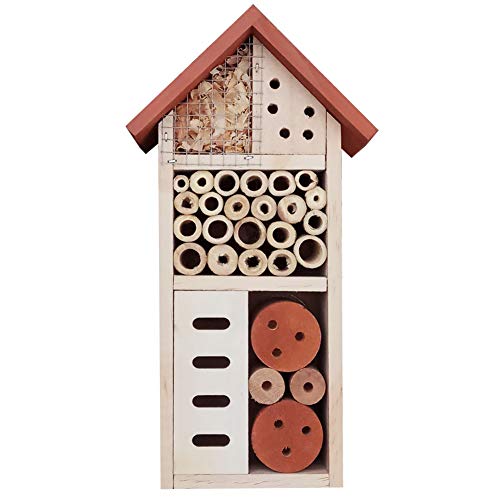
The Lulu Home insect house is designed to attract a variety of beneficial insects and provide a safe living space for pollinators. Built from wood, it offers multiple compartments to accommodate bees, butterflies, ladybirds, lacewings, and other garden allies. The design supports nesting, overwintering, and shelter from rain, helping to improve pollination and natural pest control. The product emphasizes a natural habitat with diverse “rooms,” each filled with different materials to attract different species.
Navaris Bug Hotel And Bee House Kit

This bug hotel is designed for efficient insect control through a larger capacity that accommodates a wide variety of species. It supports a balanced garden ecosystem by providing a habitat for pollinators and natural pest controllers. The unit includes doors and handles to facilitate easy cleaning, ensuring a healthy environment for beneficial insects while minimizing maintenance. A humane approach reduces the need for chemical pest control in your garden.
Lulu Home Wooden Insect House With Stake

This model provides two mounting options—hanging or staking—to fit various garden setups. It uses natural wood, a weather-resistant roof, and non-toxic coatings for durability in outdoor conditions. Filled with bamboo tubes, pine cones, and additional natural materials, the habitat supports a broad range of beneficial insects, including mason bees, solitary bees, butterflies, ladybugs, and lacewings. The varied compartments are designed to encourage nesting, breeding, overwintering, and rain protection, boosting garden biodiversity.
Niteangel Natural Wooden Insect Hotel
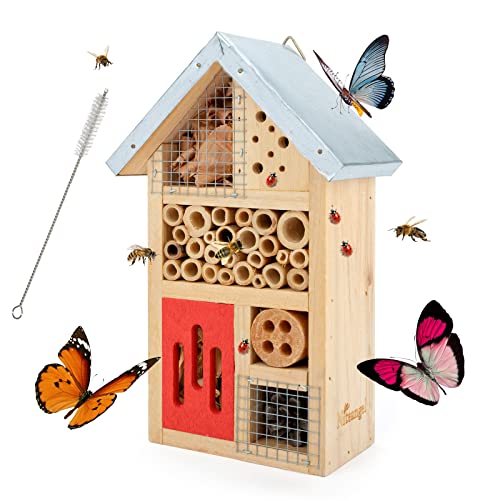
The Niteangel insect hotel offers a safe environment for garden creatures to shelter, hibernate, and lay eggs. Its natural wood and bamboo construction provide a rustic habitat that attracts butterflies, bees, and ladybugs. The design emphasizes dry wood and bamboo components that host aphid-eating beneficial insects, supporting pest management and plant health without chemicals. The hotel encourages observation of resident insects in a controlled outdoor setting.
Wildlife Friend Insect Hotel

Wildlife Friend’s insect hotel combines natural wood with a protective metal roof, designed for year-round use. Its interior features a mix of materials like wood, wood wool, bamboo tubes, and pine cones to cater to the needs of bees, butterflies, and ladybugs. The extended roof provides rain protection, allowing beneficial insects to inhabit the structure even during wet seasons. This habitat supports conservation by offering nesting and shelter space for pollinators and pest controllers in outdoor spaces.
Buying Guide: Key Purchase Considerations And Comparisons
Purpose and species: If you want to attract a broad range of beneficial insects, choose a model with multiple compartments and a variety of filling materials (bamboo, pine cones, wood wool). For targeted species like mason bees, look for specific nesting tubes and openings sized to their needs.
Material and durability: Opt for untreated or naturally treated wood with a weather-resistant roof. Avoid painted interiors that could introduce toxins. A sturdy frame and protective roof help extend life in rain and sun.
Mounting options: Decide between hanging, staking, or wall-mounting. Some designs offer dual mounting methods, increasing placement flexibility in, for example, a sheltered wall or a garden fence.
Weather protection: Rain protection is crucial. A metal or extended roof reduces moisture exposure and helps keep occupant habitats dry, supporting longer lifespans for the inhabitants.
Maintenance: Consider accessibility for cleaning and inspecting the habitat. Models with removable inserts or doors are easier to inspect and refresh without disturbing resident insects.
Ecological impact: Look for habitats that promote biodiversity and support pollination without chemical interventions. A habitat that attracts a mix of pollinators and predatory insects contributes to a balanced garden ecosystem.
Size and placement: Larger hotels can host more insects but require more space. Place the unit in a sunny, sheltered location with nearby flowering plants to maximize visitation by pollinators.
Safety and non-toxicity: Ensure coatings are non-toxic and safe for insects. Natural wood and plant-based materials are generally preferable for hobbyist wildlife habitats.