Choosing the right inline water pump is essential for efficient nutrient delivery in hydroponics. The following five pumps are well-suited for inline use or submersion, offering reliable flow, easy setup, and compatibility with hydroponic systems, ponds, fountains, and algae-free nutrient circulation. This guide highlights key specs to help you compare performance and select the best option for your garden.
| Product | Brand | Max Flow (GPH) | Power | Notes |
|---|---|---|---|---|
| EcoPlus Eco 396 Water Pump | EcoPlus | 396 | 36W | UL Listed; inline or submersible |
| VIVOSUN 800GPH Submersible Pump | VIVOSUN | 800 | 24W | Ultra-quiet; multiple nozzles |
| JEREPET 800GPH 30W | JEREPET | 800 | 30W | DC controllable; 6-speed; quiet |
| Uniclife Aquarium 1000 GPH | Uniclife | 1000 | 80W | Submersible/inline; 10 ft lift |
| EcoPlus Eco 1056 Water Pump | EcoPlus | 1083 | 89W | Inline or submersible; multiple fittings |
EcoPlus Eco 396: Compact Inline Pump
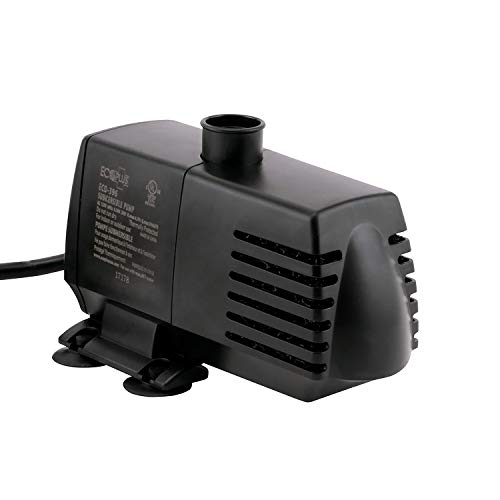
The EcoPlus Eco 396 is a fixed-flow pump designed for inline or submersible use. Its 396 GPH capacity fits small to medium hydroponic systems, aquariums, ponds, and fountains. A 36-watt motor delivers steady performance with included fittings for multiple inlet/outlet configurations, including 0.75″ and 0.5″ barbed connections as well as threaded options. The pump is UL Listed, emphasizing safety and reliability for home hydroponics, and can operate on dry land for inline installations or submerged in water for mixed setups.
VIVOSUN 800GPH Submersible Pump

The VIVOSUN 800GPH pump delivers robust flow with a compact footprint suitable for hydroponic reservoirs, aquariums, or small ponds. It features a maximum lift height of up to 10 feet and a 24W motor, balancing power and energy efficiency. The pump ships with multiple nozzles for customizable spray patterns and flow control. Its detachable and easy-to-clean design makes maintenance straightforward for hydroponic setups where nutrient solutions must remain clean and consistent.
JEREPET 800GPH 30W DC Pump

The JEREPET 800GPH is a DC-controlled, 30W pump with six-speed adjustment and a maximum 12.5-foot lift. This unit supports both inline and submersible use, making it versatile for hydroponic systems, fountains, or sumps. It emphasizes quiet operation with a sealed impeller and a ceramic shaft to minimize noise and wear. The inclusion of a 10-minute feeding mode and wave maker feature can help manage nutrient distribution and water movement in dynamic hydroponic environments.
Uniclife Aquarium 1000 GPH

The Uniclife 1000 GPH pump offers substantial flow for larger hydroponic setups, deep reservoirs, or multiple water features. It supports both submersible and inline configurations and provides up to a 10-foot lift. With an 80W power draw and a 10-foot power cord, this pump ensures reliable circulation and nutrient delivery while maintaining reasonable energy use. It includes inlet and multiple outlet nozzles to accommodate diverse piping sizes in hydroponic layouts.
EcoPlus Eco 1056: High-Capacity Inline Pump

The EcoPlus 1056 is a higher-capacity inline or submersible pump designed for larger hydroponics systems. With an advertised 1083 GPH rating and an 89W motor, it can support sizeable nutrient loops and multi-terminal setups. It includes fittings for several line diameters, enabling flexible piping configurations. The pump’s design emphasizes durability and steady performance for continuous operation in larger grow spaces or multiple hydroponic channels.
Buying Guide: How to Choose The Right Inline Water Pump For Hydroponics
- Flow rate and lifting height: Match GPH with your reservoir size and nutrient delivery needs. Higher GPH pumps are better for larger systems, but may require higher power and more robust tubing. Check the lift height (maximum vertical height water can be pumped) to ensure it fits your layout.
- Inline vs. submersible: Inline pumps stay outside the water and push water through pipes; submersible pumps sit in the reservoir. Inline systems are tidy for tight spaces and easier to service, while submersibles can be quieter and simpler to install in a closed-loop setup.
- Power and efficiency: Consider wattage relative to GPH. Energy-efficient models reduce running costs in grow lights-heavy environments. Look for pumps with energy-efficient motors and durable impellers.
- Materials and compatibility: For hydroponics, corrosion-resistant components and compatible fittings (barbed vs. threaded, pipe diameters) minimize maintenance and leaks. Check for compatibility with nutrient solutions and saltwater if used in mixed environments.
- Noise, maintenance, and durability: Submersible pumps often run quietly but require regular cleaning to prevent clogging. Inline pumps should be inspected for leaks and wear in piping joints. Ceramic shafts and robust impellers tend to offer longer life in hydroponic settings.
- Connectivity and fittings: Verify included fittings align with your tubing diameters (e.g., 0.75″, 0.5″, 1″ options) and whether adapters are needed. Easy disassembly aids routine cleaning and replacement parts.
- Maintenance schedule: Plan routine cleaning to prevent nutrient buildup and algae growth. Keep spare nozzles and seals accessible to maintain consistent flow and pressure.
- System design considerations: For vertical or multi-tier grows, consider pumps with stable flow across varying head pressures. In-line filtration or pre-cleaning may help protect pump life and nutrient distribution.
In hydroponics, reliable water movement supports uniform nutrient delivery and root oxygenation. The selected pumps provide a range of capacities and configurations to fit home grow setups, from compact spaces to larger systems. When pairing a pump with your reservoir and tubing, ensure compatibility with your hydroponic layout and maintenance capabilities to sustain healthy plant growth.