Home aquaponics combines fish farming with plant growing in a closed-loop system. This guide highlights five practical setups that pair fish tanks with hydroponic plant growing, offering low-maintenance options for beginners and busy households. Each option uses natural waste from fish to fertilize plants, while plants help keep the water clean for the fish. Read on to compare features, ease of use, and how these systems integrate into everyday living spaces.
| Product | Brand | Key Benefit |
|---|---|---|
| Hydroponic Garden Aquaponic Fish Tank Plants Growing System Self-Cleaning Seed Sprouter Tray | Self-cleaning, tidal oxygen supply for roots, fertilizes plants with fish waste | |
| Penn-Plax Aquaponic Planter and Aquarium for Betta Fish | Penn-Plax Store | Symbiotic environment for bettas and herbs/greens; compact setup |
| Geelin 1 Gallon Plastic Aquaponic Betta Fish Tank | Geelin Store | Elevated base for easy maintenance; beginner-friendly ecosystem |
| Beta Fish Tank, 2 Gallon Betta With Filter & Light | AQUASMITH Store | All-in-one filtration, oxygenation and easy water changes |
| Hydroponics Growing System, 12 Pods Indoor Herb Garden With Aquaponic Fish Tank | Dual hydroponic and aquaponic system with LED lighting and automation |
Hydroponic Garden Aquaponic System With Seed Sprouter

The Hydroponic Garden Aquaponic Fish Tank is designed as a combined fish tank and seed sprouter. The system uses fish waste as a nutrient source for plants, promoting a self-sustaining cycle. Plants help cleanse the water, reducing the frequency of maintenance compared with traditional tanks. A key feature is the siphon oxygen supply, where tidal-style water level fluctuations allow plant roots to breathe regularly. This arrangement can minimize daily watering and fertilizing needs while maintaining a healthy environment for fish.
Penn-Plax Aqua-Ponic Planter And Aquarium For Betta

Penn-Plax offers a betta-friendly Aqua-Ponic Tank that combines a clear, compact aquarium with a planter on top. The design encourages a natural metabolic cycle where plant roots help filter the water while providing a living space for Bettas and compatible small fish like tetras or danios. The included plant options range from Peace Lily to mint and leafy greens. The setup is particularly suitable for compact living spaces and work well in kitchens or desks where users want a visible, functioning ecosystem.
Geelin 1 Gallon Aquaponic Betta Tank With Base
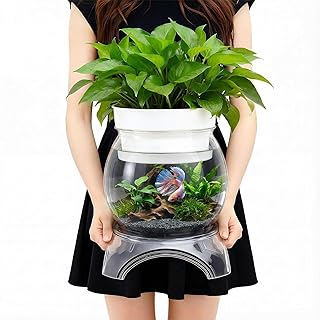
The Geelin 1 Gallon Aquaponic Betta setup features an elevated base that makes water changes easier and reduces bending. It is paired with an aquaponic planter to filter water naturally, creating a compact and self-sustaining ecosystem suitable for beginners. Its design aims to fit small apartments or offices while offering a visually pleasing centerpiece that doubles as a functional habitat for Betta fish and herbs or greens.
Beta Fish Tank With Filter & Light, 2 Gallon

The 2-gallon Beta Fish Tank from AQUASMITH Store combines a quiet filtration system with built-in lighting and an adjustable flow for a self-sustaining ecosystem. It emphasizes quick setup, with features designed for beginners to establish a healthy environment in minutes. The tank supports expansion with additional filtration media and heaters, enabling tailored conditions for various Betta configurations while aiming to minimize maintenance and water changes.
Hydroponics Growing System With Aquaponic Fish Tank

This 12-pod indoor herb garden integrates a hydroponic growing system with an aquaponic fish tank. The dual-purpose setup provides full-spectrum LED lighting and an auto-timer that controls growth cycles and aquarium illumination. The touch panel interface makes it simple to schedule water pump activity and light modes, supporting vigorous plant growth while maintaining stable water conditions for the fish. It suits kitchen countertops and bright, busy spaces where automation adds convenience.
Buying Guide: Key Considerations For Choosing An At-Home Aquaponics System
- Tank size and footprint: Measure available space and consider whether you want a compact desk model or a larger setup that can grow more plants and support more fish.
- Maintenance needs: Look for systems with self-cleaning features, accessible filters, and clear water-change procedures to reduce routine chores.
- Plant compatibility: Ensure the planter or grow bed accommodates herbs or leafy greens you enjoy, and check whether the system supports live plants or seed options.
- Fish compatibility: Some setups are tailored for Bettas, guppies, or small tetras. Verify the recommended fish species and stocking levels to avoid overcrowding.
- Water chemistry and filtration: Evaluate filtration type (mechanical, biological, or combined), water-change frequency, and any automatic dosing features for nutrients.
- Lighting and automation: If the system includes LED grow lights or automated timers, consider energy use, light spectrum for plant growth, and how intuitive the control interface is.
- Build quality and materials: Durable plastics and stable bases reduce the risk of leaks and make cleaning easier. Look for models with elevated bases or accessible panels.
- Expansion potential: If you plan to scale, check whether the system accommodates additional grow beds, extra tanks, or modular designs.
- Accessories and warranty: See what comes with the unit—plants, substrate, or starter fish—as well as warranty terms for peace of mind.
- Budget and value: Compare initial cost against ongoing maintenance, energy use, and expected yield of herbs or greens to determine overall value.
In evaluating home aquaponics options, balance space, ease of maintenance, and the desired balance between fish comfort and plant productivity. Systems that emphasize self-cleaning features, simple water changes, and clear instructions typically deliver consistent results for beginners and busy households alike. For more experienced hobbyists, modular designs that allow expansion and customization can provide long-term flexibility while still maintaining a compact footprint.