Pond weed control requires selecting a reliable herbicide that targets submerged, floating, and emergent weeds while keeping fish and overall water health in mind. The following picks are widely used for lakes, ponds, and decorative water features in the United States. Each product is evaluated for spectrum, application style, and practicality to help you compare options at a glance.
| Product | Brand | Form | Application Type | Notes |
|---|---|---|---|---|
| Airmax Shoreline Defense Emergent Weed Control | Airmax | Liquid (Quart / Gallon) | Tank sprayer / direct foliage | Emergent weeds; root kill; fresh to brackish water |
| Tsunami DQ Aquatic Herbicide | Crystal Blue | Diquat-based liquid | Liquid spray | Broad range of aquatic plants; fast action |
| Airmax Ultra Pondweed Defense | Airmax | Liquid (Quart) | Tank sprayer / concentrate | Controls submerged and emergent weeds; pond-safe |
| Sonar RTU Aquatic Herbicide | SePRO | Ready-to-Use liquid | No mixing; pour directly | Systemic control; long-lasting; fish-safe |
| Weedtrine D Aquatic Herbicide | APPLIED BIOCHEMISTS | Gallons | Spray application | Broad-spectrum; diquat-based |
Below are five product sections, each detailing a relevant option with imagery and key features to help you compare performance, usage, and limitations.
Airmax Shoreline Defense Emergent Weed Control

Product overview: Airmax Shoreline Defense is a broad spectrum liquid aquatic herbicide designed for emergent weeds along shorelines, docks, and beaches. It targets cattails, phragmites, grasses, weeds, and brush, and is formulated for use in fresh and brackish water. The product is effective at killing weeds down to the root, improving long-term control when applied with a surfactant. It is marketed for easy application via a tank sprayer, directly to foliage, enabling efficient treatment of persistent emergent species.
Key considerations: This option emphasizes root-level control for persistent emergent growth and is compatible with typical water features found near residences and recreational ponds. As with most aquatic herbicides, surfactants or adjuvants can influence uptake. Potential limitations include regulatory constraints for certain water bodies and seasonal application timing for optimal results.
Tsunami DQ Aquatic Herbicide Quart

Product overview: Tsunami DQ is a diquat-based aquatic herbicide designed to target a wide range of submerged, floating, and emergent plants. It is formulated to deliver fast-acting control in ponds and lakes, helping reduce weed pressure in a short time frame. The product is not available in some states, so regional availability may vary. The fast action makes it suitable for clearing problem areas or preparing water bodies for seasonal use.
Key considerations: Diquat-based products typically act quickly but may require follow-up treatments for regrowth. They are generally applied via spray methods and can affect non-target vegetation if not carefully directed. Always follow label instructions regarding water use restrictions, site-specific advisories, and environmental considerations.
Airmax Shoreline Defense Emergent Weed Control (Gallon)

Product overview: A gallon version of the Airmax shoreline product, designed for large areas or frequent maintenance. It retains the same broad spectrum emergent weed targeting, effective in fresh and brackish water. The gallon size provides extended coverage between purchases and can be cost-efficient for larger properties or repeated season-long control programs.
Key considerations: Consider spray coverage and storage requirements when choosing larger quantities. As with other aquatic herbicides, ensure you follow label directions for mixing, application rates, and environmental protections for nearby wildlife and aquatic ecosystems. Long-term management often benefits from integrating with mechanical removal or buffer plant strategies.
Tsunami DQ Aquatic Herbicide Gallon

Product overview: This gallon-size Tsunami DQ offers broad-spectrum control of duckweed, watermeal, curly leaf pondweed, and other common pond weeds. It is designed for larger water bodies and provides rapid results similar to the quart version, with consideration for state restrictions on sale and use. The product is marketed for its quick action against diverse aquatic plants and algae, contributing to a cleaner water environment.
Key considerations: When using diquat-based products, ensure compatibility with the target species and water conditions. Fast-acting formulations are valuable for clearing problematic weed patches, but follow-up plans may be necessary to address regrowth. Always consult local regulations and applicator guidelines before use.
Airmax EasyKlear Pond & Lake Algae & Weed Vegetation Control

Product overview: EasyKlear combines broad-spectrum algicide and herbicide action in a granular formulation designed for bottom-growing algae, Chara, and submerged weeds. It is applied with a spreader and sinks to the target zone, simplifying application without requiring extensive equipment. The product emphasizes long-lasting control and ease of use, suitable for larger ponds and lakes that struggle with both algae and weeds.
Key considerations: Granular formulations offer semi-permanent effects with contact and residual action. They are beneficial for users who prefer no-mix applications, but proper spreading and uniform coverage are essential to maximize results. Assess water movement and depth to ensure even distribution and avoid localized over-application near wildlife habitats.
Sonar RTU Aquatic Herbicide, 1 Quart

Product overview: Sonar RTU is a ready-to-use systemic aquatic herbicide designed for duckweed, among other weeds, with no mixing or equipment needed. It’s EPA approved and marketed as safe for fish and wildlife when used as directed, making it suitable for residential ponds and smaller water features. The ready-to-use format appeals to DIY pond owners seeking a straightforward treatment method.
Key considerations: Systemic control means the herbicide moves through the plant to provide longer-lasting suppression. Users should measure pond size and apply the appropriate rate per label. Because it’s designed for fish-friendly environments, adhere strictly to label instructions to maintain ecological balance and to avoid over-application that could affect non-target organisms.
Weedtrine D Aquatic Herbicide
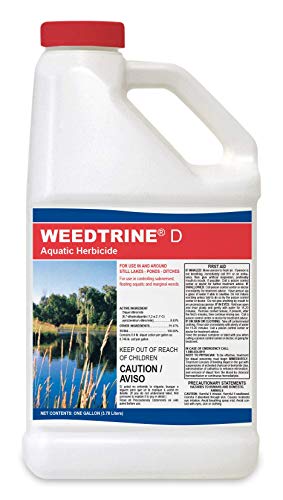
Product overview: Weedtrine D provides fast, broad-spectrum control of duckweed, floating, submersed, and emergent weeds. It is a professional-grade diquat-based solution that targets a wide range of shoreline weeds. This option is commonly used where rapid suppression of weed growth is needed to restore water clarity and access for boaters and wildlife viewing.
Key considerations: Diquat products act quickly but may require follow-up treatments for persistent regrowth. Given the broad targeting, care should be taken to prevent unintended impacts on non-target aquatic plants. Confirm regional availability and adhere to local restrictions on use to protect water quality.
Buying Guide: Key Purchase Considerations
When choosing a pond weed herbicide, consider the following factors to align with your pond’s needs and regulatory environment:
- Weed spectrum and target species: Determine whether your pond has submerged, floating, or emergent weeds and pick a product with proven efficacy for those categories.
- Water body type and conditions: Freshwater vs. brackish water, water movement, depth, and plant density influence product performance and application method.
- Application method: Tank sprayers, ready-to-use liquids, and granular formulations each require different equipment and timing. Consider ease of use and labor involved.
- Speed of action: Some products offer rapid results, while others provide longer-term control. Balance urgency with long-term pond health.
- Non-target safety and fish compatibility: Ensure the product is labeled for use in your pond and complies with local wildlife and irrigation guidelines. Always follow label directions to minimize risk to fish, pets, and wildlife.
- Regulatory availability: Certain products or formulations are restricted in specific states. Verify local regulations and retailer availability before purchasing.
- Environmental considerations: Integrate herbicide use with mechanical weed removal, buffer zones, and vegetation management to reduce chemical load and support ecological balance.
- Long-term management plan: Consider a combination of preventive measures (algae control, buffer plants) and targeted treatments to maintain water clarity over seasons.
In short, selecting the right herbicide involves matching weed types, water conditions, and user experience with the product’s labeled capabilities. For larger ponds or ongoing weed issues, a combination strategy—including mechanical, chemical, and habitat-based approaches—often yields the most reliable results without excessive chemical use.