Knotweed is a stubborn perennial weed that can invade lawns, fields, and landscapes. Selecting the right herbicide requires understanding whether you’re targeting actively growing plants, prepping for seasonal growth, or controlling woody regrowth. Below, discover five proven products with different active ingredients and application styles that help manage knotweed in American settings. This guide compares their uses, strengths, and best-practice approaches to maximize results while considering environmental and site factors.
Summary of selected products:
| Product | Active Ingredient / Type | Best Use | Notes |
|---|---|---|---|
| Ranger Pro Glyphosate Concentrate | Glyphosate | Post-emergent control of broadleaf weeds and grasses | Widely used around homes, landscapes, and non-crop areas |
| Syngenta Tenacity | Mesotrione | Pre-emergent and post-emergent lawn and turf weed control | Can be applied at seeding and in established turf |
| Triclopyr 4 EC | Triclopyr | Brush and woody plant control, invasive shrubs | Effective on knotweed and similar woody perennials |
| Southern Ag Crossbow | 2,4-D + Triclopyr (low volatility) | Weed and brush control in landscapes and perimeters | Good for broadleaf weeds and woody plants |
| Southern Ag Amine 2,4-D Weed Killer | 2,4-D (amine form) | Broadleaf weed control in turf, pastures, and ditches | Economical for large areas |
Ranger Pro Glyphosate Concentrate

Ranger Pro Glyphosate Concentrate is a widely used post-emergent herbicide designed to kill broadleaf weeds and grasses. With an active ingredient similar to Roundup, it targets actively growing knotweed plants through systemic action, moving from foliage to roots. This product is suitable for residential areas, parks, and recreational spaces where knotweed is a problem around walkways and landscapes. The label recommends mixing 2-3 ounces per gallon of water to achieve effective coverage for typical knotweed stands. For best results, apply on actively growing plants under favorable weather conditions to minimize drift and maximize uptake. Always follow local regulations for non-cropland applications and read the label for safety and compatibility guidance with other lawn-care products.
Syngenta Tenacity Herbicide

Tenacity by Syngenta is a versatile herbicide that offers both pre-emergent and post-emergent control. Its active mesotrione targets a broad spectrum of weeds, including knotweed species, while allowing turf establishment when seeding is involved. Tenacity can be applied during seeding or overseeding, helping suppress weeds as new grass establishes. It provides selective control that protects many common turfgrasses, making it valuable for lawns, golf roughs, and landscape areas where knotweed risk is high. The label supports application across various seasons, enabling flexible management strategies. For knotweed control, use according to the label to balance weed suppression with turf safety and seed compatibility.
Triclopyr 4 EC

Triclopyr 4 EC is a broad-spectrum woody plant herbicide commonly used to control brush and trees in diverse settings, including pastures, rangelands, and rights-of-way. Knotweed is a woody perennial in some contexts, and triclopyr is effective at reducing resprouts and regrowth. The label notes a typical mix rate of 3.2 to 6.4 ounces per gallon, with improved performance when combined with a bark penetrant like methylated seed oil. This product is particularly suitable for managing knotweed in areas where brush control is desired and can complement other weed-control programs by reducing woody regrowth and canopy density.
Southern Ag Crossbow
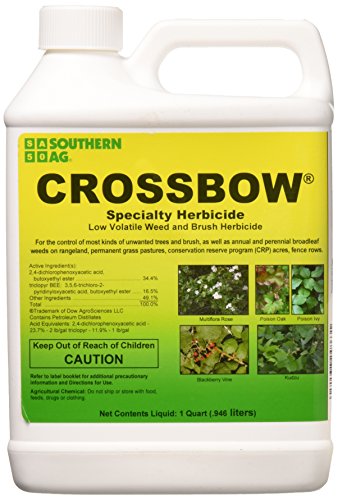
Crossbow from Southern Ag combines actives for broadleaf weed and brush control, presenting a low-volatile formulation for safer handling and reduced drift. Its dual action helps manage knotweed that has developed resistance to single-ingredient products, especially in landscapes and perimeters where woody growth accompanies broadleaf weeds. The formulation supports effective control of many unwanted trees and brush, aligning with knotweed management strategies that require both weed suppression and brush reduction. Apply according to label directions for target site and weather conditions to maximize efficacy and minimize non-target impacts.
Southern Ag Amine 2,4-D Weed Killer
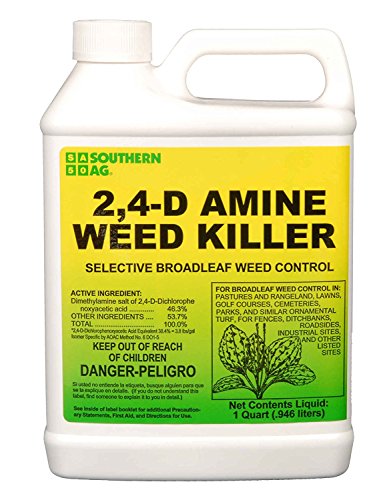
Amine 2,4-D Weed Killer from Southern Ag offers an economical approach to broadleaf weed control, including knotweed in suitable settings. The amine formulation provides efficient uptake by leafy tissues, enabling broad suppression of non-grass weeds in turf, pastures, rangeland, ditch banks, and fences. For knotweed, practical use involves applying during appropriate growth phases and following the label’s recommended rates per acre. This product can be a cost-effective option for large areas where knotweed pressure is moderate and complemented by other control measures.
Buying Guide: Key Purchase Considerations And Comparisons
- Target weed type: Knotweed responds to both post-emergent and pre-emergent strategies. If knotweed is actively growing, options with systemic action like glyphosate or translocation-focused products are typically effective. For areas with repeated growth, consider pre-emergent or soil-active herbicides to reduce regrowth.
- Turf safety and site use: Lawns and landscapes may require selective products like Tenacity for seeding or post-emergent control that preserves desirable grasses. In non-crop settings, non-selective options like glyphosate can be suitable but require caution around desirable plants.
- Woody vs. herbaceous control: Knotweed often behaves like a woody perennial. Triclopyr-based products excel at suppressing woody regrowth, while 2,4-D targets broadleaf weeds. Combining modes (brush control plus broadleaf suppression) can improve results in infested areas.
- Application timing and rate: Read labels for recommended mixing rates and re-entry intervals. Some products are designed for spring, summer, or fall use, and certain formulations work during seedings to avoid harming young grass.
- Environmental considerations: Consider nearby water sources, pollinators, and non-target plants. Use drift-reducing techniques and avoid application on windy days when possible. Follow local regulations for pesticide use and disposal.
- Compatibility and tank mixing: Some products mix well with adjuvants or surfactants to improve coverage and uptake (e.g., non-ionic surfactants or penetrants). Check compatibility charts and product labels before mixing.
- Long-term management: Knotweed control may require integrated management, combining chemical treatments with mechanical removal, lawn renovation, or brush management to reduce regrowth and re-infestation.