Choosing an effective crabgrass solution requires understanding how different products work, whether you’re treating post-emergent weed growth or preventing crabgrass before it starts. This guide highlights top-performing herbicides available on Amazon, focusing on post-emergent control, residual protection, and broad-spectrum power. We compare active ingredients, application ease, and notable performance features to help American homeowners select the right option for healthy, weed-free lawns.
Summary Table of Selected Products
| Product | Brand | Active Ingredient | Best For | Key Benefit |
|---|---|---|---|---|
| BASF Drive XLR8 Crabgrass Killer | BASF | Quinclorac | Post-emergent crabgrass & broadleaf weeds | Up to 30 days residual, rainfast quickly |
| Mesotrione Weed Killer Concentrate (Tenacity competitor) | Petra | Mesotrione | Post & Pre-emergent broadleaf control | Broad-spectrum weed prevention and control |
| Pro Crabgrass & Grassy Weed Killer | Liquid Harvest | Quinclorac | Crabgrass & grassy weed control | High concentration with residual control |
| Triad QC Select (3-Way) | Select Source | 2,4-D, Dicamba, Quinclorac | Broadleaf & grassy weed control | Three active ingredients for versatility |
| 0-0-7 Prodiamine Pre-Emergent | Yard Mastery | Prodiamine | Pre-emergent crabgrass prevention | Excellent barrier against crabgrass emergence |
Note: Prices are not included here. For product details, refer to the provided product URLs.
Drive XLR8 Crabgrass Killer for Lawn & Turf

BASF Drive XLR8 Crabgrass Killer for Lawn & Turf
Active Ingredient: Quinclorac. Formulation: Water-based concentrate. Key Benefits: Provides post-emergent control of crabgrass and broadleaf weeds with up to 30 days residual effect; rainfast in under an hour. Compatible for turfgrass applications and designed for rapid uptake by leafy weeds. While evaluating effectiveness, consider lawn species tolerance and follow label directions for dilution and application windows to maximize performance.
The product is designed to target a broad spectrum of weeds, including crabgrass, foxtail, and several broadleaf species. Its water-based formulation supports easier mixing and faster plant uptake, making it practical for homeowners managing seasonal weed growth. For best results, apply after weeds are actively growing and under suitable weather conditions. Always observe restrictions for turf types and follow re-entry intervals.
Mesotrione Weed Killer Concentrate (Petra) – Compare to Tenacity

Mesotrione Weed Killer Concentrate for New & Existing Lawns
Active Ingredient: Mesotrione. Use: Post and pre-emergent weed control. Key Benefit: Targets a wide range of broadleaf weeds and crabgrass, helping prevent germination and suppress existing growth. Application is designed to offer controlled uptake and visible results over time. When using mesotrione products, monitor for plant stress signals and adhere to re-entry periods and water compatibility guidelines to avoid turf injury.
Petra’s mesotrione-based solution provides versatility across different lawn stages. While it excels in broadleaf weed management, it can also contribute to crabgrass suppression when used as part of an integrated lawn care plan. It’s important to follow label directions for mixing ratios and to assess any potential interactions with other lawn treatments.
Pro Crabgrass & Grassy Weed Killer – 18.92% Quinclorac

Pro Crabgrass & Grassy Weed Killer
Active Ingredient: Quinclorac. Concentration: 18.92%. Key Benefit: High-potency formula designed for rapid action with residual control to limit re-emergence. It’s positioned for use on lawns, gardens, and larger outdoor spaces where crabgrass and other grassy weeds are a concern. For best results, follow the label for application rates, mixing, and safety precautions, especially around desirable turf species.
The product emphasizes quick drying and a robust residual effect, aiming to reduce reapplications. As with any concentrated herbicide, careful measurement, protective equipment, and adherence to spray drift guidelines help minimize exposure to non-target plants and sensitive areas.
Select Source Triad QC Select – 3-Way Herbicide

Select Source Triad QC Select – 3-Way Herbicide
Active Ingredients: 2,4-D, Dicamba, Quinclorac. Use Sites: Residential and non-residential lawns, athletic fields, parks, golf turf (excluding tees/greens). Key Benefit: Combines three active ingredients to tackle hard-to-control weeds, offering post-emergent control and late-season corrective capability. When using multi-ingredient products, ensure compatibility with existing lawn care plans to prevent turf stress or drift onto ornamentals.
Triad QC Select is designed for versatile weed control where both broadleaf and grassy weeds co-exist. It can be particularly helpful in situations where multiple species are present, but users should follow label guidance for safe tank-mixing and re-entry intervals after application.
0-0-7 Granular Prodiamine Pre-Emergent – Yard Mastery

0-0-7 Granular Prodiamine Pre-Emergent
Active Ingredient: Prodiamine. Application: Granular pre-emergent. Key Benefit: Prevents crabgrass, Poa annua, and other annual weeds by forming a barrier at the soil surface. Useful for seasonal weed prevention and is often applied when soil temps signal upcoming germination periods. Proper timing is essential to maximize pre-emergent effectiveness and to avoid interference with subsequent seed germination of desirable grasses.
This product is best used as part of a preventive lawn care strategy. It is less useful for treating established crabgrass, but it effectively blocks new growth if applied before weed germination. For optimal results, apply according to label timing windows and keep irrigation in mind, as watering after application aids the barrier formation.
Dow AgroSciences Dimension 2EW Crabgrass Herbicide
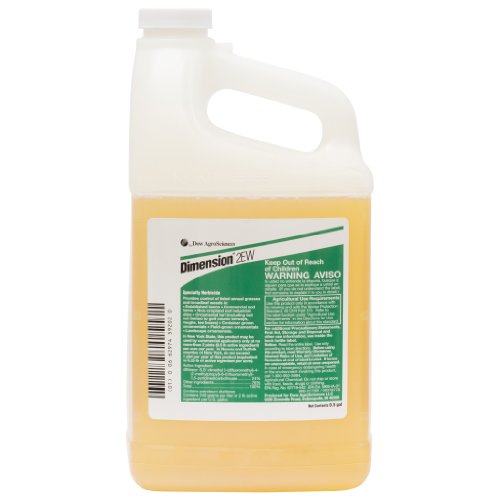
Dow AgroSciences Dimension 2EW Crabgrass Herbicide
Active Ingredient: Dimethylamine salt of 2,4-D and Dicamba (dimension formulations vary). Usage: Post-emergent and pre-emergent applications depending on formulation. Key Benefit: Reliable control of broadleaf and grassy weeds including crabgrass in a wide range of turf types. As with any multi-ingredient product, verify compatibility with your existing lawn care regime and follow label directions for application rates, water volumes, and allowed environments.
Dimension 2EW provides a dependable option for turf managers seeking a proven herbicide with broad-spectrum activity. Always read the label to confirm turf compatibility, dilution rates, and safe handling practices, especially in homes with children or pets present.
Buying Guide: Key Purchase Considerations
The following factors help compare crabgrass herbicides and choose the best option for your lawn care plan:
- Weed stage and timing: Post-emergent products target existing crabgrass, while pre-emergents block future germination. For best results, align product choice with weed growth stage and seasonal timing.
- Active ingredient approach: Quinclorac delivers strong post-emergent control of crabgrass and many broadleaf weeds; mesotrione offers broad-spectrum suppression with pre- and post-emergent capabilities; combinations like 2,4-D, Dicamba, and Quinclorac expand weed-target reach. Consider lawn species and sensitivity to active ingredients.
- Residual control: Some products claim up to 30 days of residual protection, reducing the need for frequent applications. Assess your preference for upfront coverage versus multiple applications over a season.
- Formulation and application: Liquid concentrates often require mixing and precise dilution, while granular pre-emergents offer easier long-term barriers. Water-based formulations tend to mix easily and spread uniformly; check compatibility with sprayers or spreaders you own.
- Turf compatibility: Always verify label recommendations for your specific grass type (fescue, Bermuda, Kentucky bluegrass, etc.). Some products can cause temporary turf stress if misapplied or used during heat or drought stress.
- Weather and application timing: Avoid application before rainfall or when temperatures exceed label guidelines. Rainfast windows vary by product and influence effectiveness and re-entry safety.
- Safety and handling: Wear protective gear during mixing and application. Store concentrated products properly and keep away from children and pets as advised on the label.
- Environmental impact: Consider runoff potential and impact on nearby ornamentals, water sources, and beneficial grasses. Use only as directed to minimize environmental exposure.
- Cost efficiency: Compare per-area coverage and dilution rates. Higher concentration products may require less material per square foot but could have stricter handling requirements.
When building a weed management plan, you may combine preventive pre-emergents with post-emergent options for broader control across seasons. Always start with a site assessment, considering existing lawn health, irrigation, and recent weed pressure. For large areas or persistent weed problems, consult local extension services or a turf professional to tailor a strategy that minimizes turf stress while maximizing weed suppression.