Choosing the right railing height is essential for safety, code compliance, and curb appeal. This guide focuses on common residential deck heights and how popular railing systems—from aluminum to cable and wrought-iron—perform at standard heights. We examine five well-regarded products to illustrate how different materials and designs meet or exceed typical code requirements while maintaining aesthetic appeal for American homes.
The following summary table highlights the chosen products, including their suggested height, post or panel system type, and key safety considerations. Use this as a quick reference when comparing options for your deck project.
| Product | Height | System Type | Key Safety/Code Notes |
|---|---|---|---|
| Egadis 36 in. H Porch and Deck Railing Kit | 36 inches | Aluminum railing kit | Supports up to 200 lbs; suitable for standard residential decks |
| Egadis 42 in. H Porch and Deck Railing Kit | 42 inches | Aluminum railing kit | Code-compliant for elevated areas; 200 lb support |
| Gyykzz 42″ Cable Railing Post 4 Pack | 42 inches (with handrail) | Cable railing post | Complies with typical 4 ft post spacing and 3.15″ cable spacing |
| CHR Fence & Rail Deck Railing Kit | Typically installed above 30 inches | Metal railing kit (no top rail required) | Modular, easy install for porches and stairs |
| Muzata 15-20FT Cable Railing Kit | Post height 36 inches (typical) | Cable railing kit (no handrail) | Complete solution with posts, cables, and hardware |
Egadis 36 Inch Aluminum Railing Kit
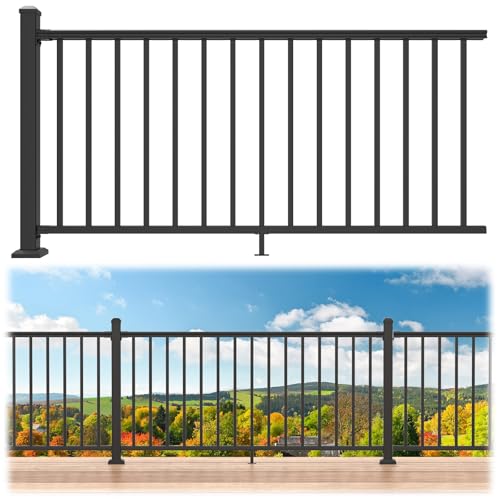
This 36-inch aluminum railing kit provides a durable, low-maintenance option for porches and decks that adhere to common residential height standards. Constructed from 6063 aluminum with a textured black powder coat, the system resists corrosion and weathering, ensuring a long lifespan even in high-humidity environments. Its lightweight yet sturdy design helps minimize wind load concerns on elevated decks while still offering a secure handhold and barrier for children and pets.
Key safety and design notes include a robust 10 mm base plate for stability and a stated capacity to withstand up to 200 pounds of applied force. The kit is flexible enough to accommodate straight runs or 90-degree corners, with the option to customize lengths. While not all installations require extra brackets for non-straight angles, users should plan for universal brackets if needed for non-standard configurations.
Egadis 42 Inch Aluminum Railing Kit

Designed to meet higher safety standards, this 42-inch version reinforces a modern curb appeal with aircraft-grade 6063 aluminum and a durable matte black powder-coated finish. It resists rust, rot, and warping, making it suitable for coastal climates and other challenging environments. The system again leverages a 10 mm base plate for maximum stability and is engineered to support up to 200 pounds of force, which helps ensure secure handrails on elevated decks and porches where children or guests might lean on the barrier.
Additionally, this model emphasizes code compliance for residential decks above 30 inches. It specifies 42-inch height along with baluster spacing under 4 inches, aligning with common U.S. residential code expectations. Installers should verify local amendments and spacing guidelines to ensure full compliance with their jurisdiction.
Gyykzz 42″ Cable Railing Post 4 Pack

These 42-inch T304 stainless steel posts provide a sleek, maintenance-friendly option for cable railing systems. The luxurious matte black finish complements contemporary outdoor spaces while delivering robust strength and corrosion resistance. The posts feature 12 level-drilled pairs of holes for adjustable cable layouts, enabling precise tensioning across spans. A note on safety: the system is designed so that the spacing between posts and the handrail is compatible with common cable railing standards, and the overall height can pair with a compatible handrail to reach the standard 42 inches.
Users should note that hardware such as cable terminals and posts are typically purchased separately, and local codes should be checked for required post-to-post spans and baluster spacing. The posts are ideal for modern decks with a focus on clean lines and unobtrusive barriers that still meet safety expectations.
CHR Fence & Rail Deck Railing Kit

CHR’s deck railing kit offers a modular approach designed for outdoor spaces above 30 inches. Notably, it supports configurations without a top rail, which can simplify installation around existing architectural features while maintaining effective safety. The system is described as easy to install, suitable for both porches and stairs, and adjustable to fit concrete or wood substrates. This flexibility makes it a practical option for homeowners seeking a low-profile, durable barrier with modern aesthetics.
With modular components, the CHR kit can adapt to irregular layouts and transitions between indoor and outdoor areas. While it emphasizes ease of installation, planners should still ensure proper anchoring and alignment to meet local code requirements and to maintain a consistent barrier height across all sections.
Muzata 15-20FT Modular Cable Railing Kit

This comprehensive cable railing solution includes four posts, an invisible cable system, adhesive washers, wire rope, and a cable cutter, designed for quick assembly over lengths of 15 to 20 feet. The kit specifies a 36-inch post height and notes that the handrail is not included, so designers can pair this with their preferred top rail. The system uses a swageless design to simplify installation and reduce time on site, which is beneficial for DIY enthusiasts and professionals aiming for a clean, modern deck railing look.
Safety considerations include ensuring a post spacing not to exceed five feet, maintaining proper tension, and confirming that cable spacing meets local fire and safety regulations. Although it lacks a handrail within the package, it provides a solid framework for a contemporary, low-profile barrier that prioritizes unobstructed views while maintaining safety standards.
Buying Guide: Key Factors To Consider
When selecting the height for deck railing, consider the following aspects to balance safety, code compliance, and aesthetics:
- Local code requirements: Most residential decks in the United States require a railing height around 36 to 42 inches, depending on deck height, occupancy, and whether the deck includes stairs or platforms above a certain threshold. Always check your city or county codes before choosing a system.
- Total headroom and use: If you have children, elderly family members, or frequent gatherings on your deck, a taller railing (42 inches) can offer added peace of mind. For views or lower-maintenance designs, 36 inches may suffice with proper baluster spacing and strong posts.
- Material and maintenance: Aluminum systems tend to be low maintenance and corrosion-resistant, while stainless steel cable systems offer a sleek, contemporary look but may require more precise tensioning and occasional inspection for cable integrity.
- Post and base stability: A solid base plate (often 10 mm) and robust posts help minimize wobble and ensure long-term safety, particularly in high-wind areas or near doors and high-traffic zones.
- Compatibility with top rails or glass: Some systems omit the top rail for a minimalist look, while others pair with glass inserts or traditional handrails. Ensure your chosen height integrates well with your preferred visual style and safety requirements.
- Span and spacing: The recommended maximum span between posts (often around 4 feet for many systems) affects both safety and installation cost. Cable railing requires careful attention to cable spacing and load-bearing capacity to pass a sphere test at 4 inches.
- Ease of installation: Modular kits and complete solutions save time and reduce measurement errors. DIY installers may prefer systems with clear instructions, included hardware, and design flexibility for straight and curved layouts.
- Aesthetics and curb appeal: Match the railing finish with your home’s exterior and landscape. Matte black finishes, textured powder coats, and brushed stainless options complement a broad range of architectural styles.
In summary, the right height for a deck railing depends on local building codes, deck height, and user needs. A 36-inch system tends to cover standard low-to-mid-height decks and provides a balanced look, while 42-inch options offer enhanced safety for higher decks or homes with more active outdoor spaces. Cable railing adds a modern, unobtrusive profile but requires precise installation and maintenance checks to preserve its safety and visual appeal. Whichever system you choose, ensure that it is installed by following manufacturer guidelines and local code requirements for a safe, durable deck barrier.