If you’re maintaining an outdoor pond, a dedicated pond heater helps protect aquatic life by preserving a small, oxygen-rich opening in the ice. The following selection highlights strong, reliable options with thermostatic controls, safety features, and weather-ready builds. This guide compares models by wattage, cord length, and control sophistication to help you pick the right fit for your pond size and climate.
| Product | Brand | Wattage | Cord | Key Feature |
|---|---|---|---|---|
| Farm Innovators 1250W | Farm Innovators, Inc. | 1250 | 10 ft | |
| TURBRO PD400A | TURBRO | 400 | 32.8 ft | |
| Laguna 315W | Laguna | 315 | 22 ft | |
| NamcheBarwa 1500W | NamcheBarwa | 1500 | Unknown | |
| tenlox 1000W | tenlox | 1000 | 10 ft |
The following sections review five pond heaters that provide reliable, energy-conscious ice prevention for outdoor ponds. Each entry includes a concise feature snapshot drawn from product listings to help you compare capabilities at a glance.
Farm Innovators 1250 Watts Pond De-Icer

Designed to float on the pond’s surface, this 1250-watt de-icer creates a safe hole in the ice to protect fish and other aquatic life during winter. Built with patented cast aluminum for efficiency and safety, it is designed to withstand harsh weather. A thermostatic control ensures operation only when needed, offering eco-friendly heating and reliable performance in cold climates.
TURBRO PD400A Floating Pond De-Icer

With a full stainless steel casing and a 32.8-foot UL-approved cord, the TURBRO PD400A emphasizes electrical safety and flexible placement. The unit includes GFCI leakage protection and built-in overheating safeguards. Its SCR-based temperature management delivers fast response and a longer lifespan compared with traditional de-icers, supporting safer operation in varied conditions.
Laguna PowerHeat 315-Watt

This de-icer is designed for ponds that drop to about 20 degrees Fahrenheit, featuring a highly visible LED indicator to show when it’s on. The integrated thermostat shuts off the unit if overheating occurs, protecting internal components while maintaining a small, ice-free opening for gas exchange.
NamcheBarwa 1500W Floating Pond Heater
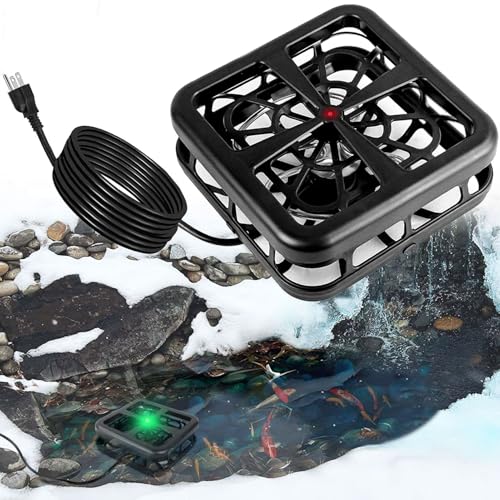
This model uses sturdy aluminum alloy for safety and efficiency, and it includes an upgraded LED indicator. The device floats on the pond and requires submersion of the heating element in water. It offers thermostatic control with a red/green LED indicator to signal status and aims to keep a maintainable ice-free zone for oxygen exchange.
tenlox 1000W Floating Pond Heater
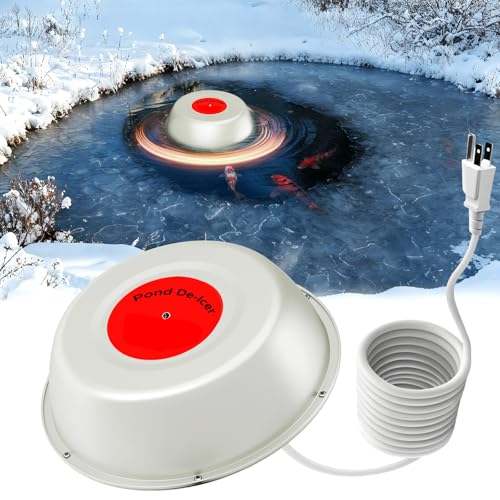
The 1000-watt model from tenlox features smart thermostatic control with auto ON/OFF. It heats efficiently to keep a small area unfrozen for gas exchange, while offering energy savings by maintaining a defined open-water zone. The unit is designed for ponds 50-500 gallons and is suitable for various plastic, rubber, or liner ponds with a protective housing.
Buying Guide: Key Purchase Considerations
- Wattage and pond size: Higher wattage is typically needed for larger ponds or colder climates. For small to medium ponds, 315–1000W models are common; larger ponds may require 1250W or more.
- Thermostatic control: Look for automatic on/off functionality that activates only when water approaches freezing. This helps save energy and reduces wear on components.
- Cord length and placement flexibility: A longer cord can simplify installation, especially for remote or shaded ponds. Ensure cords and plugs meet safety standards for outdoor use.
- Safety features: GFCI protection, overheating protection, and corrosion-resistant or stainless-steel housings enhance electrical safety and durability in damp environments.
- Floating vs submerged design: Floating de-icers are common and typically safer for natural ponds, allowing gas exchange by melting a hole in the ice. Submerged elements require careful placement to avoid damage.
- Material and build quality: Aluminum or stainless-steel casings resist corrosion and weathering. Lightweight plastic housings may be less durable in harsh winters.
- Compatibility with pond liners and fish: Ensure the device is suitable for your pond’s liner material and that it maintains a safe, oxygen-rich opening without overheating the water.
- Ease of maintenance: Look for simple cleaning options and clear indicator lights that help verify operation and status at a glance.
When selecting a pond heater, balance the pond volume, climate severity, and energy considerations. A thermostatically controlled unit with a robust, corrosion-resistant housing and a safety-compliant power cord generally offers the best combination of reliability and long-term savings. For ponds with sensitive fish or specific liner materials, verify compatibility with the manufacturer’s guidance to ensure safe operation throughout the winter months.