Choosing the right supplies for round bale feeding helps reduce waste, promote healthy grazing, and simplify daily chores. This guide highlights the best hay tarps and round bale nets designed for American farms and pastures. You’ll find options that protect bales from weather, while nets help control intake and minimize waste.
Summary of chosen products
| Product | Brand | Key Feature | Amazon Link |
|---|---|---|---|
| Covers & All Round Tarp | Covers & All | Heavy-duty 1000 Denier PVC-coated tarp; weather and UV resistant | https://www.amazon.com/dp/B0B7XHG1HX?tag=hayeshomeguide-20 |
| NETYSAY Round Bale Hay Net | NETYSAY | 2″ holes; knotless design; fits 5×5 round bales | https://www.amazon.com/dp/B0F7XZKDL2?tag=hayeshomeguide-20 |
| hay chix Round Bale Hay Net 5 ft | hay chix | 1 3/4″ holes; patented closure; Goldilocks size | https://www.amazon.com/dp/B0897VM983?tag=hayeshomeguide-20 |
| hay chix Round Bale Hay Net 6 ft | hay chix | 1 3/4″ holes; patented closure; versatile sizing | https://www.amazon.com/dp/B07NLHXBFR?tag=hayeshomeguide-20 |
| MIYABALA Round Bale Hay Net 5×5 | MIYABALA | 1.5″ holes; knotless; large 5×5 ft net | https://www.amazon.com/dp/B0DL8QC9P2?tag=hayeshomeguide-20 |
Covers & All Round Tarp: 10 Ft Dia, Heavy-Duty Round Tarp

The Covers & All round tarp is designed for long-lasting outdoor protection. Made from 1000 Denier, 18 mil PVC-coated polyester, it offers tear and UV resistance while guarding round bales from rain, snow, and wind. The tarp’s 10-foot diameter is suited for standard round bales, with gray coloring for versatility in farm settings. Its weather resistance helps extend bale storage life and reduces moisture-related spoilage.
Key considerations include diameter compatibility, edge protection, and ease of securing the tarp during windy conditions. The tarp’s heavy construction supports durable performance through multiple seasons of field use. It’s a practical choice for preventing weather damage and keeping hay drier for longer storage on open lots or in shelters.
NETYSAY 5×5 Round Bale Hay Net

The NETYSAY round bale hay net is designed to promote balanced slow feeding. With 2″ holes, it moderates eating speed to mirror natural grazing patterns, helping extend the feed from a 5×5 bale over time. The knotless, gentle mesh reduces mouth irritation and wear, making it suitable for horses and other livestock. The net comes with a quick-install design, including a wide opening and reliable tightening cord to fit securely around round bales, ensuring edge-to-edge coverage.
Considerations include hole size relative to forage type, whether the bale is 4×5 or 5×5, and the net’s resilience in weather and tension. Knotless construction minimizes mouth abrasion, and the oversized design ensures full coverage on larger bales. The NETYSAY option offers a robust balance between ease of use and effective portioning for daily feeding routines.
hay chix Round Bale Hay Net – 5 Ft

This Hay Chix round bale net uses marine-grade UV-treated nylon and 1 3/4″ holes, offering durability in field conditions. The patented rope and HOGGLE closure system simplifies the setup, helping users cover round bales quickly and securely. The 5-foot size is marketed as a “Goldilocks” option, compatible with 5′ x 5′ bales as well as smaller sizes. The design promises substantial hay retention while promoting efficient feeding, with potential hay waste reduction reported by users.
Key considerations include net longevity in sunlight, compatibility with bale size, and closure reliability. The Goldilocks sizing can be advantageous for mixed-farm operations that rotate bale sizes. Easier filling and reduced waste are common benefits highlighted in product descriptions.
hay chix Round Bale Hay Net – 6 Ft

The 6-foot Hay Chix net builds on the same marine-grade nylon platform with 1 3/4″ holes and the patented closure system. This larger option fits bigger round bales or bales that require extended feeding windows between fillings. The system emphasizes reducing waste by maintaining a secure enclosure around the bale while allowing animals steady access to forage. It remains suitable for field, pasture, or feeder setups like Bale Barns.
When evaluating this option, consider bale diameters and whether the 6-foot net aligns with your storage and feeder configuration. Its durability under UV exposure and field weather is a focal point for long-term use. The product’s ability to cut waste and support natural grazing are common decision factors for buyers.
MIYABALA Round Bale Hay Net 5×5
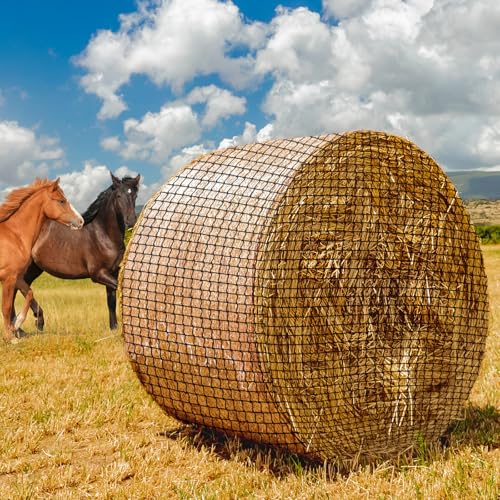
The MIYABALA net is a knotless, 5×5-foot round bale net designed for generous feeding space and safety. The 1.5-inch hole size promotes slow feeding, supporting healthier grazing habits while minimizing waste. The knotless construction reduces snags and potential injuries, making it suitable for horses, cattle, sheep, and other livestock. The large size adds versatility for different bale formats and farming layouts.
When choosing this option, buyers should assess bale type and feeding needs, the net’s lifespan under sun exposure, and how easily it fits over a 5×5 bale. The knotless, slow-feed design aims to balance animal welfare with operational efficiency in daily feeding routines.
Buying Guide: Key Purchase Considerations
- Bale size compatibility: Verify whether the net or tarp is designed for 4×5, 5×5, or larger bales to ensure proper coverage and effective feeding.
- Hole size and feeding rate: Hole dimensions (e.g., 1.5″, 1.75″, 2″) influence how quickly livestock can access forage. Smaller holes slow consumption more but may increase blockage risk with coarse stems.
- Knotless versus knotted: Knotless nets are gentler on mouths and gums, reducing abrasion and potential injury while improving durability; knotted designs may be more resistant to tearing in some conditions.
- Material durability: Marine-grade nylon and UV-treated fibers offer longevity for outdoor use. Consider weather exposure, sun, rain, and freeze-thaw cycles in your region.
- Ease of use: Look for features like quick-opening designs, secure closures, and simple installation to save time during daily feeding routines.
- Waste reduction versus cost: Higher quality nets and tarps can reduce hay waste, potentially offsetting initial costs through longer bale life and reduced feeding losses.
- Weather protection: For tarps, assess diameter and thickness to protect bales from moisture, mold, and spoilage; for nets, focus on whether insulation or wind exposure affects performance.
- Maintenance needs: Evaluate ease of cleaning and drying after rain, as well as any washing instructions that preserve materials’ integrity.
- Storage and storage conditions: Consider whether reels or flat storage best fit your operation, especially for large quantities or frequent bale turnover.
- Compatibility with feeders and facilities: Ensure nets and tarps integrate with your existing Bale Barn, Hay Hut, bale feeders, or pasture setups without obstruction to animals or equipment.
In deciding between tarps and nets, consider your local climate, bale management practices, and livestock size. A tarp protects the bale from weather, extending storage life, while nets optimize intake and minimize waste during feeding. For many operations, pairing a durable tarp with a reliable slow-feed hay net provides comprehensive coverage—from storage to daily feeding—while supporting animal health and feeding efficiency.