Microgreens offer a fast, scalable route to profit for home gardeners and small urban farms. This guide highlights five reliable kits and seed mixes that optimize yield, speed, and consistency. Each option is chosen for ease of use, equipment needs, and potential for repeat customers in markets like local groceries, farmers markets, and catering.
Summary of selected products:
| Product | What It Includes | Best For |
|---|---|---|
| Self-Watering Microgreens Growing Kit | Reusable tray, hydroponic insert, blackout lid, grow mats, seeds, grow guide | Low-mess, quick harvest, countertop setup |
| 6-Pack Microgreens Growing Trays | 6 trays, hemp fiber grow mats, large growing surface | Higher yields, scalable indoor growing |
| Superfood Microgreen Seeds Mix | 1 lb heirloom, non-GMO seeds (broccoli, radish, purple kohlrabi, etc.) | Colorful, nutrient-dense blends |
| Sow Right Seeds Microgreen Mix | Three premium seed packs for broccoli, cabbage, kale | Quick harvest, simple indoor setup |
| Mizuna Microgreens Growing Kit | 2 stackable ceramic trays, coir, seeds | Stylish, space-saving, continuous harvest |
Self-Watering Microgreens Growing Kit

The ZestiGreens kit emphasizes a soil-free, low-mess setup designed for weekly microgreen production. It features a reusable 12″x6″ tray with a bamboo surround, a hydroponic insert, blackout lid, two hemp grow mats, and two seed packs (Red Garnet Amaranth and a Superfood Mix). A 16-page illustrated guide outlines the cultivation steps from germination to harvest, helping growers optimize space and manage consistent yields. The kit supports both hydroponic and traditional soil growth by allowing the user to remove the insert and use soil if desired, broadening potential crops and customer appeals.
Key advantages for profit-minded growers include quick 7–10 day harvest cycles and a compact footprint suitable for kitchen counters or storefront displays. The absence of soil and minimal daily maintenance reduce labor costs, enabling consistent weekly supply to markets or subscribers. Consider pairing with a seasonal crop rotation to keep offerings fresh and aligned with customer demand.
Six Packs Microgreens Trays With Hemp Fiber Mats

This all-in-one microgreens growing kit contains six durable, reusable trays alongside 12 premium hemp fiber grow mats. The design focuses on scalability and ease of use for both beginners and experienced indoor gardeners. PS material trays offer lightness and durability, aiding transport and long-term use, with simple cleaning for hygienic cycles between harvests. Each tray measures a generous 15 x 11 inches, supporting a range of greens from wheatgrass to arugula, enabling larger harvests per session to boost profit potential.
Profitability considerations include studying tray turnover rates and seed-to-harvest timelines. The large growing surface makes it feasible to run multiple cycles weekly in a small footprint. Sustainability is enhanced by the reusable mats and recyclable PS trays, appealing to eco-conscious customers. For market-ready products, consider pre-labeling with harvest dates and bundle options (e.g., mixed trays or pre-plated microgreen salads).
Superfood Microgreen Seeds Mix
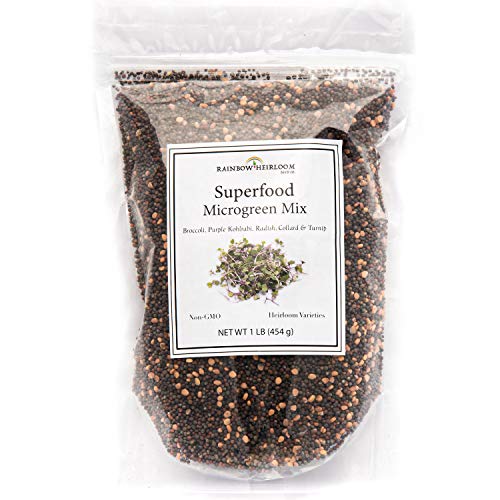
Rainbow Heirloom Seed Co.’s Superfood Mix combines broccoli, radish, purple kohlrabi, collard, and turnip seeds in a 1 lb resealable bag. The blend emphasizes colorful, nutrient-dense greens with high germination rates and USA-sourced production. This variety is particularly appealing to health-conscious customers seeking diverse flavors and textures in a single harvest. The blend can yield multiple harvests from the same tray across several weeks, making it well-suited for subscription services or regular farmers market rotations.
Operational guidance includes testing germination in small trays before full-scale runs, tracking yield per tray, and offering mixed greens bundles to increase average order value. Emphasize freshness and color in marketing materials to attract health-focused buyers and restaurants seeking vibrant, nutrient-rich additions to menus.
Sow Right Seeds Microgreen Mix

Sow Right Seeds offers a trio of premium microgreen packs designed for fast, reliable harvests. The mix focuses on broccoli, cabbage, and kale microgreens, delivering a variety of flavors and textures suitable for salads, sandwiches, and garnishes. Quick harvest times—typically 8 to 12 days—allow growers to maintain a steady supply chain with minimal equipment. The seeds support cultivation in thin soil or on fiber mats, reducing setup complexity for beginners while remaining practical for commercial scaling.
Profit-oriented strategies include offering “build-your-own microgreen combo” bundles, where customers select different mixes for weekly menus or meal kits. Emphasize consistent germination rates and show-off trays with distinct color hues to attract chefs and home cooks seeking vibrant, nutritious produce.
Mizuna Microgreens Growing Kit

The Mizuna kit centers on two stackable ceramic trays, coconut coir, and seeds to deliver a stylish indoor growing experience. The dual-tray design saves space and enables continuous harvest cycles by allowing new crops to start while earlier greens are maturing. The coconut coir medium supports healthy root systems with good aeration, contributing to robust yields in compact setups. This option balances aesthetics with practicality for urban growers aiming to display microgreens in-store or at local markets.
Implementation tips include scheduling staggered planting days to ensure a constant supply, pairing with bagged microgreens for take-home sales, and promoting the look of ceramic trays in marketing materials to attract customers who value presentation and freshness.
Buying Guide
- Space and scale: Choose a kit that matches your available space. Multi-tray systems are ideal for higher-volume selling, while compact kits suit home kitchens and small markets.
- Speed to harvest: Look for seeds and kits designed for rapid cycles (about 7–12 days). Faster turnover supports more weekly harvests and recurring revenue.
- Growing medium and method: Hydroponic, soil, and coconut coir options each have maintenance differences. Hydro systems reduce mess and may appeal to busy customers, while soil-based setups can broaden crop variety.
- Seed diversity and nutrition: A mix of colorful, nutrient-dense varieties can attract health-conscious buyers and culinary professionals. Consider heirloom and non-GMO options for premium positioning.
- Labor and maintenance: Kits with reusable components and simple cleaning processes lower ongoing costs. Consider automation opportunities like self-watering features to reduce labor.
- Shelf life and branding: Visible, fresh-looking greens sell better. Packaging and labeling that communicates harvest date, variety, and care instructions can boost perceived value.
- Market fit: Align offerings with local demand—restaurants may prefer standard mixes, while households value colorful, ready-to-eat packs. Consider subscription models for steady cash flow.
- Price positioning: Balance seed and kit costs with expected yields. For wholesale channels, provide consistent sizing and labeling to ease buyer decisions.
- Compliance and safety: Ensure clean handling processes and food-safety guidelines, especially if selling to restaurants or preparing pre-packed greens.
These options collectively cover a spectrum of approaches to profitable microgreens production—from compact, stylish home kits to larger-scale trays and diverse seed blends. When evaluating products, prioritize yield, speed, ease of use, and how well the setup supports consistent weekly harvests. Pair the most scalable kits with diverse seed mixes to offer customers a rotating, colorful lineup that drives repeat business.