Discover engaging, hands-on ways for children to explore plant science, growth cycles, and ecology. This guide highlights five top kid-friendly grow kits that blend storytelling, experimentation, and creativity to foster curiosity and practical gardening skills. Each kit offers a unique lens on biology, ecosystems, and patience, helping kids learn by doing while parents and educators can track progress and celebrate discoveries.
| Product | Brand | Type / Focus | Link |
|---|---|---|---|
| DUYOYU Kids Plant Growing Kit | DUYOYU | Mini greenhouse with irrigation and grow light | Amazon |
| Grow ‘N Glow Terrarium Kit | Creativity for Kids | Terrarium with glow-in-the-dark elements | Amazon |
| Root Viewer Kit for Kids (6 Seeds) | PLANTMEW | Transparent planter with six seed varieties | Amazon |
| Dan&Darci Root Viewer Kit | Dan&Darci | Transparent root-viewing planter with seeds | Amazon |
| National Geographic Flower & Herb Kit | Blue Marble | 3 stainless pots, seeds, and decorating tools | Amazon |
Below is a quick look at the five kits chosen for this guide, outlining what makes each one suitable for curious kids and budding gardeners.
DUYOYU Kids Plant Growing Kit

The DUYOYU kit provides a mini garden experience from start to finish. It supports planting, nurturing, and observing plant growth, offering a practical introduction to greenhouse concepts and solar or artificial light irrigation. The kit is designed to motivate kids by letting them guide watering, sunlight exposure, and plant care, turning a simple seed into a visible, growing plant. Educational elements focus on plant life cycles and responsible gardening habits, making it suitable for classroom or at-home use.
Grow ‘N Glow Terrarium Kit

The Creativity for Kids Grow ‘N Glow Terrarium Kit blends biology with creative arts. Kids plant chia and wheatgrass seeds inside a jar terrarium, then illuminate it at night with glow-in-the-dark accents. The kit emphasizes system thinking—how light, water, and seed type interact to produce growth. It also encourages storytelling and design as children decorate their terrarium, turning science into a hands-on, decorative project that lasts beyond a single lesson.
Root Viewer Kit for Kids (6 Seeds)

The Root Viewer Kit from PLANTMEW centers on transparent planters to reveal root systems. With six seed varieties, it supports comparative observation of growth rates, root shapes, and shoot development. This kit is well-suited for ongoing science exploration, teaching patience as some plants sprout quickly while others take longer. Educators and parents can use weekly check-ins to discuss germination, growth stages, and environmental needs of different plants.
Dan&Darci Root Viewer Kit

Dan&Darci’s Root Viewer Kit emphasizes a transparent, kid-friendly viewing window to watch root growth. The package includes a viewer box, soil, high-germination seeds (spring onion and cilantro), and personalization stickers. The accompanying instruction booklet explains basic botany concepts in plain language, reinforcing stem-to-root relationships and how soil conditions influence plant health. It’s a compact option ideal for desks, bedrooms, or classroom corners where students can observe progress over time.
National Geographic Flower & Herb Kit
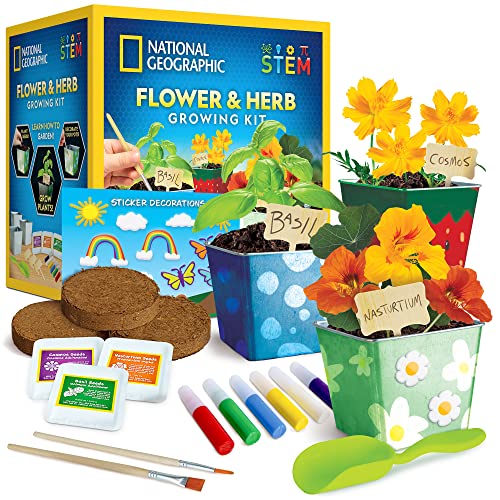
This National Geographic kit offers a comprehensive entry into garden design with three stainless steel pots, cosmos, nasturtium, and basil seeds, plus decorating supplies. Kids decorate their pots with paints and stickers before sowing seeds, encouraging creativity alongside biology. The kit is attractive for group projects or family garden days, combining practical planting with an arts-and-crafts component, and includes simple tools and a learning guide to reinforce basic horticulture concepts.
Buying Guide: Key Purchase Considerations and Comparisons
- Learning goals: Choose kits that align with what you want children to learn—root viewing, photosynthesis, plant life cycles, or ecosystem building.
- Engagement level: Consider whether the kit mixes hands-on planting with creative activities (glow effects, decorating, or storytelling) to sustain interest.
- Observation opportunities: Transparent planters or terrariums heighten curiosity by allowing kids to observe roots, stems, and growth in real time.
- Materials and cleanup: Look for kits with reusable components and non-toxic materials. Some kits require additional items like soil or water, while others include everything needed.
- Age appropriateness: Check recommended ages and complexity. Some kits suit younger children with simple steps, while others offer more advanced experiments for older kids.
- Durability and safety: Stainless steel pots and BPA-free plastics are preferable for long-lasting use and safety.
- Educational value: Kits with a guiding booklet, teacher tips, or science explanations help parents and teachers leverage the activity into longer learning sessions.
- Project longevity: Consider whether the kit supports ongoing growth beyond a single project, such as multiple plant cycles or repeatable experiments.
- Budget and space: Mini kits fit smaller spaces and lower budgets, while larger sets provide more plants and accessories for extended play.
Choosing a kid-friendly grow kit involves balancing educational depth with hands-on fun. The five kits featured here emphasize observation, experiment design, and creativity, while offering clear avenues to expand learning as children grow more confident in their gardening and scientific thinking.