Answering the needs of gardeners, DIY enthusiasts, and small-property owners who want automatic soil watering, this guide highlights five ground moisture sensor irrigation products. Each option targets different setups—from simple DIY kits to wireless sensor networks—so you can choose the best fit for your garden, balcony pots, or lawn. The table below summarizes the top picks and their best-use scenarios to help you compare quickly.
| Product | Brand | Best For |
|---|---|---|
| AEDIKO Upgrade Automatic Irrigation DIY Kit | AEDIKO | Compact, all-in-one watering projects for small pots and planters |
| Moen Smart Wireless Soil Sensor | Moen | Lawn and exterior garden zones with wireless monitoring |
| Songhe Capacitive Soil Moisture Sensor Module | Songhe | Arduino/DIY projects needing multiple sensors |
| 2 Sets Resistive Soil Moisture Meter (IS) | IS | Analog-detection projects and educational watering systems |
| RAINPOINT Smart Soil Moisture Meter | RAINPOINT | WiFi-enabled automatic watering with hub integration |
AEDIKO Upgrade Automatic Irrigation DIY Kit
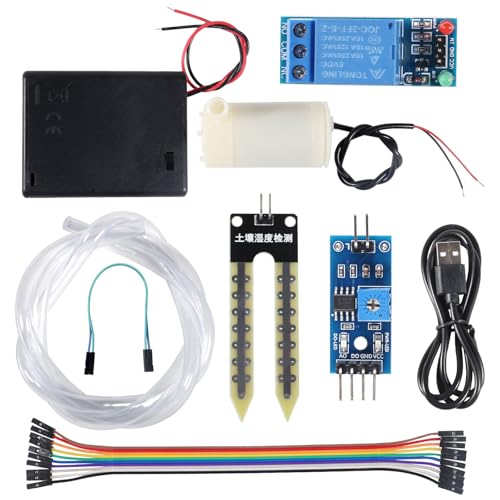
The AEDIKO kit combines a LM393 soil moisture sensor, a mini water pump, tubing, a battery case, and a 1-channel 5V relay in one compact unit. It is designed for automatic plant watering based on soil moisture levels. The LM393 sensor operates from 3.3V to 5V and includes a fixed mounting hole for simple installation. A user-friendly setup makes it suitable for single-spot or small-container irrigation projects. This kit is best for hobbyists who want an all-in-one solution without needing multiple separate components.
- Best for: small planters, balcony boxes, or a single-plant watering system.
- Why chosen: integrated components reduce setup time and simplify wiring for beginners.
- Caution: ensure the water source and tubing are clean to prevent clogs in the micro pump.
Moen Smart Wireless Soil Sensor

The Moen sensor system provides wireless soil moisture and temperature readings at multiple depths (1-, 3-, and 5-inch) to determine thresholds for watering. It integrates with Moen’s Smart Sprinkler Controller to automatically adjust schedules, helping reduce water waste by targeting only zones that require moisture. Installation is simple due to wireless sensors, avoiding buried cables. This option is best for larger lawns or exterior enclosures where precise zone-based irrigation is desirable.
- Best for: lawns or exterior plantings that benefit from automated, zone-aware watering.
- Why chosen: real-time data fed to a smart controller can optimize irrigation automatically.
- Caution: requires a compatible Moen hub/controller for full automation, which may add cost.
Songhe Capacitive Soil Moisture Sensor Module

The Songhe capacitive moisture sensor module is designed for Arduino-style DIY projects. It notes a supply range of 3.3–5.5V and provides an output voltage of 0–3.0V, making it suitable for basic moisture sensing in DIY irrigation circuits. This module is best for tinkerers building small, sensor-based watering rigs or integrating with microcontroller projects. The data is straightforward for simple on/off irrigation triggers.
- Best for: hobbyist projects and prototype irrigation systems using microcontrollers.
- Why chosen: compact sensor with a clear analog output suitable for DIY controllers.
- Caution: not a full irrigation controller; needs a separate actuation method (relay or pump).
2 Sets Resistive Soil Moisture Meter (IS)
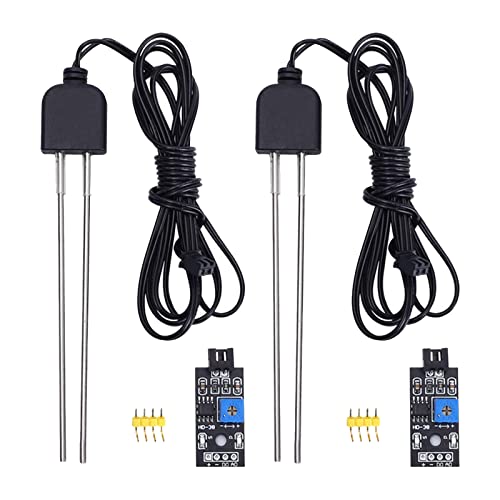
This kit includes resistive soil moisture meters with corrosion-resistant probes and an analog signal output suitable for Arduino/Raspberry Pi integrations. It’s useful for hands-on monitoring and basic automatic watering systems, where the user can set thresholds with a potentiometer. It’s best for educators or hobbyists who want to learn the fundamentals of soil moisture sensing and build a tailored irrigation routine.
- Best for: education projects and simple, affordable automation experiments.
- Why chosen: easy integration with common microcontrollers and adjustable thresholds.
- Caution: resistive sensors can be affected by soil temperature and salinity; calibrate accordingly.
RAINPOINT Smart Soil Moisture Meter

RAINPOINT offers a WiFi-enabled soil moisture meter designed to work with a compatible WiFi hub (HWG023/HWG040, sold separately) for remote monitoring and automatic irrigation. It can deliver readings at regular intervals (every few minutes) and, when paired with a timer or automation hub, can form an automatic watering system. This option suits growers who want to monitor moisture data remotely and adjust schedules from anywhere via the Home app.
- Best for: remote monitoring and WiFi-enabled automation in gardens or indoor setups.
- Why chosen: supports automatic watering by integrating with a smart hub and timer ecosystem.
- Caution: full automation requires additional WiFi hub, which is sold separately.
Buying Guide: Ground Moisture Sensor Irrigation Essentials
What should I look for in a moisture-based irrigation system?
Key features to consider include sensor type (capacitive vs resistive), depth and location of sensing, power source, and the level of automation. Capacitive sensors tend to last longer in moist soils, while resistive sensors are often cheaper and straightforward to wire into DIY controllers.
Is a wireless option worth it for my yard?
Wireless sensors reduce installation complexity and avoid buried cables. They are ideal for lawns, multi-zone gardens, and exterior areas where wires can be damaged or hidden. Ensure the hub or controller supports your chosen sensor’s data format and range.
How do I calibrate the system for reliable watering?
Calibrate thresholds carefully to avoid over- or under-watering. Many modules feature adjustable potentiometers to set the moisture threshold. For wireless systems, validate that reported moisture levels align with soil feel in multiple spots and at various depths.
What maintenance should I expect?
Regular maintenance includes cleaning sensors to prevent salt buildup, checking tubing and pumps for clogs, and replacing any corroded probes. If using a water pump, ensure you monitor the flow rate and avoid introducing debris into the irrigation line.
Which configuration best fits a small garden vs. a large lawn?
Small gardens or single-plant setups benefit from all-in-one kits with integrated pumps and relays. Larger lawns benefit from multiple wireless sensors connected to a smart controller or hub that can schedule zone-based watering and adjust for local weather conditions.
What about data and apps?
WiFi-enabled meters offer remote dashboards and mobile app access, enabling you to track moisture trends and adjust settings without on-site visits. For purely local monitoring, simpler meters connected to a microcontroller may be sufficient.
Quick product comparison by scenario
- Best for beginners: AEDIKO Upgrade Automatic Irrigation DIY Kit — all-in-one setup with a built-in relay and pump.
- Best for lawn and exterior zones: Moen Smart Wireless Soil Sensor — deep-monitoring depths and smart controller integration.
- Best for Arduino/DIY projects: Songhe Capacitive Sensor Module — compact with straightforward output.
- Best for education and hands-on learning: IS Resistive Meter Set — affordable, easy to experiment with.
- Best for remote monitoring: RAINPOINT Smart Meter — WiFi-enabled readings and hub-based automation.
FAQ
- What is the main difference between capacitive and resistive soil sensors? Answer: Capacitive sensors measure moisture with less soil conductivity interference and tend to last longer, while resistive sensors are typically cheaper but more prone to corrosion and environmental effects.
- Do I need a hub for smart irrigation? Answer: For WiFi-enabled meters, a hub or compatible controller is often required to automate watering and enable remote access.
- Can I use these sensors with existing watering systems? Answer: Many sensors can be integrated with standard relays or microcontroller boards to trigger an irrigation pump or valve, but confirm compatibility with your hardware.
- Are wireless sensors harder to install than wired ones? Answer: Wireless sensors usually simplify installation since they avoid buried cables, but they require a reliable power source and a good placement strategy for signal reach.
- Which sensor is best for multi-zone irrigation? Answer: Systems designed for zones, such as Moen’s wireless setup or rainpoint hubs, are better suited for dividing a yard into separate irrigation areas.
- How often should soil moisture be checked? Answer: For automated systems, set monitoring intervals to minutes or hours based on plant needs and climate; many devices support automatic measurements at a fixed cadence.