Choosing the right gravel grid can transform a muddy path into a durable, low-maintenance walkway. This guide reviews five top options that balance load-bearing capacity, ease of installation, and long-term resilience. Each product highlights how it performs on slopes, in high-traffic areas, and with different fill materials. Read on to compare features, installation tips, and what to consider when selecting a gravel grid for your walkway project.
| Product | Brand | Approx. Coverage | Load Capacity (per sq ft when filled) | Depth |
|---|---|---|---|---|
| Sunnyglade 2″ Thick Ground Grid 40 x 4 FT | Sunnyglade | 160 sq ft | 1880 lbs | 2″ |
| MIWOOYY 2″ Thick Gravel Ground Grid 6.5ft x 16.5ft | MIWOOYY | ~107 sq ft | 1885 lbs | 2″ |
| GRITSPIKE 40FT Gravel Driveway Grid | GRITSPIKE | 40 ft length | ~1990 lbs | 5 cm (approx. 2″) |
| Sunnyglade 68 x 4 FT Ground Grid | Sunnyglade | 272 sq ft | 1880 lbs | 2″ |
| Kerty 3″ Thick Geo Ground Grid 36×4 FT | Kerty | 144 sq ft | 1885 lbs | 3″ |
Sunnyglade 2″ Thick Ground Grid 40 x 4 FT

The Sunnyglade 2″ deep ground grid is designed for light load reinforcement over slopes or flat areas. Each unit measures 40 feet by 4 feet, enabling broad coverage for walkways, patios, or garden paths. When filled with gravel or soil, the system provides a stable surface that resists deformation and supports foot traffic and light vehicles. The HDPE material is recyclable and foldable for compact storage, offering practical benefits for DIY projects.
MIWOOYY 2″ Thick Gravel Ground Grid 6.5ft x 16.5ft

This MIWOOYY geocell grid offers multipurpose use on grades and flat surfaces, suitable for walkways, patios, gardens, and driveways. Made from durable HDPE, it resists oxidation and chemical wear, while its high load-bearing capacity supports light traffic and heavy garden infrastructure. Its lightweight construction simplifies handling and installation for homeowners and DIY enthusiasts.
GRITSPIKE 40FT Gravel Driveway Grid

GRITSPIKE’s 40-foot gravel driveway grid is engineered for heavy use, distributing loads across a honeycomb structure that reduces rutting and surface collapse. This system ships with 32 stakes and 40 fasteners, facilitating straightforward DIY installation. It’s well-suited for driveways, parking pads, and sloped yards, providing stability and long-term durability when filled with gravel or soil.
Sunnyglade 2″ Thick Ground Grid 68 x 4 FT
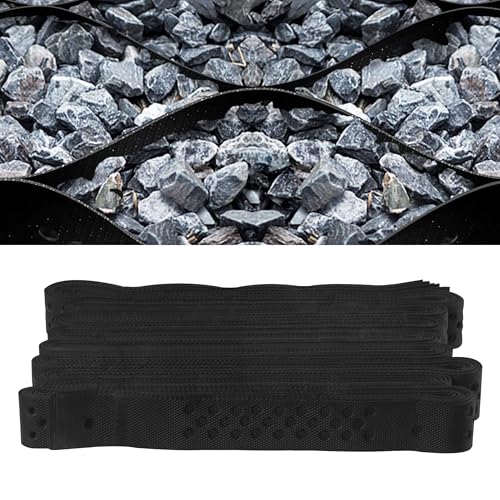
This longer Sunnyglade grid expands coverage to about 272 square feet, still at a 2-inch depth. It shares the same HDPE construction and small-cell geometry, designed to stabilize slopes or flat sections of walkways and driveways. The extended length makes it a practical option for larger projects where continuous grid panels reduce seam lines and simplify installation.
LXVOOEE Gravel Grid 4.4×33 Ft

LXVOOEE’s 4.4×33 foot grid kit includes multiple panels with staking hardware. Each 2-inch deep cell provides stability for driveways, walkways, and slopes, and the system is built to withstand weathering, erosion, and soil variability. The kit’s modular design supports customization for irregular layouts or longer pathways that require seamless coverage.
Kerty 3″ Thick Geo Ground Grid 36×4 FT

The Kerty grid uses a 3-inch depth and modular 36×4 foot panels to maximize load-bearing capacity—up to 1885 lbs per square foot when filled. Its HDPE composition is designed for durability in harsh weather, with foldable sections for easy storage and transport. It’s suitable for driveways, walkways, slopes, and larger landscape projects where high stability is needed.
Buying Guide: Key Purchase Considerations
- Load-bearing requirements: For driveways or areas with vehicle traffic, prioritize grids listed with high per-square-foot capacities when filled (typical ranges from 1880–1885 lbs).
- Depth and soil compatibility: Deeper grids (2″ to 3″) generally provide better stability on slopes or soft ground, while shallower grids may suffice for pedestrian paths.
- Panel size and coverage: Consider the overall area and choose grids that minimize seams. Larger panels reduce installation time, while modular options offer flexibility for irregular layouts.
- Material durability: HDPE is common and durable, offering resistance to UV exposure, oxidation, and chemical wear. Look for foldable designs that simplify storage.
- Installation hardware: Staking and fastening kits help secure grids on slopes and prevent migration. Ensure the kit is included or readily available.
- Drainage considerations: Permeable designs support stormwater infiltration, reducing puddling and erosion along walkways.
- Maintenance and future modifications: Choose grids that are easy to cut, adjust, or remove without specialized tools for future landscaping updates.
When selecting a gravel grid for a walkway, balance coverage, depth, and load requirements with your local soil conditions and climate. For sloped areas, prioritize grids with higher fill strength and reliable anchoring. For flat, pedestrian-focused paths, a shallower but well-anchored grid may suffice. Always follow manufacturer installation guidelines to maximize performance and longevity.