Managing weed competition is crucial for productive food plots. The right grass killer can selectively reduce unwanted grasses while preserving desirable forages, boosting deer nutrition and plot longevity. Below are five vetted options geared toward food plots, emphasizing selectivity, safety with clovers and alfalfa, and ease of use for American enthusiasts.
Summary of chosen products:
| Product | Brand | Best For | Form |
|---|---|---|---|
| Arrest Max Selective Grass Control | Whitetail Institute | Selective grass control in deer food plots | Pint |
| Weed & Feed3 | Scotts | Kills listed lawn weeds while feeding | Granular |
| Ready-to-Use Grass & Weed Killer | Spectracide | Immediate broadleaf and grassy weed control | Liquid, 1 gal |
| Liquid Turf Builder With Plus 2 | Scotts | Weed control and lawn nourishment | Liquid |
| Antler King Clover Fuel | Antler King | Faster growth for legume-based plots | Liquid |
Arrest Max Selective Grass Control
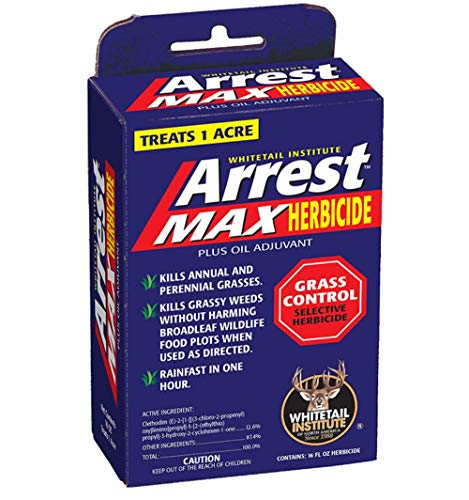
Whitetail Institute Arrest Max Selective Grass Control is designed specifically for food plots. It targets a broad range of annual and perennial grasses while leaving the essential perennial forages intact. The product is described as safe for use with Whitetail Institute perennials and with clover or alfalfa plantings, helping you protect high-value forage while reducing grass competition. For deer-focused plots, this selective approach supports seedings of clover and other forages that attract and sustain deer populations. Application timing and rates should align with label directions to ensure selectivity and safety for existing forages.
Key considerations:
– Selectivity helps retain preferred legumes and clovers.
– Compatibility with common food-plot forages reduces risk to essential plantings.
– Use as directed to maximize control of grasses without harming desirable species.
Antler King Clover Fuel Food Plot Enhancer

Antler King Clover Fuel is a liquid fertilizer designed to support legume-based plots, including clovers, soybeans, and alfalfa. While primarily a growth enhancer rather than a weed killer, Clover Fuel aims to promote faster germination, thicker stands, and longer-lasting forage cover. In a weed-pressured food plot, a robust legume canopy can help shade out grasses that compete for nutrients and moisture, contributing to an overall healthier stand. It is essential to use this product as part of an integrated plot plan that combines weed control with timely fertilization.
Key considerations:
– Legume-focused formulation supports clover and alfalfa stands.
– Helps plots establish quickly, potentially reducing weed vigor over time.
– Use in conjunction with selective weed killers for best results in mixed stands.
Scotts Turf Builder Weed & Feed3

Scotts Turf Builder Weed & Feed3 combines weed control with lawn feeding, targeting a broad range of listed weeds, including clover and dandelion. This product is designed for lawns but can be appealing for larger plots adjacent to lawns where weed migration matters. It requires active weed growth and appropriate temperatures for best results. For food plots, use with caution, ensuring it is compatible with the forage species you intend to establish and that application rates align with label directions to avoid stresses on desirable forages.
Key considerations:
– Dual action: weed control plus fertilization.
– Effective against a wide list of lawn weeds; check suitability for your plot species.
– Follow timing guidelines to minimize impact on desired forages.
Scotts Turf Builder Lawn Food

Scotts Turf Builder Lawn Food is a general lawn fertilizer designed to strengthen roots and improve nutrient uptake. While not a weed killer, it supports healthy grass growth that can outcompete weed pressure when used as part of a comprehensive plot management plan. For food plots, this product helps maintain vigor in desirable forage grasses, which can indirectly aid in suppressing opportunistic weeds through dense growth. Apply according to label directions to avoid damage to sensitive forage species and during suitable weather conditions.
Key considerations:
– Focuses on root development and nutrient uptake.
– Best used as part of an overall weed-management strategy in combination with selective herbicides.
– Timing matters for maximizing growth without stressing forages.
Whitetail Institute Imperial Clover Seed

Whitetail Institute Imperial Clover Seed supports robust clover plots that are attractive to deer and provide high-protein forage. As a complement to weed-control products, establishing and maintaining clover stands can reduce grass competition over time and improve nutritional quality. Imperial Clover Seed is cold-tolerant and versatile for spring or fall planting, making it a practical component of a comprehensive food-plot plan that emphasizes selective weed management and forage diversity.
Key considerations:
– High-protein forage supports deer nutrition.
– Helps diversify plots and reduce grass pressure through dense clover stands.
– Pair with selective herbicides for best results in mixed stands.
Buying Guide: Key Purchase Considerations For Grass Control In Food Plots
When selecting a grass killer and related plot products, consider these perspectives to ensure effective, safe results for deer-focused food plots.
- Selectivity: Prioritize products labeled for selective grass control that won’t harm desirable forages like clovers and alfalfa. In food plots, preserving high-protein forage is essential.
- Plot composition: Review your stand mix (clover, alfalfa, soybeans, grasses) and choose products compatible with those species. Some products are designed for lawns and may not transfer perfectly to plots.
- Application timing: Weed control often hinges on active growth and favorable temperatures. Follow label guidance to maximize effectiveness without stressing forages.
- Safety with existing perennials: If you already have established perennials in your plot, ensure the chosen product is labeled as safe for use with these plants or plan a rotation that minimizes risk.
- Combination strategy: Weed control can be more effective when paired with proper fertilization and seeding plans. Use a holistic approach that includes soil health, moisture management, and timely reseeding.
- Environmental considerations: Consider local watershed and pollinator guidelines. Opt for herbicides with lower off-target risk when possible and follow spray practices to minimize drift.
- Budget and ease of use: Balance upfront costs with application frequency and safety requirements. Some ready-to-use products offer quick results, while granular options may require more handling.
- Long-term plot goals: If your aim is a persistent, high-protein plot, integrating legume stands (like clover) with selective grass control can yield lasting benefits and reduce ongoing weed pressure.
In sum, the best grass killer strategy for food plots blends selective chemical control with supportive agronomy: sturdy, legume-rich stands, appropriate fertilization, and timing that aligns with forage growth. The products listed above provide a spectrum of options designed to help maintain productive, deer-friendly plots with reduced grass competition.