Answering the question “what garden tools are best for kids?” this guide highlights child-friendly sets that balance safety, durability, and educational value. The top picks are designed for ages 2–8, with lightweight handles, rounded edges, and bright colors to encourage hands-on learning. The best options suit beginner gardeners, while several kits are better for kids who want a larger range of tools. Below, learn who each product is best for and why it stands out, followed by a buying guide and FAQ to help you choose confidently.
| Product | Why It Stands Out |
|---|---|
| Kinderific Ocean Blue Gardening Set | Comprehensive 6-piece set with tote, watering can, and wooden-handled tools; great for beginners. |
| Kinderific Petal Gardening Set | Educational and safe with a complete beginner’s toolkit for kids who love STEM play. |
| Duckura 10-Piece Wheelbarrow Set | Large tool assortment and sturdy build; ideal for curious kids who want more options. |
| Duckura 7-Piece Wheelbarrow Set | Balanced 7-piece collection; good for outdoor play and early gardening tasks. |
| G & F Products JustForKids 4-Piece | Smaller, sturdy set with durable heads and wood handles; suitable for younger beginners. |
Kinderific Ocean Blue Garden Tool Set

Best for: younger children starting into gardening. The set includes a tote, spade, watering can, rake, fork, trowel, and gloves with wooden handles and metal heads designed for safe use. The colorful, kid-friendly design helps with recognition and engagement.
Why selected: It provides a complete, safe starter kit in a single package. The wooden handles and durable heads are built to withstand early explorations in soil and plant care, making it a practical first choice for parents seeking a cohesive bundle.
Caution: Check grip size for very small hands; ensure supervision during use to avoid over-tightening the watering can.
Kinderific Petal Gardening Set

Best for: kids who enjoy STEM-inspired play and a complete tool collection. This set emphasizes educational features and includes a attractive tote, watering can, gloves, and essential tools.
Why selected: It blends learning with practical garden activities, encouraging kids to observe plant growth, water cycles, and soil care while using safe, child-sized tools.
Limitation: Some tools may be lightweight for very active older children; best for younger to mid-range ages.
Duckura 10-Piece Wheelbarrow Set

Best for: kids who want a broader toolkit for diverse garden tasks and pretend play. This 10-piece set includes a wheelbarrow and gloves for a more involved gardening experience.
Why selected: The larger assortment supports progressive skill development, from digging and weeding to transporting soil. The design prioritizes safety with durable materials and kid-oriented dimensions.
Caution: The wheelbarrow adds weight; younger preschoolers should have adult supervision during movement and use.
Duckura 7-Piece Wheelbarrow Set

Best for: children who enjoy a compact yet versatile tool kit for outdoor play and basic garden tasks. The 7-piece set covers essential gardening activities with a wheelbarrow base.
Why selected: The combination of functional tools and a sturdy construction makes it a good next step after a starter kit for growing confidence in independent play.
Limitation: The shorter handle length may be less comfortable for taller kids; consider sizing as your child grows.
Duckura 7-Piece Garden Tools for Kids

Best for: kids aged around 3–5 who benefit from a slightly smaller, easy-to-handle tool set. Includes a shovel, rake, hoe, leaf rake, gloves, and a spray bottle.
Why selected: The set emphasizes safety with rounded edges and wooden handles, while offering enough variety to support a broader range of garden activities, from soil loosening to seedling care.
Limitation: It has fewer pieces than larger kits; may require additional tools for more complex projects.
UMUACCAN Beach Toys for Kids (6Pcs)
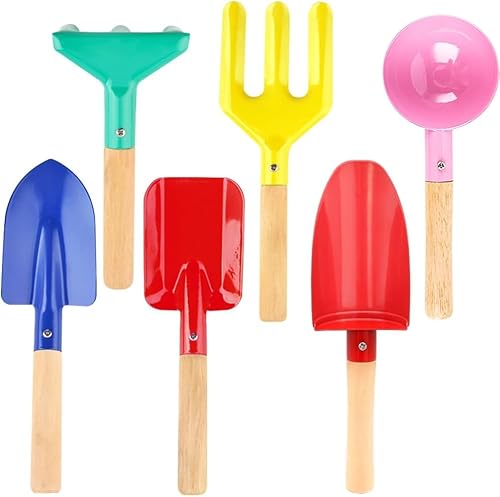
Best for: kids who enjoy both garden work and beach play, offering cross-season versatility for yard activities and summer projects.
Why selected: The 6-piece set includes assorted shovels and sturdy wooden handles with enamel-coated heads designed to resist corrosion and rust during outdoor use.
Caution: Some pieces may be more suitable for sand and soil; ensure proper use for garden beds to avoid damage to seedlings.
Buying Guide: Key Purchase Considerations
- Age and size: Choose sets with appropriately sized handles and weight for your child’s age and grip strength. Look for rounded edges and smooth finishes for safety.
- Durability vs. cost: Wooden handles and metal heads offer durability, but ensure coatings resist rust. Balance price with expected playtime and growth.
- Tool range: Start with a basic 4–6 piece kit for beginners. Consider larger sets (7–10 pieces) as a child becomes more confident and curious.
- Storage: Tote bags or integrated storage solutions help keep tools organized and reduce clutter in the garden space.
- Safety features: Look for blunt edges, non-toxic paints, and ergonomic handles. Avoid tools with sharp, exposed points for younger children.
- Multifunction use: Some sets double as beach toys or outdoor education kits, offering year-round value.
- Maintenance: Tools with removable parts and simple assembly are easier to clean and store after messy gardening sessions.
FAQ
- What age is best for kids’ garden tool sets?
Most sets are suitable for ages 2–8. Start with smaller, lighter tools for younger children and progress to larger sets as they grow stronger and more independent.
- Are wooden handles safer than plastic?
Wooden handles are generally sturdy and comfortable for little hands. Ensure finishes are smooth and free of splinters; avoid rough or sharp edges.
- What should I avoid when buying kid gardening tools?
Avoid工具 with small parts that can break off, sharp edges, or heavy, unbalanced tools that are hard for a child to control.
- Is a larger toolkit always better?
Not necessarily. A well-sized starter kit encourages use without overwhelming a child. You can expand later as interest grows.
- How important is a storage bag?
Very important. A tote or storage case keeps tools organized, reduces clutter, and helps children learn responsibility for their gear.
- Do these tools help with learning?
Yes. Using child-sized tools supports fine motor skills, coordination, and early science concepts like plant care and soil health.