Looking to create crisp, durable borders around lawns, flower beds, and pathways? This guide highlights top garden lawn edging products that balance ease of installation with lasting performance. Suitable for DIYers, homeowners with small-to-medium landscapes, and anyone seeking low-maintenance edging, these picks cover metal, plastic, and wood-inspired options. Below you’ll find five well-rounded choices, each with who it’s best for and why it was selected.
| Product | Best For | Material | Notable Benefit |
|---|---|---|---|
| Land Guard Corrugated Garden Edging Border | Durable borders for long-term lawns | Galvanized steel | 3D ripple design strengthens structure |
| Amazon Basics Flexible Landscape Edging Coil | Low-cost, natural look for larger projects | Recycled plastic | Faux woodgrain texture |
| Jorvila Landscape Edging | Budget-friendly DIY customization | Plastic with metal spikes | Easy installation with spikes |
| Quibbay No Dig Landscape Edging | Flexible edging with quick setup | Plastic PE | 75 anchoring spikes |
| SnugNiture Corrugated Metal Edging | Stylish, durable metal border | Metal | Distinct corrugated design |
Land Guard Corrugated Garden Edging Border

Best for: homeowners seeking a rugged, weather-resistant edging with a contemporary corrugated look. This edging uses galvanized metal and CNC precision for accuracy. The 3D ripple design adds visual interest while reinforcing the border’s structure, making it suitable for lawns, flower beds, and raised landscape features.
Why selected: The combination of CNC accuracy, anti-corrosion treatment, and advanced coating makes this edging resilient in harsh conditions. The corrugated profile contributes both strength and modern appeal, reducing the risk of warping over time.
Limitations: Metal edges may require careful handling during installation to avoid sharp edges and to ensure proper staking for stability.
Amazon Basics Flexible Landscape Edging Coil
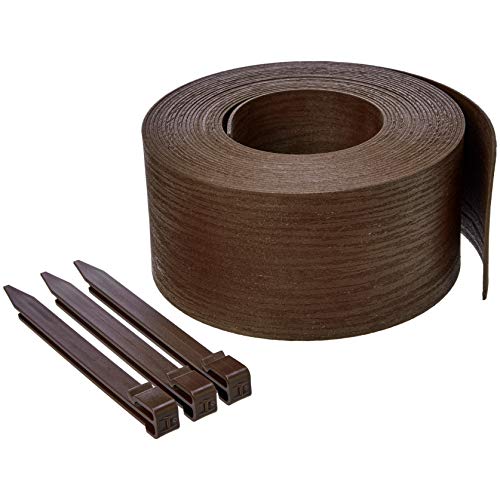
Best for: budget-conscious projects that still require a natural look around lawns, beds, and pathways. The faux woodgrain finish provides a low-cost, unobtrusive border that blends with most garden styles.
Why selected: This edging uses recycled plastic and offers a clean border option for large areas where metal edging is unnecessary or overkill. The woodgrain texture helps borders appear softer and more natural in traditional landscapes.
Limitations: Plastic edging may not be as robust as metal in heavy foot traffic or under substantial soil pressure; check for appropriate stakes and maintenance if the ground shifts.
Jorvila Landscape Edging

Best for: DIYers who want flexibility and straightforward installation. The 1.5″ height and 100′ length provide ample edging for multiple beds, with a 3-pack option that helps users scale their project with consistent borders.
Why selected: Easy, tool-free installation with metal spikes enables quick shaping and staking. The plastic construction is durable and can be bent to form curves, with the option to cut to fit exact lengths.
Limitations: Plastic edging may be less rigid than metal in very uneven soil; plan for additional stakes in areas with loose soil to maintain straight lines.
Quibbay 3.15″ x 50′ No Dig Landscape Edging

Best for: flexible edging that minimizes digging and simplifies setup for intricate borders around beds and pathways. The 3.15″ height provides clear separation from garden spaces, while the spiral spikes add stability.
Why selected: The combination of durable PE material, bendability, and reusable nylon spikes supports long service life. It’s especially useful for irregular shapes and longer borders that require frequent adjustments.
Limitations: The material is plastic, so very heavy weed pressure or extreme weather could affect long-term rigidity; ensure proper staking to maintain curves.
SnugNiture Corrugated Metal Garden Edging

Best for: buyers wanting a sturdy metal border with a distinct corrugated look. The brown finish offers a natural tone that blends well with earthy garden palettes while providing robust border integrity.
Why selected: Metal construction provides long-term durability against weather, sunlight, and garden activities. The corrugated pattern adds both visual interest and additional strength, reducing risk of bending.
Limitations: Metal edges can be sharp during handling; confirm safety-wrapped edges and use protective gloves during installation.
Buying Guide: Key Considerations Before You Buy
- Material choice: Metal edges deliver durability and a premium look but require careful handling. Plastic options offer flexibility and lower cost but may wear faster in extreme weather. Wood-inspired finishes can blend with traditional gardens but may need maintenance.
- Height and length: Taller borders (around 3 inches) work well for keeping mulch in beds and defining spaces, while shorter borders are easier to install around curved paths. Plan for total linear footage to determine how many bundles you need.
- Installation method: No-dig solutions speed up setup but require appropriate spikes or anchors. Metal edging often needs a stake system; plastic and wood-like edges can be simpler for DIY beginners.
- Weather resistance: Look for anti-corrosion treatments and UV stability for outdoor longevity. Consider local climate when choosing metal vs. plastic.
- Aesthetics vs. practicality: Corrugated designs add style and strength. A natural woodgrain look blends with greenery but may require more maintenance than metal or plastic.
- Maintenance: Metal edges resist wear but may require occasional cleaning. Plastic borders are generally low maintenance but can crack under ground pressure. Wood-like finishes may need sealing over time.
Frequently Asked Questions
- What edging is best for large, uneven lawns? Plastic coils and flexible edging systems are typically easier to shape around irregular terrain and can be installed quickly with stakes.
- Do edging borders prevent weed overgrowth effectively? Edging helps separate spaces and keep mulch in place, but ongoing weed control depends on overall garden maintenance and soil management.
- How do I install metal edging safely? Use protective gloves, cleanly cut to length, and secure with appropriate stakes. Ensure edges are wrapped or tucked to avoid cuts.
- Can edging borders be used around trees? Yes, most edging products can be shaped to circle tree bases, but ensure the cable or stake system accommodates curves without damaging the root zone.
- Which edging is lowest maintenance? Recycled plastic edging typically requires less maintenance than wood or untreated metal, though it may show wear sooner in harsh conditions.
- Is no-dig edging as durable as digging-in borders? No-dig options are convenient and effective for many setups, but verify spike strength and material flexibility for your landscape.