Protecting garden plants from frost, wind, and sudden temperature swings is essential for a healthy, productive season. Frost cloths and floating row covers offer a lightweight, breathable solution that preserves warmth while letting air and light reach roots and foliage. This article highlights five top frost cloth options, compares their features, and explains how to choose the right one for your climate and garden setup. Use the buying guide to evaluate size, material, durability, and ease of use before purchasing.
| Product | Brand | Size | Material / Key Feature |
|---|---|---|---|
| SnugNiture Plant Covers Freeze Protection | SnugNiture | 10 ft x 33 ft | 1.1 oz/yd² non-woven polypropylene; reusable; breathable and protective |
| Garutom Plant Covers Freeze Protection | Garutom | 10 ft x 33 ft | 1.1 oz/yd²; lightweight; cuts to fit; protects from frost and pests |
| Abimars Thicker Plant Covers | Abimars | 10 ft x 33 ft | 1.77 oz/yd²; UPF 30+; up to 4°F frost protection; durable |
| KLEWEE Plant Covers | KLEWEE | 10 ft x 50 ft | 1.05 oz/yd²; UV stabilized; large coverage; versatile use |
| YFFSIDMY Plant Covers Freeze Protection | YFFSIDMY | 6.5 ft x 16 ft | 0.9 oz/yd²; breathable; frost protection; easy trimming |
SnugNiture Plant Covers Freeze Protection
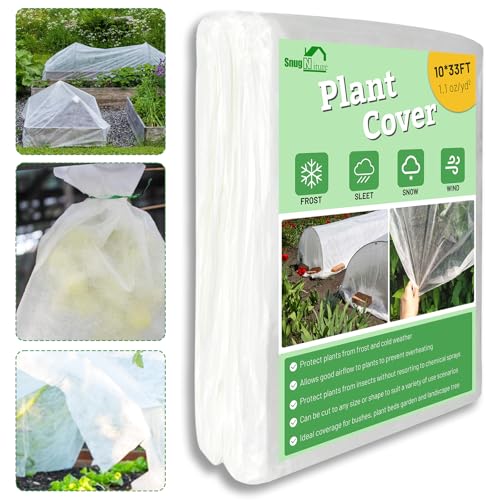
The SnugNiture frost cloth uses a lightweight 1.1 oz/yd² non-woven polypropylene fabric designed for outdoor use. Available in a 10×33 ft size, it provides reliable frost and pest protection while allowing rain, sunlight, and air to reach soil and plants. The cover is reusable when kept dry and clean, supporting multiple seasons of use. Its balance of insulation and breathability makes it suitable for a wide range of vegetables and ornamentals in fluctuating winter conditions.
Garutom Plant Covers Freeze Protection

The Garutom frost cloth offers a 10×33 ft footprint with a 1.1 oz/yd² fabric. It is lightweight, breathable, and easily cut to fit irregular shapes. This cover protects against frost, wind, snow, and pests while still permitting light transmission to support photosynthesis and soil warmth. Its flexible sizing makes it a practical option for large beds, trees, or multiple planters in a compact garden layout.
Abimars Thicker Plant Covers

Abimars provides a thicker 1.77 oz/yd² frost cloth with UPF 30+ sun protection, designed to endure sunny winters and prevent UV degradation. In a 10×33 ft layout, it offers up to 4°F of frost protection and is noted for tear resistance. Its heavier fabric helps preserve warmth while still allowing airflow to minimize moisture buildup on foliage, making it suitable for sensitive transplants and late-season crops.
KLEWEE Plant Covers

KLEWEE offers a larger 10×50 ft option in a 1.05 oz/yd² fabric with UV stabilization for extended outdoor use. Its generous width accommodates larger garden plots and fruit trees, and the fabric can be cut to fit irregular shapes. The cover allows light and heat to reach plants while trapping warmth at night, providing a flexible, durable shield against frost, hail, wind, and even pests.
YFFSIDMY Plant Covers Freeze Protection

YFFSIDMY provides a 6.5 ft x 16 ft frost cloth at 0.9 oz/yd², designed to be trimmed to fit specific plants. The breathable fabric supports light transmission while protecting crops from frost, wind, and early frosts. This size is well-suited for small to medium plantings, seedlings, and potted configurations needing targeted protection in shoulder seasons.
Buying Guide: Key Purchase Considerations
- Size and coverage: Measure your beds, trees, and containers to select a size that minimizes gaps. Larger models can be cut or layered for multi-layer protection.
- Fabric weight and durability: Heavier fabrics (around 1.77 oz/yd²) offer stronger frost resistance and longer life, while lighter fabrics provide better airflow and light transmission.
- Light transmission and airflow: Ensure the cloth transmits enough sunlight (often 60–85%) to support photosynthesis and prevents moisture buildup that can lead to mold.
- UV resistance and color: UV-stabilized fabrics reduce sun degradation; white or light-colored covers reflect heat and minimize overheating during sunny days.
- Reusability and care: Check whether the cover is easy to dry, clean, and store between seasons to extend its lifespan.
- Ease of use: Drawstrings, clips, and pre-cut edges help secure the cover over irregular shapes and high wind conditions.
- Protection scope: Consider whether you need frost protection only, or added shielding from insects, birds, and hail.
- Compatibility with existing structures: If you use hoops, tunnels, or raised beds, ensure the cover fits with your setup or can be trimmed to do so.
To optimize outcomes, combine frost cloths with row covers during the most frost-prone times, cover during the night, and remove when daytime temperatures rise. Store the fabric in a dry, clean area to maintain flexibility and prevent mildew. For gardeners near late-season frosts or variable winters, having a few different sizes on hand can accommodate shifting needs across crops and garden layouts.