When selecting French drain pipe fittings, choose parts that ensure secure connections, compatibility with common pipe sizes, and durable materials that withstand outdoor conditions. This guide highlights five practical options for different scenarios—from quick, tool-free installs to robust adapters for long-term drainage projects. Ideal buyers include DIY homeowners, landscapers, and property managers seeking simple, reliable fittings to direct water away from foundations, reduce erosion, and prevent pooling.
| Product | Best For | Key Benefit |
|---|---|---|
| 4″ Universal Pipe Connector (Generic) | DIYers needing quick corrugated-to-PVC transitions | Tool-free, multi-fit connection options |
| NDS 422G Pop-Up Drainage Emitter | Property owners needing downstream water discharge | Directs water away from structures |
| NDS 451 HDPE Corrugated Adapter | Connecting corrugated to smooth-wall pipes | Reliable hub-to-pipe transitions |
| Corrugate Drain Internal Coupler, Single | Landscape drainage projects requiring universal coupling | Leak-resistant, easy 3″ connection |
| French Drain Man HDPE 4″ External Snap Coupler | Heavy-duty, high-volume drainage jobs | Durable dual-wall HDPE with secure snap fit |
4″ Universal Pipe Connector
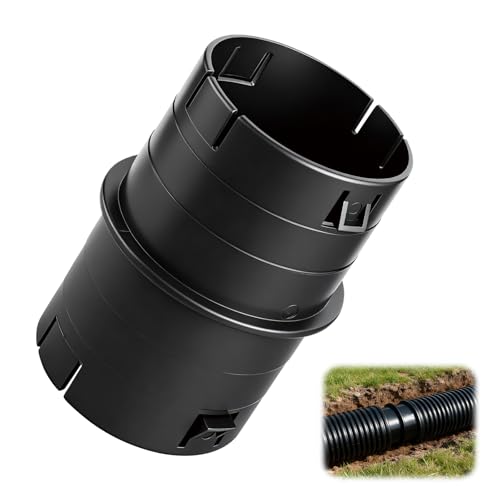
Features: Universal Fit for Multiple Pipes. This drain internal coupler supports six connection methods, including 4″ corrugated to 4″ corrugated, 4″ SDR 35 to 4″ SDR 35, and 4″ corrugated to 4″ SCH 40. It also supports transitions among these pipe types for seamless drainage. Installation is tool-free and quick, enabling a 3-minute setup. Best for: DIY homeowners who need fast, flexible transitions in a mixed-pipe system. Caution: Verify both pipe outer diameters match the listed 4″ nominal size to avoid a loose fit.
NDS 422G Pop-Up Drainage Emitter

Features: Pop-up emitter releases water downstream from a low point in the drainage line, helping protect structures from excess moisture. It connects to 4″ sewer and drain pipes and adapts to other pipe types via appropriate adapters. Best for: property owners needing passive water discharge at grade level to prevent pooling. Limitation: Positioning should avoid mowing damage; ensure the emitter is placed flush or just below turf to minimize clipping.
NDS 451 HDPE Corrugated Adapter

Features: Transitions between 4″ corrugated pipe and 4″ sewer/drain pipe in non-pressurized systems. Works as a connector within EZflow Gravel-Free French Drain systems, linking corrugated to S&D pipes. Best for: projects that require reliable, straightforward corrugated-to-S&D transitions. Caution: Confirm the adapter’s compatibility with your specific corrugated and S&D pipes before purchase.
Corrugate Drain Internal Coupler, Single

Features: Durable polyethylene with a universal 3″ size, designed for easy connection to standard corrugated or 3″ drain pipe. It provides a secure, leak-resistant fit. Best for: landscape drainage and exterior installations where a simple, universal coupling is required. Caution: Ensure the 3″ size matches your pipe diameter to prevent leaks or misfit.
French Drain Man HDPE 4 in External Snap Coupler

Features: Heavy-duty dual-wall HDPE coupler with eight spring-loaded barbs that snap onto corrugated pipe. Mold-injected wall thickness ensures consistency. Best for: heavy-duty installations where a strong, secure connection is needed to prevent detachment in shifting soil. Limitation: Heavy construction may be less forgiving in tight spaces; plan routing to accommodate the larger snap-fit profile.
Buying Guide
What should I consider when choosing French drain pipe fittings?
Pipe material compatibility, diameter standards, and the environment are key. HDPE fittings are flexible and durable for outdoor use, while PVC is rigid but common in many drains. Confirm that the fitting matches the pipe type (corrugated vs smooth-wall) and the nominal diameter (often 4 inches in common French drains).
How do I determine the right connector type?
For quick setups and mixed pipe systems, tool-free couplers that fit multiple pipe types are ideal. For long-term durability in high-flow areas, choose heavy-duty adapters with secure snap or hub connections. If you’re using a pop-up emitter downstream, ensure compatibility with your pipe size and the emitter’s outlet.
Are there any installation tips I should follow?
Plan a clear trench path with adequate slope for gravity drainage. Dry-fit components first to confirm alignment. Use appropriate adapters when joining corrugated pipe to smooth-wall pipe to prevent leaks. Place emitters and grates to minimize obstruction by landscaping or mowing equipment.
What are common limitations to watch for?
Size mismatches or incompatible pipe types can create leaks. Overly tight couplers may restrict water flow. Heavy-duty snap couplers may require more space for installation. Always verify compatibility with the entire drainage system before purchasing.
How do these fittings impact overall drainage performance?
High-quality fittings reduce the risk of leaks and disconnections, improving flow efficiency and reducing maintenance. Proper transitions between corrugated and smooth-wall pipes help maintain consistent interior diameter and prevent bottlenecks that could slow drainage.
FAQ
- Q: Can these fittings work with all 4″ pipes?
- A: They cover common 4″ corrugated, SDR 35, SCH 40, and some S&D pipes, but always verify exact specifications before mixing brands.
- Q: Is tool-free installation reliable for outdoor drainage?
- A: Yes, tool-free designs are designed for quick, secure assemblies; ensure a snug fit to avoid leaks.
- Q: Do these fittings help with foundation protection?
- A: When correctly installed, they help direct water away from foundations and reduce soil erosion and cracking risks.
- Q: Should I use a pop-up emitter with every French drain project?
- A: Not always. Pop-up emitters are useful downstream in low spots, but some systems discharge water via grading or other outlets.
- Q: How should I store fittings for winter?
- A: Store in a dry area to prevent material degradation; keep fittings clean and away from freezing conditions that could cause brittleness.