Home repair and pest prevention converge with foam sealants to keep mice out of living spaces. The best foam sprays for mice combine rapid expansion, strong adhesion, and long-lasting durability to block gaps around doors, windows, pipes, and foundations. This guide reviews top-rated options from trusted brands, highlighting how each product creates a formidable barrier against entry. Whether you are patching a small crack or sealing large openings, these foams offer a pesticide-free, user-friendly solution for a cleaner, safer home environment.
Below is a quick overview of five foam products most relevant to preventing mice from entering your home. The table highlights the key features you should consider when choosing a sealant for rodent control.
| Product | Brand | What It Does | Typical Use |
|---|---|---|---|
| Tomcat Rodent Block Expanding Foam Barrier | Tomcat | Expands to fill gaps and block mice; pesticide-free barrier | Gaps, cracks, entry points |
| Loctite Tite Foam Gaps & Cracks | Loctite | Fills and insulates gaps up to 1 inch; durable, UV-resistant | Small cracks, around fixtures |
| Loctite Tite Foam Big Gaps | Loctite | Fills gaps up to 3 inches; high-density, flexible | Large openings, foundation penetrations |
| PAMAZY [Upgraded] Rodent Barrier Kit | PAMAZY | Steel wool plus spray foam for durable barrier | Medium to large holes, vents, pipelines |
| Akfix 895 PestBlocker Insulation Spray Foam | Akfix | Gap filler and barrier; 2×12 oz. | Gaps, cracks, holes; general sealing |
Note: The products listed emphasize a pesticide-free approach and focus on sealing and insulation to deter mice. Availability and suitability vary by home layout and climate, so assess your gap sizes and entry points before purchase.
Tomcat Rodent Block Expanding Foam Barrier
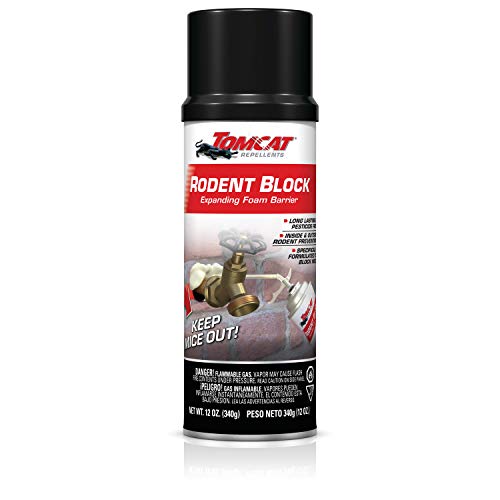
Tomcat’s Rodent Block expands to fill gaps but remains easy to apply for DIY homeowners. It is a pesticide-free option designed to create an airtight, water-resistant barrier against mice and other rodents. The product adheres to most building materials, making it suitable for blocking entry points around foundations and rough openings. Its long-lasting properties help maintain a secure seal even with building movement and weather exposure.
Loctite Tite Foam Gaps & Cracks

This Loctite option is designed to fill, seal, and insulate gaps up to 1 inch. Its polymer foam composition provides UV resistance for outdoor use, ensuring a durable barrier against mice across exterior wall penetrations and interior gaps. The dense texture supports a stable seal even when walls shift, reducing the likelihood of future entry points.
Loctite Tite Foam Big Gaps

Designed for larger openings, this foam seals gaps up to 3 inches. Its high-density structure offers durability and resilience amid structural movement, making it suitable for sealing larger holes around foundations, pipes, and HVAC penetrations. The product’s flexibility helps maintain a secure barrier over time as temperatures fluctuate.
PAMAZY [Upgraded] Rodent Barrier Kit

This kit combines premium steel wool with a spray polyurethane foam to create a dual-action barrier. The steel wool provides a physical blockage that rodents can’t easily chew through, while the foam expands to seal irregular gaps and cracks. It’s designed for medium to large entry points such as holes in walls, vents, and pipelines, offering durable, year-round protection when used as directed.
PAMAZY [Upgraded] Rodent Barrier Kit (3Pcs)

This version includes three sets of steel wool plus spray foam to cover multiple holes or larger areas more efficiently. As with the two-piece version, it combines a barrier of steel wool with PU spray foam for a robust defense against mice, rodents, and other intruders. It is particularly suitable for garages, basements, and wall cavities requiring stronger multi-point protection.
Akfix 895 PestBlocker Insulation Spray Foam

Akfix 895 PestBlocker is a 2×12 oz. sealant designed to block gaps and cracks with a resilient barrier. Its adhesive, expanding foam creates a seal around pipes, outlets, and wall penetrations. The formula emphasizes long-term performance and airtight sealing for energy efficiency and rodent defense, making it a solid all-around choice for home sealing tasks.
Buying Guide
- Gap size and location: Choose a product with suitable expansion depth. Small gaps may require a 1-inch-capable foam, while larger openings benefit from Big Gaps formulations or dual-stage kits.
- Material compatibility: Verify adherence to common building materials (wood, metal, concrete, drywall) to ensure a durable seal.
- Durability and movement: Homes shift seasonally; select high-density and flexible foams for long-lasting protection.
- Odor and safety: For indoor use, odor-free options reduce indoor air concerns. Ensure proper ventilation during application.
- Combination barriers: Kits that pair steel wool with foam offer stronger protection for medium to large holes, especially around vents and pipes.
- Application controls: Look for precision nozzles and clog-resistant designs for clean, controlled application to minimize overspray and mess.
- UV exposure: Exterior use benefits from UV-resistant formulas to resist sunlight and weathering over time.
- Environmental considerations: Many of these products are pesticide-free, aligning with safer indoor pest prevention practices.
- Storage and curing: Allow adequate curing time as recommended, and store upright in a dry location to maintain effectiveness.
When choosing a foam sealant for mice, assess the size of the entry points, indoor or outdoor use, and whether you prefer a standalone foam or a dual-action solution with steel wool. Proper sealing across all likely entry points reduces mouse infestations and helps ensure a long-term, pesticide-free approach to home protection.