Roses deserve specialized nutrition to promote strong roots, vibrant blooms, and robust disease resistance. The following flower foods are among the best options for roses, blending long-lasting nourishment with pest defense and disease control. This guide highlights five top choices, covering granules, slow-release formulas, and bio-based solutions to fit different gardening needs and environments.
Summary Table
| Product | Brand | Type | Key Benefit |
|---|---|---|---|
| BioAdvanced All-In-One Rose and Flower Care I | BioAdvanced | Granules | Strong roots, blooms, pest and disease control |
| BioAdvanced All-In-One Rose and Flower Care Fertilizer | BioAdvanced | Granules | Promotes roots, blooms; pest and disease protection |
| Scotts Rose & Bloom Continuous Release Plant Food | Scotts | Granular, slow-release | Steady feeding, up to 2 months |
| Burpee Organic Bloom Granular All-Natural Food | Burpee | Granular, organic | Organic nutrients with long-lasting feed |
| Chrysal Bio-Based Flower Food | Chrysal | Liquid/eco-friendly preservative | Extends vase life, bio-based formula |
BioAdvanced All-In-One Rose And Flower Care I

BioAdvanced All-In-One Rose And Flower Care I blends plant nutrition with integrated pest and disease protections. The granules are designed to promote strong root systems and vibrant blooms for roses and other flowering plants. Additionally, the formula includes fungicidal properties that help manage common diseases such as Black Spots, Powdery Mildew, and Rust. This combination makes it a convenient option for gardeners seeking a multi-function product that supports both growth and health.
BioAdvanced All-In-One Rose And Flower Care Fertilizer
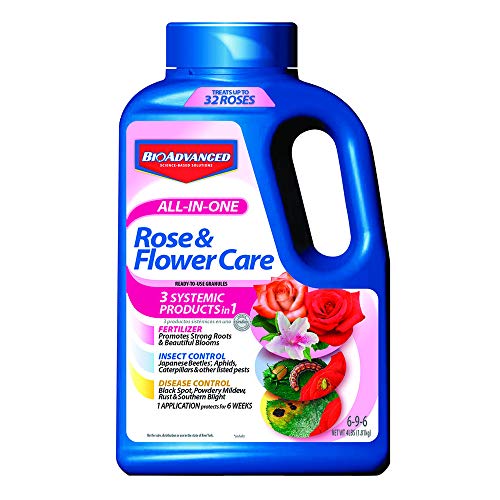
This BioAdvanced fertilizer focuses on plant food for roses and related flowering plants, encouraging robust root growth and strong flowering. The product is formulated to deter common pests like adelgids and aphids while delivering nutrients that support bloom production. It also targets disease control, helping to keep roses healthier overall in typical garden conditions. The granulated format suits both in-ground plantings and container setups.
Scotts Rose & Bloom Continuous Release Plant Food

Scotts Rose & Bloom Continuous Release provides steady feeding for roses and other flowering plants. The formula feeds over a two-month period, helping to promote consistent bloom production and overall plant health. It’s particularly convenient for gardeners who prefer a low-maintenance approach to feeding, reducing the frequency of applications while delivering reliable results.
Burpee Organic Bloom Granular All-Natural Food for Roses

Burpee Organic Bloom Granular Food is OMRI-listed for organic use and formulated to feed roses and other flowering plants quickly while delivering long-lasting nutrients. It’s designed for both containers and garden beds, with a focus on steady nourishment and extended bloom potential. The product includes beneficial microbes to help promote stronger roots and healthier growth, aligning with organic gardening goals.
Chrysal Bio-Based Flower Food

Chrysal Bio-Based Flower Food is a sustainable, plant-based preservative designed to extend vase life for cut flowers. While primarily marketed for cut arrangements, the product’s eco-friendly formulation can be a good fit for gardeners who cut and display roses indoors. It includes a measuring scoop for precise dosing and aims to keep blooms looking fresh longer, aligning with the needs of cut-rose enthusiasts.
FloraLife Fresh-Cut Flower Food Sachet

FloraLife Fresh-Cut Flower Food provides a multi-nutrient hydration solution designed for cut flowers, ensuring robust nourishment and hydration for extended freshness. The sachet format offers convenience and consistent dosing for floral arrangements, supporting color, scent, and overall vitality of cut roses and other stems.
Buying Guide: Key Purchase Considerations For Rose Flower Foods
When choosing a flower food for roses, consider the following factors to ensure you select a product that matches your garden setup and bud quality goals.
- Target plants: For roses, look for formulas specifically labeled for roses or flowering plants, or general all-purpose plant foods with proven rose results.
- Nutrient balance: A balanced mix of nitrogen, phosphorus, and potassium supports root development, bloom production, and overall plant health. Some products also include trace minerals that aid color and fragrance.
- Persistence: Granular and slow-release options reduce application frequency and provide steady nutrition, which can be ideal for larger rose beds.
- Pest and disease components: Integrated pest and disease control helps protect roses from common threats such as aphids, whiteflies, black spot, and mildew. Decide whether you need a separate pest/disease control or a combined product.
- Organic vs synthetic: Organic options appeal to environmentally conscious gardeners and may offer slower, more natural nutrient release, while synthetic formulas typically provide faster results.
- Heritage uses: If you tend to cut roses for bouquets, consider products designed for vase life extension in addition to plant health, such as bio-based or flower-specific preservatives.
- Administration method: Granules, liquids, or sachets require different handling. Ensure ease of use fits your routine and preferred watering schedule.
- Gardening conditions: Sun exposure, soil type, irrigation frequency, and existing plant health influence how aggressively you feed roses. Start with the recommended dose and monitor growth and bloom response.
- Certification and safety: For organic gardeners, look for OMRI-listed products. For indoor use, choose formulations that minimize residue and odor.
Across these options, a common thread is the balance between feeding strength, pest and disease protection, and ease of use. For many rose enthusiasts, a combination approach—using a rose-specific fertilizer for ongoing nutrition and a separate pest/disease product when issues arise—provides the most consistent results. In larger gardens, slow-release granules paired with seasonal applications can help maintain bloom abundance without frequent reapplication.